In the realm of industrial automation and control systems, the selection of the right sensing technology is paramount for ensuring efficiency, reliability, and safety. Two of the most prevalent and sometimes confused technologies are proximity sensors and photoelectric sensors. While both serve the fundamental purpose of object detection without physical contact, their underlying principles, capabilities, and ideal applications differ significantly. This article provides a detailed technical comparison to guide engineers and system integrators in making informed decisions.
Fundamental Operating Principles
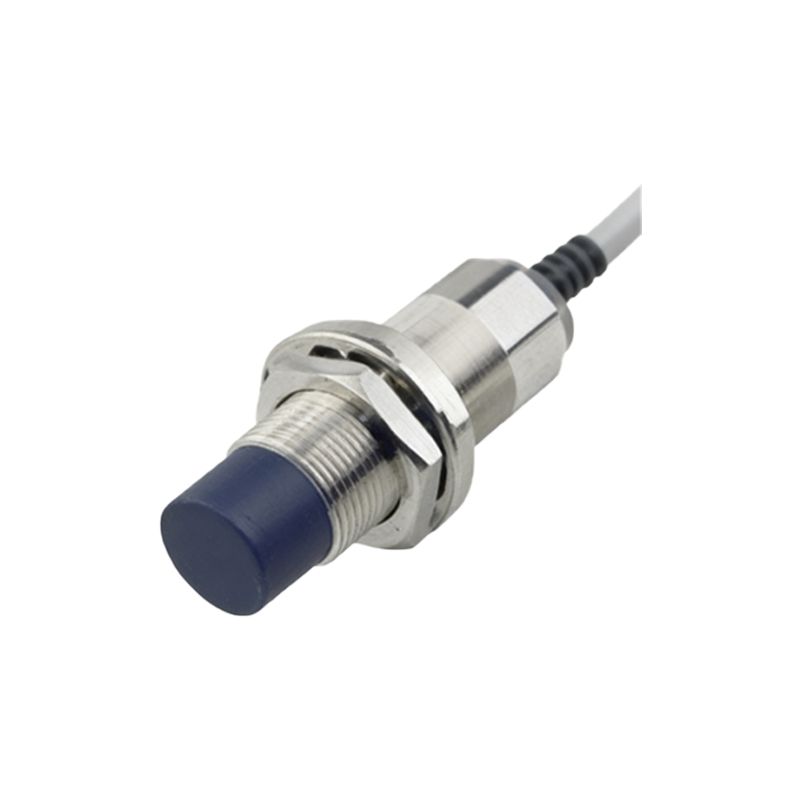
The core distinction lies in their method of detection. Proximity sensors, specifically inductive and capacitive types, operate by generating an electromagnetic field. Inductive proximity sensors detect the presence of metallic objects. When a conductive metal enters the sensor's oscillating electromagnetic field, it induces eddy currents within the target. This causes a change in the oscillation amplitude, which the sensor's circuitry detects, triggering an output signal. Capacitive proximity sensors, on the other hand, can detect both metallic and non-metallic materials (plastics, wood, liquids, etc.) by sensing changes in capacitance. They generate an electrostatic field. When any object with a dielectric constant different from air enters this field, it alters the capacitance, leading to detection.
Photoelectric sensors function on the principle of light transmission and reception. They consist of a light emitter (typically an LED using visible red, infrared, or laser light) and a receiver. The sensor detects an object by interpreting changes in the received light signal. This leads to three primary operating modes: Through-beam (or opposed), Retro-reflective, and Diffuse (or proximity) mode. Through-beam sensors have separate emitter and receiver units; detection occurs when the object breaks the light beam. Retro-reflective models use a single unit and a reflector; detection happens when the object interrupts the beam reflected back. Diffuse sensors rely on the reflection of light off the target itself back to the receiver.
Key Performance Characteristics and Comparison
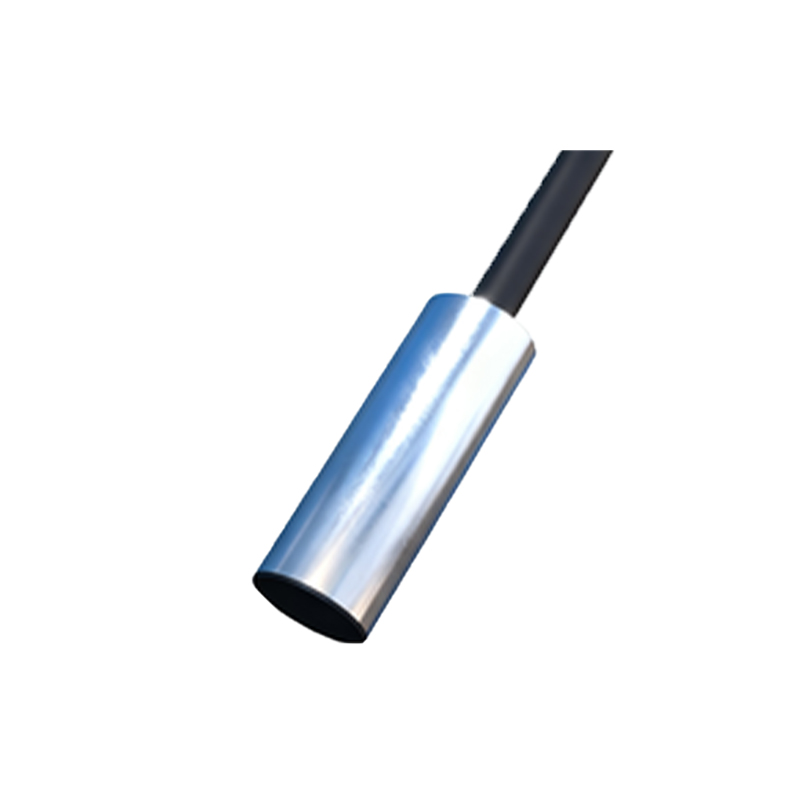
Sensing Range: Photoelectric sensors generally offer much longer sensing ranges, from a few centimeters up to several hundred meters for specialized laser models. Proximity sensors have relatively short ranges, typically from a few millimeters to about 60 mm for standard inductive models, with capacitive sensors often having even shorter ranges.
Target Material Dependency: This is a critical differentiator. Inductive proximity sensors are highly material-specific, detecting only metals, with sensitivity varying by metal type (ferrous metals are most easily detected). Capacitive sensors are material-versatile. Photoelectric sensors can detect virtually any object that interrupts or reflects light, regardless of material—metal, plastic, glass, wood, or liquid. However, the color, transparency, and surface finish of the target can significantly affect performance, especially for diffuse sensors.
Environmental Robustness: Inductive proximity sensors excel in harsh environments. They are inherently immune to dust, dirt, steam, oil, and ambient light interference. Their sealed, solid-state construction makes them ideal for washdown areas or dirty machining applications. Photoelectric sensors can be susceptible to environmental factors. Dust, fog, or heavy condensation can scatter or block the light beam, causing false triggers. While models with robust housings and specialized lenses exist, they often require more careful environmental consideration.
Speed and Response Time: Both technologies offer high-speed operation suitable for most industrial counting and positioning tasks. High-end models in both categories can achieve response times in the microsecond range. For ultra-high-speed applications, certain photoelectric through-beam sensors may have a slight edge.
Accuracy and Resolution: Photoelectric sensors, particularly laser-based models, provide superior accuracy for precise positioning, edge detection, and measuring applications. Proximity sensors are primarily binary presence/absence detectors, though analog versions can provide distance information over a very limited range.
Application Guidelines
Choosing between the two often comes down to the specific application requirements.
Choose an Inductive Proximity Sensor when:
Detecting metal objects (e.g., parts on a conveyor, cylinder position).
The environment is dirty, oily, or wet.
A very short, consistent sensing distance is required.
The application demands a rugged, low-maintenance solution.
Choose a Capacitive Proximity Sensor when:
Detecting non-metallic materials like plastic bottles, wood panels, or liquid levels in non-metallic tanks.
The target material is the primary differentiator from the background.
Choose a Photoelectric Sensor when:
Long sensing ranges are needed.
Detecting non-metallic objects is necessary.
The target is small or requires precise detection.
Clear or transparent objects need to be sensed (using specific polarized or background suppression diffuse sensors).
The environment is relatively clean and free of light-obscuring contaminants.
In conclusion,