In the realm of industrial automation and control systems, metal proximity sensors are indispensable components for detecting the presence or absence of metallic objects without physical contact. These sensors operate based on various principles, each suited to specific applications and environmental conditions. Understanding the different types is crucial for engineers and technicians to select the optimal sensor for their needs. This article explores the primary categories of metal proximity sensors, detailing their working mechanisms, advantages, and typical use cases.
The most common type is the inductive proximity sensor. It generates an electromagnetic field using a coil and oscillator. When a metal object enters this field, eddy currents are induced in the target, causing a change in the sensor's oscillation amplitude. This change is detected by a threshold circuit, which triggers an output signal. Inductive sensors are highly reliable and excel in harsh environments with dust, moisture, or vibration. They are ideal for detecting ferrous metals like iron and steel, though some models can sense non-ferrous metals with reduced sensing ranges. Typical applications include position sensing in machinery, part counting on conveyor belts, and limit switching in automated systems.
Another significant category is the capacitive proximity sensor. While primarily used for non-metallic materials, certain capacitive sensors are designed to detect metals by sensing changes in capacitance. These sensors create an electrostatic field between two electrodes. When a metal object approaches, it alters the dielectric constant, leading to a capacitance shift that triggers detection. Capacitive sensors offer versatility but may be less precise for metals compared to inductive types. They are useful in applications requiring detection of various materials, such as in packaging or liquid level sensing, where metals might be present alongside other substances.
For high-precision and long-range detection, ultrasonic proximity sensors are employed. They emit high-frequency sound waves and measure the time taken for echoes to return after hitting a metal surface. The distance to the object is calculated based on the speed of sound. Ultrasonic sensors are effective for detecting metals at greater distances and can operate in challenging conditions like fog or dirt. However, they may be influenced by temperature variations and require careful calibration. Common uses include tank level monitoring, robotic navigation, and object profiling in manufacturing.
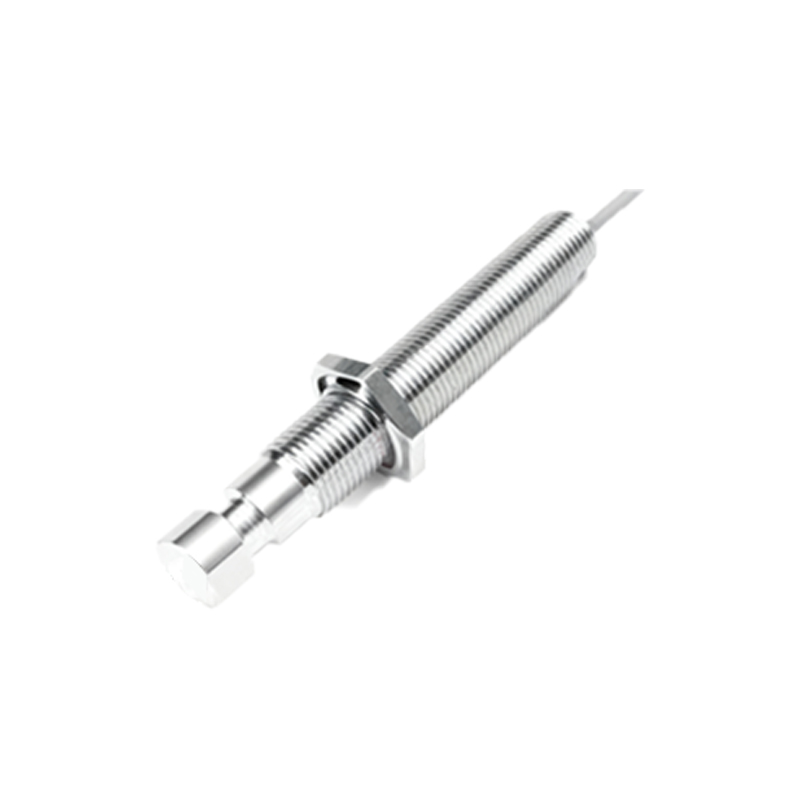
Magnetic proximity sensors, including reed switches and Hall effect sensors, detect magnetic fields or changes caused by ferrous metals. Reed switches consist of two ferromagnetic reeds sealed in a glass tube; when a magnet or magnetic metal approaches, the reeds contact each other, closing a circuit. Hall effect sensors generate a voltage proportional to the magnetic field strength when exposed to a magnetic field from a metal object. These sensors are compact, energy-efficient, and suitable for low-power applications like door position sensing in appliances or speed detection in automotive systems.
Photoelectric sensors, though often associated with non-metallic detection, can be used for metals by leveraging reflective or through-beam methods. They emit a light beam (usually infrared or laser) and detect its reflection or interruption by a metal object. Photoelectric sensors offer fast response times and long sensing ranges but may be affected by surface reflectivity and environmental factors like dirt. They are commonly found in sorting systems, security applications, and precision assembly lines.
Each type of metal proximity sensor has distinct characteristics. Inductive sensors are robust and cost-effective for close-range metal detection, while capacitive sensors provide flexibility for mixed-material environments. Ultrasonic sensors excel in long-range scenarios, magnetic sensors are ideal for low-power and compact designs, and photoelectric sensors offer speed and accuracy. Factors such as sensing distance, target material, environmental conditions, and budget should guide selection.
In summary, the diversity of metal proximity sensors enables tailored solutions across industries like automotive, aerospace, manufacturing, and robotics. By leveraging the appropriate technology—inductive, capacitive, ultrasonic, magnetic, or photoelectric—engineers can enhance system efficiency, safety, and reliability. As technology advances, innovations in miniaturization, smart sensing, and IoT integration continue to expand the capabilities of these critical devices, driving progress in automation and beyond.