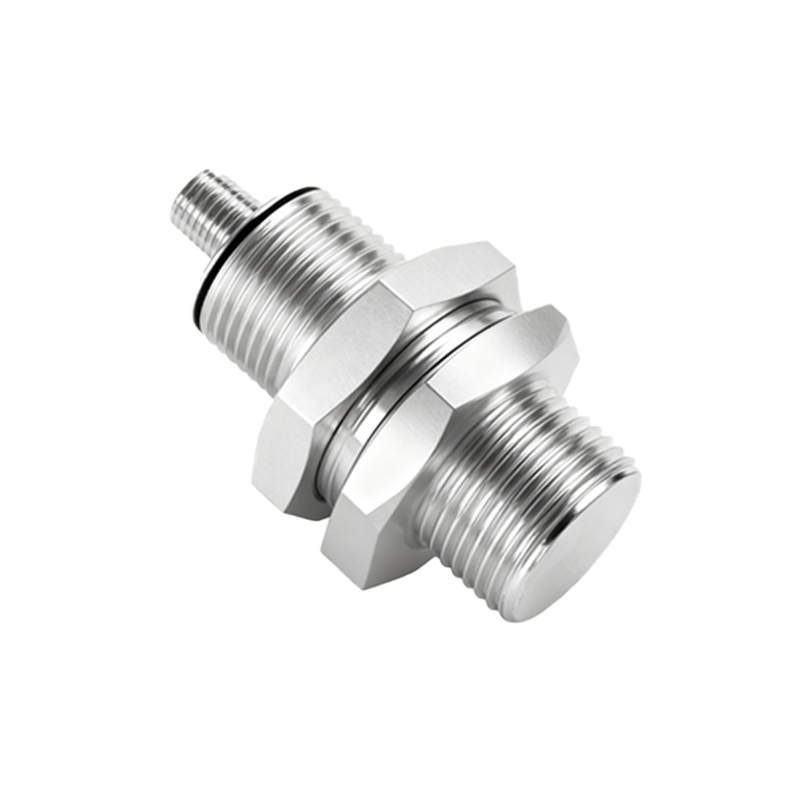
In the rapidly evolving landscape of industrial automation, short proximity sensors have become indispensable components for precise object detection and positioning. These sensors, typically designed for sensing ranges up to 15mm, are widely utilized in applications such as robotic assembly, packaging machinery, and safety interlocks. The market pricing for these devices is influenced by a complex interplay of technological specifications, brand positioning, supply chain dynamics, and regional economic factors.
From a technical standpoint, the core technology defines a significant portion of the cost. Inductive proximity sensors, detecting metallic objects, are generally the most cost-effective, with entry-level models starting from approximately $25 USD. Capacitive sensors, capable of detecting both metallic and non-metallic materials, command a premium, often ranging from $35 to $60 USD. More advanced models featuring analog outputs, IO-Link communication, or heightened resistance to environmental factors like washdown conditions or extreme temperatures can see prices escalate to $80-$150 USD per unit. The price is directly correlated with performance metrics such as repeat accuracy, switching frequency, and housing material (e.g., stainless steel versus PBT plastic).
Brand reputation and origin play a crucial role in pricing stratification. Established European and Japanese manufacturers, known for high reliability and extensive R&D, typically occupy the premium segment. Their products are often 20-40% more expensive than comparable specifications from emerging Asian brands. However, this premium is frequently justified by longer product lifecycles, comprehensive global support, and certification for use in safety-critical applications. In contrast, competitive pricing from manufacturers in regions with lower production costs has made basic sensor technology highly accessible, fostering growth in price-sensitive markets.
The global supply chain, recently strained by semiconductor shortages and logistical challenges, has introduced volatility. Lead times have extended, and component cost increases have been passed down, resulting in a general price inflation of 5-15% across the board over the past two years. Manufacturers are responding by diversifying their supplier base and, in some cases, redesigning products to use more readily available components, which may affect long-term pricing stability.
Market trends indicate a growing demand for miniaturization and smart features. The integration of diagnostics and predictive maintenance capabilities via industrial IoT protocols is adding value but also cost. While the initial purchase price of a "smart" sensor is higher, the total cost of ownership (TCO) can be lower due to reduced downtime and maintenance needs. Furthermore, the adoption of standardized form factors (e.g., M8, M12 connectors) has increased competition among manufacturers, applying downward pressure on prices for standard models.
In conclusion, navigating the short proximity sensor market requires a balanced consideration of technical requirements, operational environment, and total cost of ownership. Prices are not static but reflect ongoing technological advancement and macroeconomic forces. For procurement specialists and engineers, the key is to specify the necessary performance without over-engineering, while maintaining relationships with distributors who can provide insights into market trends and stable supply. The future points towards smarter, more connected sensors where the value proposition will increasingly shift from unit price to the data and reliability they deliver within a networked system.