In the rapidly evolving landscape of industrial automation, the demand for higher precision, reliability, and intelligent data integration has never been greater. Today, we are proud to unveil our latest innovation: the LSR-9000 Series Smart Laser Sensor. This next-generation device is engineered to set a new benchmark in non-contact measurement and detection, offering unparalleled performance for a wide range of applications, from intricate assembly line tasks to harsh environmental monitoring.
The core of the LSR-9000 Series lies in its advanced laser triangulation technology, coupled with a proprietary high-speed processing unit. This combination enables micrometer-level accuracy at measurement distances up to 500mm, a significant leap forward from conventional models. The sensor's integrated CMOS array and sophisticated algorithms allow it to consistently deliver precise data on position, displacement, and profile, even when dealing with challenging surfaces or variable ambient light conditions.
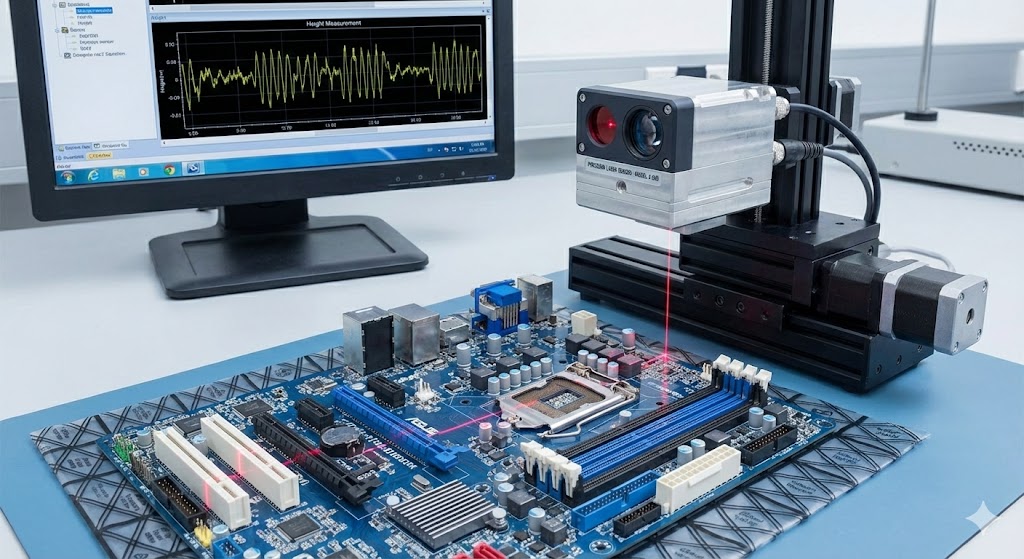
What truly defines the "smart" in this sensor is its embedded intelligence. Equipped with a powerful onboard microprocessor and IoT-ready connectivity modules (including Ethernet/IP, PROFINET, and OPC UA), the LSR-9000 goes beyond simple data acquisition. It features real-time adaptive calibration, which automatically compensates for thermal drift and mechanical vibrations, ensuring long-term stability without manual intervention. The built-in diagnostic functions continuously monitor system health, predicting potential issues before they lead to downtime, thereby enhancing overall equipment effectiveness (OEE).

The user experience is revolutionized through an intuitive web-based interface. Engineers can easily configure complex measurement tasks, set multi-zone detection parameters, and analyze historical trend data directly from any standard browser. The sensor supports programmable logic, allowing for simple decision-making at the edge—such as triggering an actuator or sorting a part—without relying on a central PLC for every command. This distributed intelligence reduces network load and system latency.
Durability is paramount in industrial settings. The LSR-9000 Series boasts an IP67-rated stainless-steel housing, making it resistant to dust, water jets, and common chemical splashes. Its operating temperature range of -30°C to 70°C ensures reliable performance in both refrigerated warehouses and foundry environments. The laser source is classified as Class 2M, ensuring eye safety while providing a highly visible beam for easy alignment during installation.
Application versatility is another key strength. In automotive manufacturing, the sensor provides sub-micron accuracy for gap and flush measurement between body panels. In electronics, it ensures precise component placement on PCBs. In logistics, it enables high-speed dimensioning and volume calculation of packages. Furthermore, its ability to output rich point-cloud data makes it a cost-effective solution for preliminary 3D profiling tasks.

Integration into existing digital ecosystems is seamless. The sensor generates structured data that can be fed directly into Manufacturing Execution Systems (MES) or Enterprise Resource Planning (ERP) software, providing valuable insights for quality control and predictive maintenance analytics. This facilitates the transition towards Industry 4.0 and smart factory initiatives.
In conclusion, the LSR-9000 Series Smart Laser Sensor represents a significant technological stride. It is not merely a measurement tool but a comprehensive data node designed to enhance precision, intelligence, and connectivity on the factory floor. By reducing complexity, improving reliability, and delivering actionable insights, it empowers engineers to build more efficient, agile, and competitive automated systems. We invite industry professionals to experience this new standard in sensing technology and explore its potential to transform their operational capabilities.