In the realm of industrial automation and precision measurement, multi-channel laser distance sensors have emerged as a pivotal technology, driving advancements in accuracy, speed, and operational flexibility. These sophisticated devices utilize laser triangulation or time-of-flight principles to measure distances with micron-level precision, and by integrating multiple measurement channels into a single unit, they offer unparalleled capabilities for complex applications.
The core advantage of multi-channel laser distance sensors lies in their ability to perform simultaneous measurements at several points. Traditional single-channel sensors are limited to one measurement axis, which can be insufficient for tasks requiring dimensional analysis, profile monitoring, or alignment checks across multiple planes. In contrast, multi-channel systems can be configured with two, four, or even more independent laser emitters and detectors, allowing for concurrent data acquisition. This parallelism significantly reduces cycle times in production lines, as a single sensor can replace multiple single-channel units, simplifying system architecture and lowering installation costs. For instance, in automotive assembly, a multi-channel sensor can simultaneously gauge the gap dimensions between a car door and its frame at several critical points, ensuring consistent quality without sequential scanning delays.
Technologically, these sensors rely on advanced optics and high-speed signal processing. Each channel typically consists of a laser diode that projects a focused beam onto the target surface. The reflected light is captured by a position-sensitive detector (PSD) or a CMOS/CCD array, and the displacement is calculated based on the angle or time delay of the return signal. Multi-channel designs incorporate dedicated processing circuits for each channel to prevent crosstalk and maintain individual accuracy. Modern versions often feature integrated microprocessors that handle real-time data fusion, enabling outputs such as differential measurements, thickness calculations, or even 3D contour mapping when combined with scanning mechanisms.
Key applications span diverse industries. In manufacturing, they are indispensable for robotics guidance, where multiple channels help robots adjust grip positions on irregularly shaped objects. In electronics, they verify component coplanarity on printed circuit boards by measuring heights at several pads simultaneously. The logistics sector employs them for parcel dimensioning and sorting, using multi-point data to calculate volume rapidly. Additionally, in structural health monitoring, these sensors track deformations across bridges or buildings at various locations, providing early warnings of potential failures.
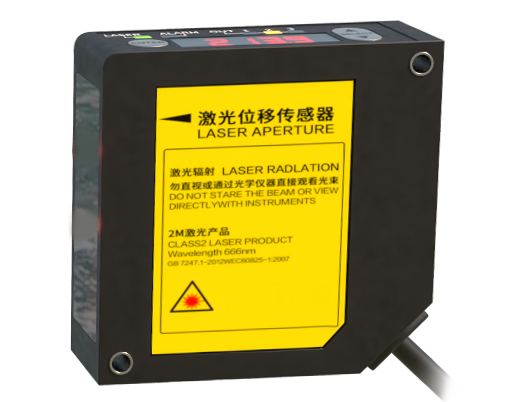
When selecting a multi-channel laser distance sensor, engineers must consider several parameters. Measurement range and resolution are primary; while standard models cover distances from a few millimeters to several meters, high-resolution variants can detect sub-micron changes. The number of channels should match the application's complexity—over-specifying can lead to unnecessary expense, whereas under-specifying may compromise functionality. Environmental robustness is also critical, as industrial settings often involve dust, vibrations, or temperature fluctuations. Many sensors now come with IP67 ratings, ensuring reliable performance in harsh conditions. Communication interfaces like Ethernet/IP, PROFINET, or IO-Link facilitate seamless integration into Industry 4.0 networks, enabling predictive maintenance through continuous data streaming.
Despite their benefits, challenges persist. Calibration of multiple channels demands precision to avoid alignment errors, and thermal drift can affect long-term stability if not compensated. However, ongoing innovations are addressing these issues. Emerging trends include the integration of artificial intelligence for adaptive calibration and anomaly detection, as well as miniaturization allowing more channels in compact form factors. Furthermore, the advent of blue laser technology offers improved performance on reflective or dark surfaces, expanding applicability.
In conclusion, multi-channel laser distance sensors represent a significant leap forward in metrology and automation. By enabling high-speed, multi-point measurements, they enhance quality control, boost productivity, and reduce operational costs. As industries continue to embrace smart manufacturing, the demand for these versatile sensors is poised to grow, underpinning future advancements in precision engineering. Engineers and system integrators are encouraged to evaluate their specific needs and leverage this technology to optimize processes, ensuring competitiveness in an increasingly automated world.