In the realm of precision measurement and industrial automation, the laser dynamic force sensor represents a significant leap forward. This sophisticated device is engineered to measure rapidly changing forces with exceptional accuracy, non-invasively and in real-time. Unlike traditional strain gauge or piezoelectric force sensors that require physical contact, laser dynamic force sensors operate on optical principles, offering distinct advantages in applications where contact is impractical or could interfere with the measurement process.
The core operating principle hinges on the Doppler effect and laser interferometry. A coherent laser beam is directed at the target surface—often a component subjected to dynamic forces. As the surface vibrates or deforms under the influence of these forces, the frequency of the reflected laser light shifts proportionally to the velocity of the surface's motion. This shift, known as the Doppler shift, is precisely measured by an interferometer within the sensor. The interferometer compares the frequency of the reflected beam with a reference beam. The resulting interference pattern is analyzed to calculate the instantaneous velocity of the target point. Since force is fundamentally related to acceleration (the rate of change of velocity), the sensor's sophisticated signal processing electronics then integrate this velocity data over time to derive the dynamic force acting upon the target. This entire process occurs at extremely high sampling rates, enabling the capture of transient events and high-frequency force fluctuations.
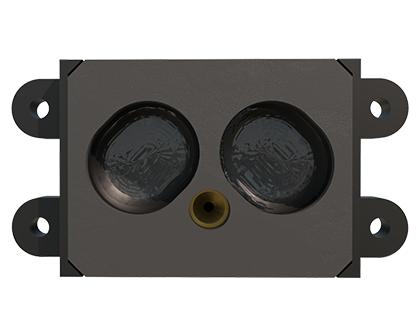
The applications for laser dynamic force sensors are vast and span multiple high-tech industries. In aerospace engineering, they are indispensable for modal analysis and vibration testing of turbine blades, aircraft wings, and satellite components, helping to predict fatigue life and prevent catastrophic failures. Within the automotive sector, these sensors are used to measure dynamic forces in powertrain components, brake systems, and during crash testing, providing critical data for safety and performance optimization. The field of precision manufacturing leverages them to monitor cutting forces in ultra-precision machining (e.g., diamond turning), where even micron-level force variations can affect surface finish and tool wear. Furthermore, in biomedical research, they facilitate the study of biomechanical forces, such as the dynamic forces exerted by heart valve leaflets or during orthopedic implant testing. Their non-contact nature makes them ideal for measuring forces on delicate, rotating, or very hot surfaces where physical sensor attachment is impossible.
Several key advantages define the value proposition of laser dynamic force sensors. First and foremost is their non-contact nature, which eliminates mass-loading effects—a common source of error in contact sensors where the sensor's own mass can dampen the vibration being measured. This leads to more accurate measurements of the true system dynamics. Second, they offer an exceptionally high frequency response, often into the megahertz range, allowing them to capture shock waves and very rapid force transients. Third, they provide high spatial resolution, capable of measuring force at a specific, tiny point on a surface. Finally, they are largely immune to electromagnetic interference (EMI), making them robust for use in electrically noisy industrial environments.

However, the technology is not without its challenges and considerations. The surface of the target must be suitably reflective to return a measurable laser signal; non-reflective or transparent surfaces may require the application of a reflective coating or tape. The alignment of the laser beam is critical, and environmental factors like air turbulence or significant ambient vibration can introduce noise into the measurement. Additionally, the interpretation of data requires expertise, as the measurement is of velocity, which is then processed to yield force, necessitating a clear understanding of the system's boundary conditions.
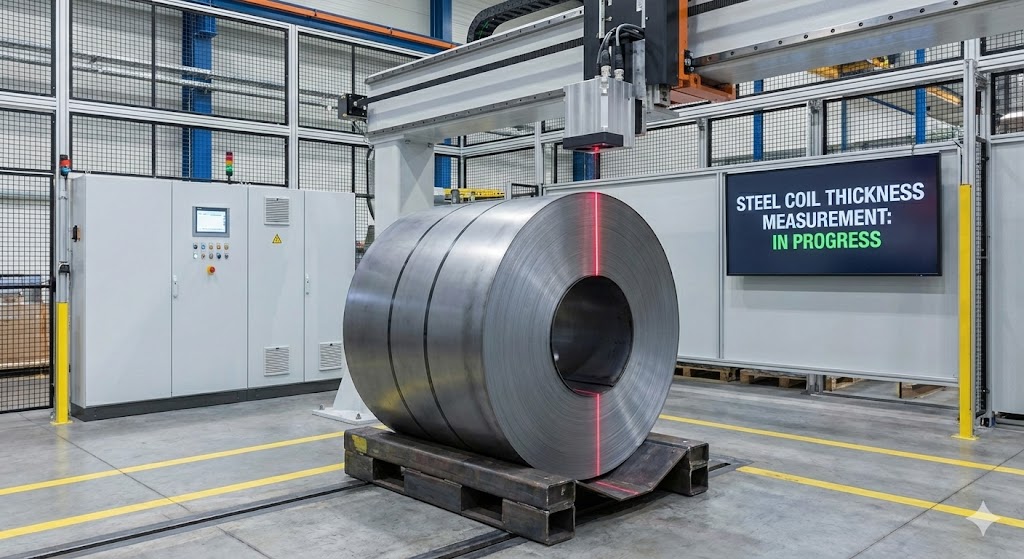
Recent advancements continue to push the boundaries of this technology. The integration of multi-beam systems allows for the simultaneous measurement of force at multiple points, enabling full-field dynamic force mapping. Improvements in laser diode stability and digital signal processing algorithms have enhanced measurement resolution and reduced noise floors. The miniaturization of optical components is also leading to more compact and rugged sensor heads, facilitating integration into automated production lines and portable testing setups.
In conclusion, the laser dynamic force sensor is a powerful and versatile metrology tool that has become essential for advanced engineering and research. By providing precise, non-contact measurements of dynamic forces, it unlocks deeper insights into the behavior of materials and systems under real-world operating conditions. As optical and electronic technologies evolve, these sensors will undoubtedly become even more accessible, accurate, and integral to innovation across sectors demanding the highest standards of measurement fidelity, from manufacturing the next generation of microchips to ensuring the safety of future transportation systems.