Laser sensors have become indispensable components in modern industrial automation, offering unparalleled precision in measurement, detection, and positioning tasks. As an electrical engineer specializing in control systems, I frequently design and implement experimental programs to validate sensor performance, integrate them into larger systems, and troubleshoot application-specific challenges. This article outlines a structured approach to programming laser sensor experiments, focusing on common sensor types like triangulation, time-of-flight (ToF), and confocal displacement models.
The foundation of any successful experiment is a clear definition of objectives. Are you measuring minute surface displacements, detecting the presence of transparent objects, or profiling a complex contour? The goal dictates the sensor selection, hardware interfacing, and software logic. For instance, a high-speed bottling line requires a diffuse reflective sensor with a sub-millisecond response, programmed for binary detection, while a quality inspection station might use a analog-output triangulation sensor for precise height measurement, necessitating program logic for analog value scaling and tolerance window checking.
Hardware setup precedes any coding. This involves mounting the sensor securely, aligning it correctly with the target, and connecting it to a controller—often a Programmable Logic Controller (PLC), industrial PC, or a microcontroller like an Arduino or Raspberry Pi for prototyping. Power supply specifications (e.g., 10-30 VDC) and output type (NPN/PNP, push-pull, analog voltage/current) must be meticulously observed. For communication via IO-Link, Ethernet/IP, or PROFINET, appropriate masters and network configuration are essential.
The core of the experiment lies in the program logic. Let's consider a basic experiment with a laser distance sensor providing a 4-20 mA analog output, connected to a PLC. The program must first scale the raw analog input value (e.g., 0-27648 in a Siemens PLC) to the sensor's actual measurement range (e.g., 50-150 mm). This is achieved through linear interpolation functions. Subsequently, comparison instructions are used to trigger outputs or set flags if the value falls outside predefined limits. For high-speed applications, using interrupt routines or high-speed counter inputs is crucial to capture transient events without missing a pulse.
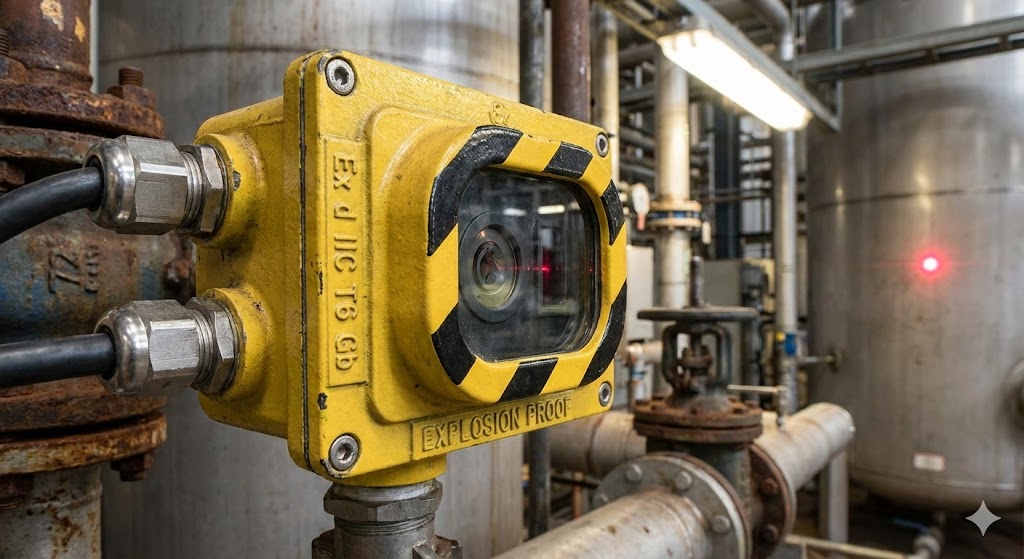
More advanced experiments involve programming for dynamic compensation. Factors like ambient light, temperature, and target surface color or material (e.g., shiny metal vs. matte plastic) can affect readings. A robust experimental program might include calibration routines that take reference measurements on known standards under different conditions. The program can then apply compensation algorithms. For example, a simple temperature compensation can be programmed by reading a temperature sensor input and adjusting the distance reading via a pre-characterized coefficient.
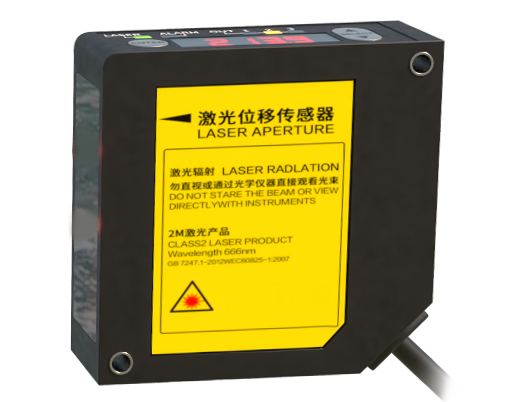
Data logging and analysis are critical experimental phases. Programming the controller to timestamp and record measurement values, error states, and input/output transitions provides invaluable data. This can be done internally to the controller's memory, or by sending data to a Supervisory Control and Data Acquisition (SCADA) system or a PC via OPC UA or MQTT. The analysis of this logged data, such as statistical process control (SPC) calculations, often reveals trends, repeatability errors, or external interference that real-time monitoring might miss.
Safety programming is non-negotiable. Experiments must include software interlocks. For example, a program controlling a moving stage with a laser profiler should include hard-coded software travel limits that override any erroneous movement commands. Emergency stop (E-stop) circuits must be integrated so that their activation is immediately read by the program, halting all motion and, if necessary, disabling the laser output for Class 2 or higher lasers.
Finally, documentation and commenting within the code are as vital as the functional logic itself. Clearly commented sections for initialization, main scan routines, alarm handling, and data handling ensure the experiment is reproducible and maintainable. Testing should proceed in stages: first with static targets, then with controlled dynamic movement, and finally in a simulated or real production environment.
By following this methodological approach—from objective definition to safety-integrated programming and data analysis—engineers can develop robust experimental programs that fully leverage the capabilities of laser sensors, leading to reliable and optimized integration into automated systems. The iterative process of testing, logging, and refining the program is where true engineering insight is gained, turning a simple sensor into an intelligent component of a sophisticated automation solution.