Vision proximity sensors represent a sophisticated fusion of optical sensing and intelligent processing, enabling machines to perceive and interact with their surroundings without physical contact. These advanced devices operate by emitting a light signal, typically from an LED or laser diode, and then analyzing the reflected light using a photodetector or a miniature camera system. The core principle involves measuring changes in the light pattern, intensity, or time-of-flight to calculate the precise distance, presence, or position of an object. Unlike simple infrared sensors, modern vision proximity systems often incorporate machine vision algorithms, allowing them to interpret shapes, detect edges, and even recognize specific patterns or objects within their field of view. This grants them a significant advantage in applications requiring nuanced spatial awareness.
The technology behind these sensors can be broadly categorized. Time-of-Flight (ToF) sensors measure the time taken for a light pulse to travel to an object and back, providing highly accurate distance data. Structured light sensors project a known pattern onto a scene and analyze the deformation of that pattern to construct a 3D map. Stereo vision systems use two or more cameras to triangulate depth, similar to human binocular vision. Each method offers distinct trade-offs in terms of accuracy, range, processing power, and cost, making them suitable for different industrial and commercial scenarios.
In practical application, vision proximity sensors are revolutionizing automation. On manufacturing assembly lines, they guide robotic arms for precise picking and placing of components, verify part alignment, and conduct quality inspections by comparing captured images to a reference model. They are indispensable in collaborative robotics, where they ensure human safety by creating dynamic safety zones that halt robot motion when a worker enters a predefined area. In the logistics sector, these sensors enable automated guided vehicles to navigate warehouses, avoid obstacles, and accurately position themselves for loading and unloading.
Beyond heavy industry, the technology is increasingly prevalent in consumer electronics. Smartphones utilize miniature vision proximity sensors to disable the touchscreen during a call when the device is held near the ear, preventing accidental inputs. They also play a role in gesture control for devices like smart TVs and gaming consoles. In the automotive industry, they form the sensory foundation for advanced driver-assistance systems, powering features like automatic emergency braking, blind-spot monitoring, and parking assistance by continuously monitoring the vehicle's proximity to other objects.
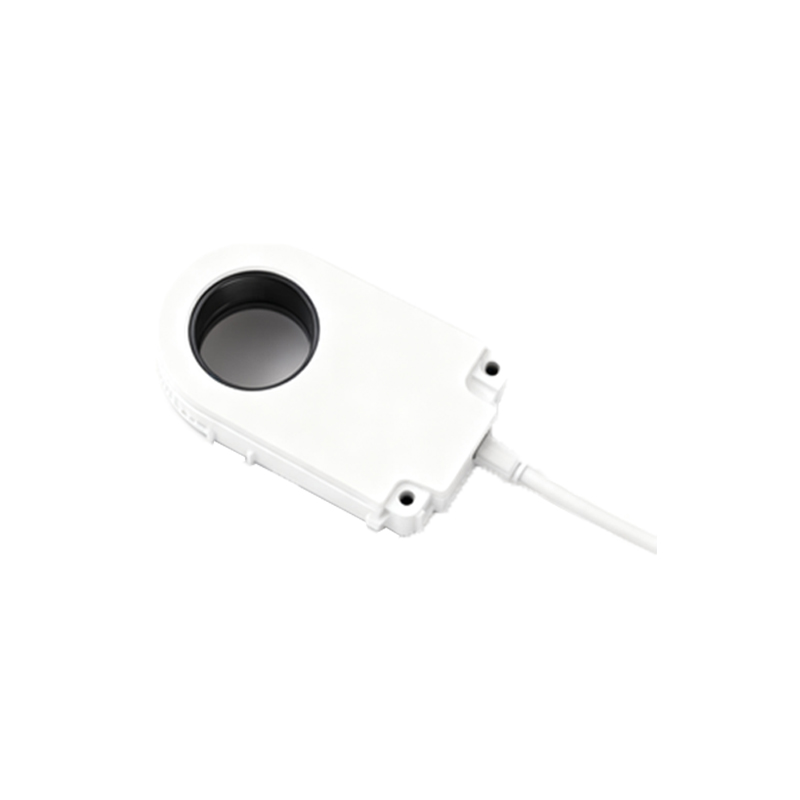
The integration of artificial intelligence and edge computing is pushing the boundaries further. Modern sensors can now perform initial data processing locally, filtering noise and extracting relevant features before sending information to a central controller. This reduces latency and bandwidth requirements, enabling faster and more reliable system responses. For instance, a sensor on a packaging machine can instantly identify a mislabeled product and trigger a reject mechanism without waiting for central server communication.
Selecting the appropriate vision proximity sensor requires careful consideration of several parameters. The required sensing range, environmental conditions such as ambient light or dust, the necessary resolution and field of view, and the desired output format are all critical factors. Engineers must balance performance needs with system cost and complexity. Regular maintenance, including lens cleaning and software updates, is also essential to ensure long-term accuracy and reliability, especially in challenging industrial environments.
Looking ahead, the evolution of vision proximity sensing is geared towards higher resolution, faster processing speeds, and lower power consumption. The convergence with other sensing modalities like LiDAR and radar will create more robust perception systems for autonomous vehicles and smart infrastructure. As machine learning algorithms become more efficient, these sensors will move beyond mere detection to true contextual understanding, opening new frontiers in human-machine interaction, augmented reality, and intelligent automation across every sector of the global economy.