In the realm of industrial safety and environmental monitoring, laser dust sensors have emerged as a pivotal technology for detecting and quantifying particulate matter in various settings. These sensors operate on sophisticated optical principles, leveraging laser light to measure dust concentration with high precision and reliability. This article delves into the core mechanisms, advantages, and applications of laser dust sensors, tailored for professionals in the electrical and engineering sectors.
At the heart of a laser dust sensor lies the principle of light scattering. When a laser beam is emitted into a sampling chamber, it interacts with dust particles suspended in the air. As light hits these particles, it scatters in multiple directions due to phenomena such as Mie scattering (for particles comparable to the laser wavelength) or Rayleigh scattering (for smaller particles). The sensor incorporates a photodetector positioned at a specific angle—commonly 90 degrees—to capture the scattered light. The intensity of this scattered light is directly proportional to the concentration of dust particles: higher dust levels result in stronger scattering signals. By analyzing this signal, the sensor calculates real-time particulate matter (PM) concentrations, often categorized into PM1.0, PM2.5, and PM10 based on particle size.
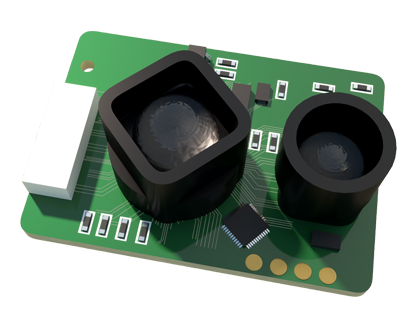
Key components of a laser dust sensor include a laser diode, optical lens, photodetector, and signal processing circuitry. The laser diode generates a stable, coherent light source, typically in the infrared or visible spectrum, ensuring consistent illumination. The optical lens focuses the laser beam and directs scattered light toward the photodetector, which converts light intensity into electrical signals. Advanced signal processing algorithms then filter noise, compensate for environmental variables like humidity, and output data in standard units such as micrograms per cubic meter (µg/m³). This design enables high sensitivity, with some sensors capable of detecting particles as small as 0.1 micrometers.
One of the standout advantages of laser dust sensors is their accuracy and rapid response time. Unlike traditional gravimetric methods that require manual sampling and laboratory analysis, laser sensors provide instantaneous readings, making them ideal for continuous monitoring in dynamic industrial environments. They are also less prone to interference from gases or non-particulate contaminants, thanks to wavelength-specific detection. Additionally, these sensors are compact, energy-efficient, and durable, suitable for integration into HVAC systems, cleanrooms, manufacturing plants, and outdoor air quality stations.
In industrial applications, laser dust sensors play a critical role in ensuring workplace safety and regulatory compliance. For instance, in mining or construction sites, they monitor airborne dust to prevent respiratory hazards and explosions. In electronics manufacturing, they maintain cleanroom standards by detecting microscopic contaminants that could damage sensitive components. Moreover, these sensors support environmental initiatives by tracking emissions from factories or urban areas, aiding in pollution control efforts. As technology advances, features like IoT connectivity and AI-driven analytics are enhancing their capabilities, enabling predictive maintenance and data-driven decision-making.

Despite their efficacy, laser dust sensors face challenges such as calibration drift over time or sensitivity to extreme conditions. Regular maintenance, including lens cleaning and recalibration, is essential to sustain accuracy. Future trends point toward miniaturization, lower costs, and enhanced multi-parameter detection (e.g., combining dust sensing with gas analysis). For engineers and industry stakeholders, understanding these principles is crucial for selecting and deploying sensors that meet specific operational needs.
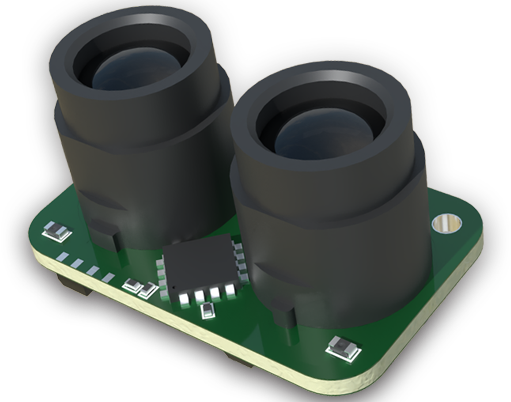
In summary, laser dust sensors represent a fusion of optical engineering and electronics, offering robust solutions for particulate monitoring. Their reliance on laser scattering ensures precise, real-time data that safeguards health, optimizes processes, and supports sustainable practices. As industries evolve toward greater automation and environmental stewardship, these sensors will continue to be indispensable tools in the electrical and safety landscapes.