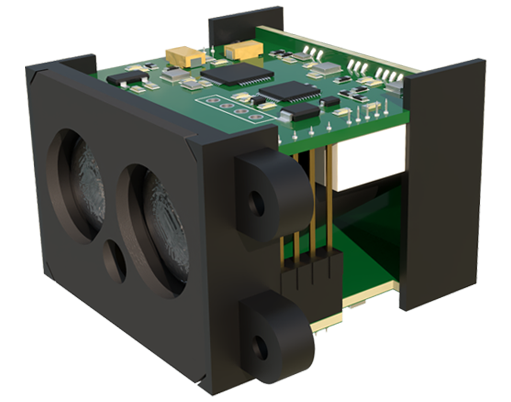
In the rapidly evolving landscape of industrial automation, precision measurement is a cornerstone of efficiency, quality control, and safety. Among the plethora of sensing technologies available, scanning laser distance sensors have emerged as a powerful and versatile solution for a wide range of applications. Unlike single-point laser sensors that measure distance to one specific spot, scanning sensors utilize a moving laser beam to capture distance profiles across a line or even a two-dimensional area, generating rich, high-resolution data about an object's shape, position, and dimensions.
The fundamental operating principle of a scanning laser distance sensor is based on the time-of-flight (ToF) or phase-shift measurement method, combined with precise angular deflection. A laser diode emits a focused beam of light. This beam is directed onto a rapidly oscillating or rotating mirror, which sweeps the laser point across the target scene at a defined angular range and frequency. The laser light reflects off the target object and returns to a photodetector within the sensor. By precisely measuring the time delay between emission and reception (for ToF) or the phase shift of the modulated signal (for phase-shift), the sensor calculates the distance to the point where the beam struck the object. Coupling this distance data with the known angular position of the mirror at that exact moment allows the sensor to build a precise profile—a set of 2D or 3D coordinate points known as a point cloud.
Key performance parameters define the capability of a scanning laser sensor. The scanning frequency, measured in Hertz (Hz), determines how many profiles are captured per second. High-frequency scanners (often 50 Hz to over 1000 Hz) are essential for monitoring fast-moving objects on production lines. The angular resolution, measured in degrees or milliradians, defines the smallest angular step between individual measurement points, impacting the detail level of the captured profile. The measurement range specifies the minimum and maximum distances over which the sensor can operate reliably, which can vary from a few centimeters to several hundred meters depending on the model. Finally, accuracy and repeatability are critical, indicating how close measurements are to the true value and how consistent repeated measurements are, respectively.
The applications for scanning laser distance sensors are vast and span numerous industries. In logistics and warehousing, they are integral to automated guided vehicles (AGVs) and autonomous mobile robots (AMRs) for navigation, obstacle detection, and pallet profiling. They enable these systems to create real-time maps of their environment. In manufacturing and robotics, these sensors are used for precise bin-picking guidance, allowing robotic arms to identify and grasp randomly oriented parts. They also perform inline dimensional inspection of products, verifying width, height, or presence of features without contact. In the building and construction sector, they facilitate volume measurement of bulk materials (like gravel or soil piles) and site surveying. Furthermore, in process industries, they monitor the fill level of large silos or the profile of raw material on conveyor belts.
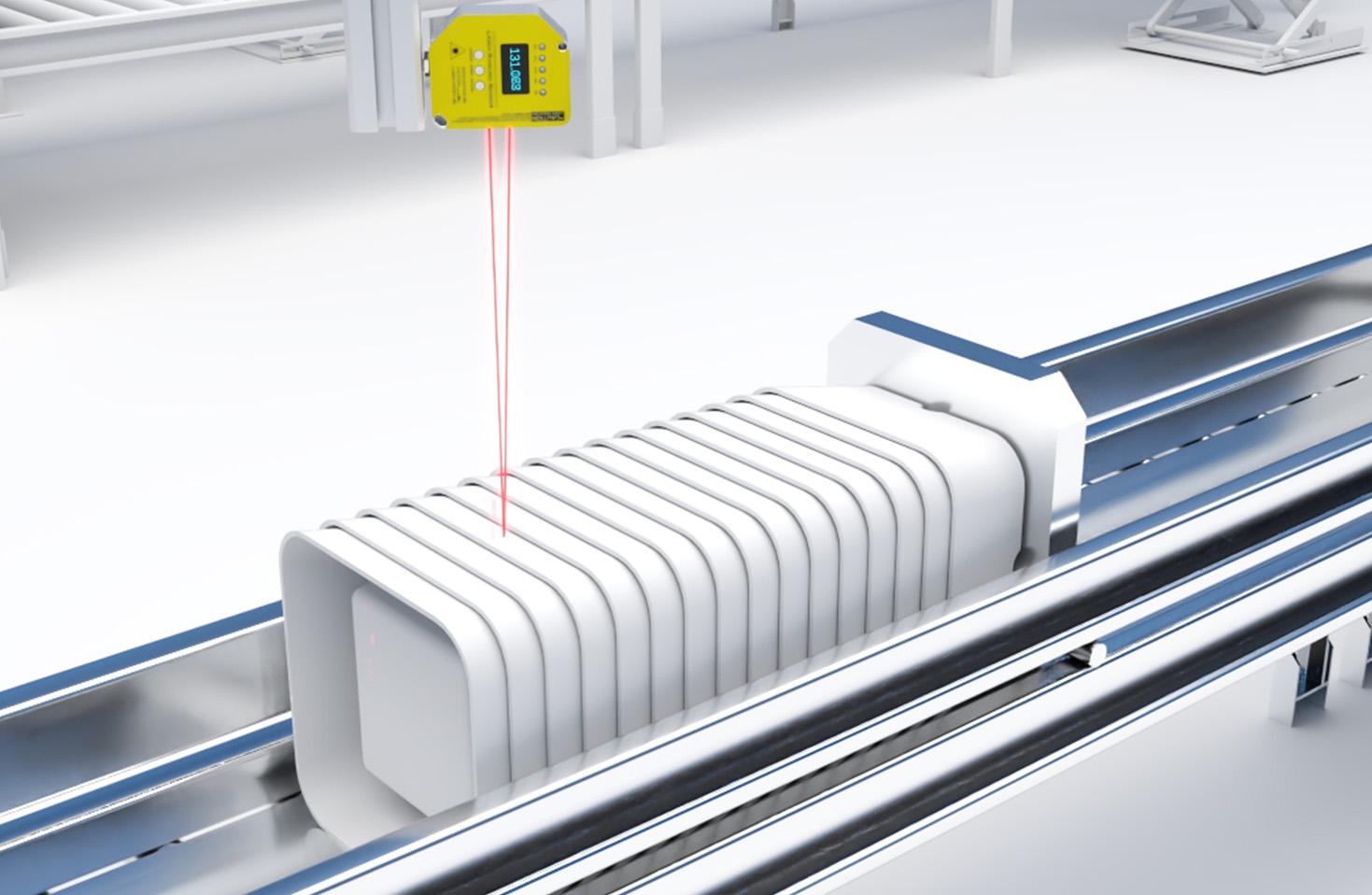
Selecting the right scanning laser sensor requires careful consideration of the application's specific demands. For outdoor use or in environments with high ambient light, a sensor with a high laser class (eye-safe) and robust housing with an adequate Ingress Protection (IP) rating is mandatory. The required scanning range and field of view will narrow down suitable models. For high-speed applications, such as monitoring on a bottling line, a high scanning frequency is paramount to avoid motion blur in the data. The communication interface is another crucial factor; modern sensors offer Ethernet/IP, PROFINET, EtherCAT, or simple analog outputs for seamless integration into industrial control systems. The software provided with the sensor for configuration, data visualization, and profile analysis also significantly impacts ease of implementation.

While offering exceptional capabilities, scanning laser sensors are not without challenges. Highly reflective, transparent, or absorbent (dark) surfaces can sometimes cause measurement errors or dropouts, though advanced models employ filtering algorithms to mitigate these issues. Environmental factors like dust, fog, or heavy vibration can also affect performance, necessitating proper installation and potentially protective enclosures. The initial investment is typically higher than for simpler photoelectric sensors, but the return on investment is justified by the unparalleled data richness, which enables complex automation tasks impossible with other sensor types.
Looking ahead, the integration of scanning laser sensors with artificial intelligence and machine vision software is a key trend. This fusion allows systems not only to capture precise geometric data but also to interpret it intelligently—for instance, classifying objects, detecting defects beyond simple dimensions, or making predictive decisions. As Industry 4.0 and smart factory concepts mature, the role of scanning laser distance sensors as critical data acquisition nodes will only become more pronounced, driving further advancements in autonomy, flexibility, and precision across the industrial world.