In the realm of industrial automation and control systems, proximity sensors are indispensable components for non-contact detection of objects. Among the various configurations, the normally closed (NC) proximity sensor represents a critical design choice, particularly for safety and fail-safe applications. This article delves into the operational principles, typical applications, and key selection criteria for independent normally closed proximity sensors.
A normally closed proximity sensor, in its fundamental state without a target present, maintains a closed electrical circuit. This means current can flow through its output switching element. When a target object enters the sensor's effective sensing range, it triggers the sensor to open the circuit, interrupting the current flow. This behavior is the inverse of the more common normally open (NO) configuration. The term "independent" often specifies that the sensor provides a dedicated NC output, as opposed to a sensor that might offer both NO and NC outputs via separate wires or a configurable output.
The operating principle depends on the underlying technology. Inductive NC sensors, used for detecting metals, generate an electromagnetic field. A metallic target entering this field induces eddy currents, causing a change in the oscillator's amplitude. This change is detected by the threshold circuit, which commands the output switch (e.g., a solid-state transistor) to change state—from closed to open. Capacitive NC sensors operate similarly but respond to a wider variety of materials by detecting changes in capacitance. Ultrasonic and photoelectric sensors can also be configured in an NC mode, where the interruption of a sound wave or light beam causes the output to switch from closed to open.
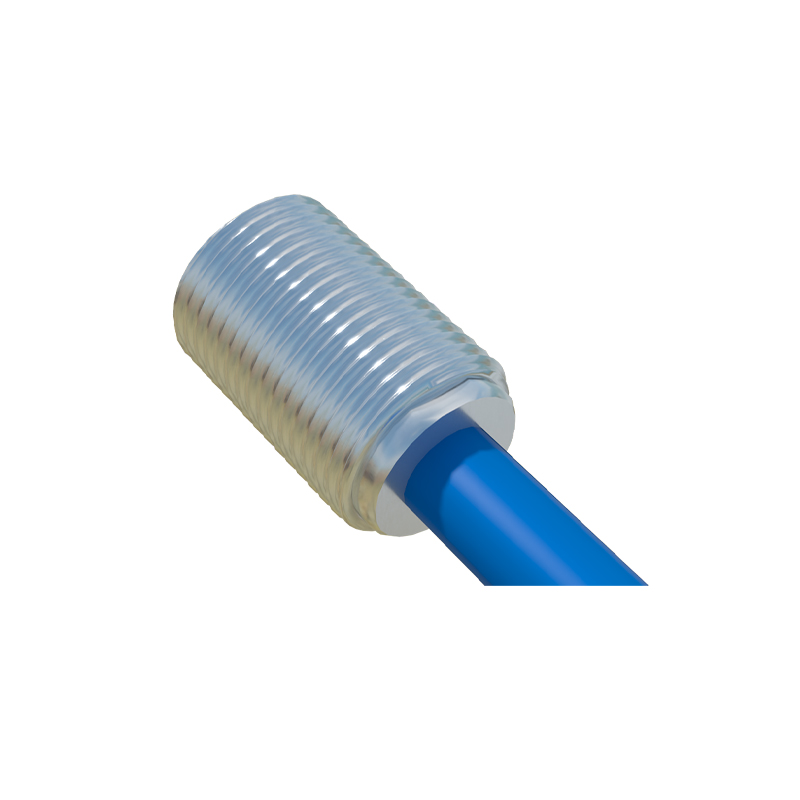
The primary advantage of a normally closed configuration lies in its inherent fail-safe characteristic. Consider a critical safety interlock on a machine guard door. An NC sensor is positioned so the door, when closed, keeps the sensor activated (circuit open). If the door opens, the target moves away, and the sensor reverts to its normal closed state, completing a circuit that can immediately trigger an emergency stop. This design ensures that a wire break, power loss, or sensor failure that results in loss of signal typically mimics the "door open" state, causing the machine to halt safely. In contrast, a normally open sensor in the same application might fail dangerously, as a broken wire could be misinterpreted as the door being securely closed.
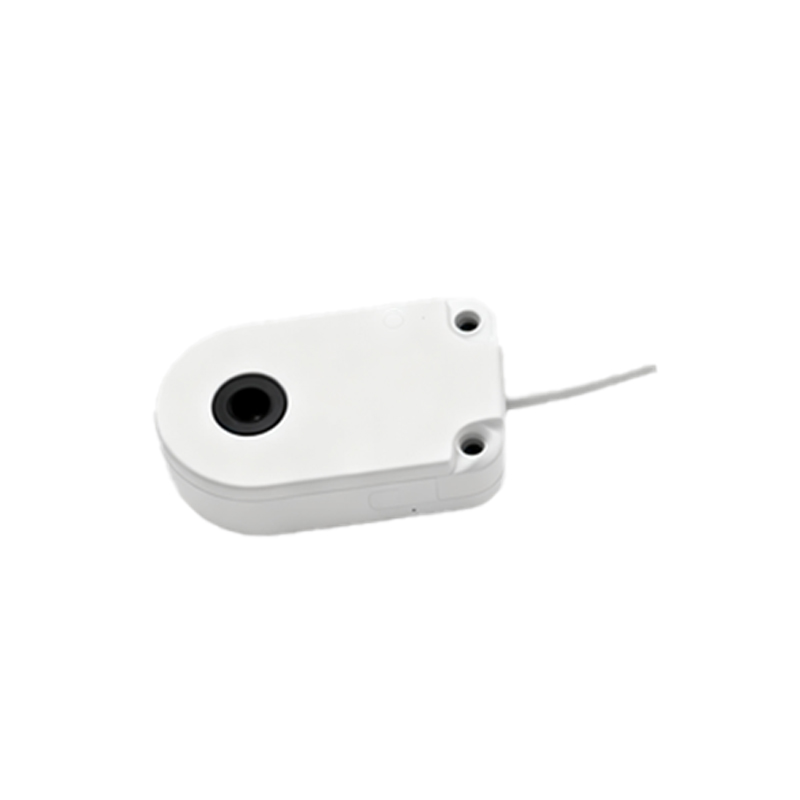
Typical applications for normally closed proximity sensors extend beyond safety interlocks. They are employed in presence verification where an object's absence must trigger an alarm or action, such as in monitoring for part jams on a conveyor or verifying the presence of a tool in a spindle. In material handling, an NC sensor might monitor the level of bulk material in a silo; when the material falls below the sensor, the circuit closes to initiate a refill sequence. The choice between NO and NC is often dictated by the logic of the control system and the desired default state under fault conditions.
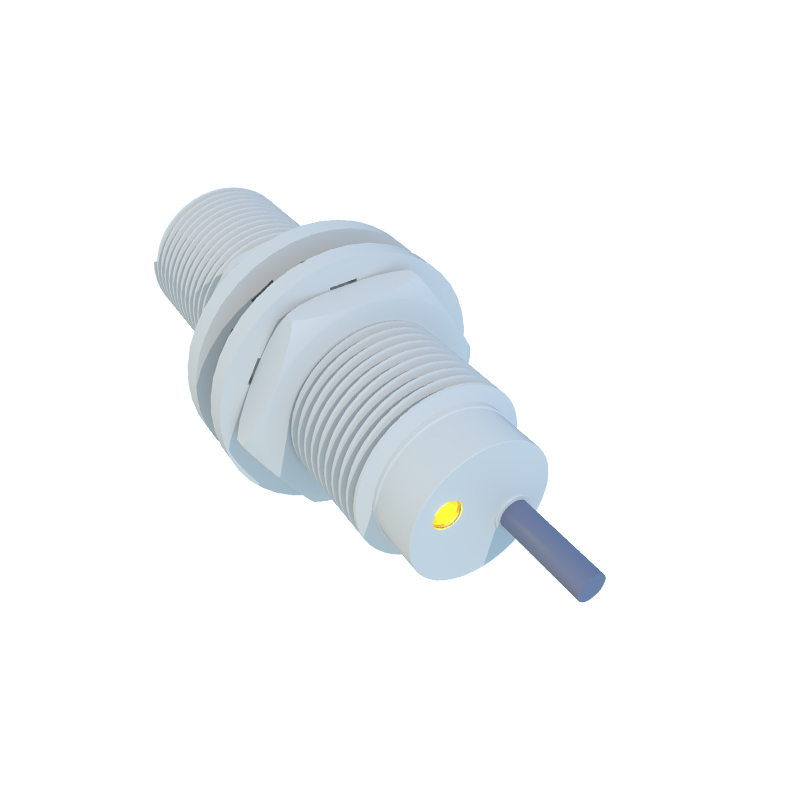
Selecting the right independent normally closed sensor requires careful consideration of several parameters. First, identify the sensing technology needed: inductive for metals, capacitive for non-metals or level detection, photoelectric for long-range or precise positioning. The sensing range must be specified with a sufficient margin, typically 70-80% of the rated nominal range to account for temperature variations and target material differences. Output type is crucial; while the logic is NC, the physical output could be a PNP (sourcing) or NPN (sinking) transistor, or even a relay contact. The choice must match the input module of the programmable logic controller (PLC). Environmental factors like temperature rating, ingress protection (IP67/IP69K for washdown areas), and resistance to chemicals or vibration are vital for reliability. Finally, consider the electrical specifications: operating voltage (commonly 10-30V DC or 90-250V AC), current rating, and whether a short-circuit and reverse polarity protection is built-in.
Installation and wiring demand attention. Ensure the sensor is mounted securely without misalignment that could affect sensing reliability. For DC sensors, correct polarity must be observed. The load (e.g., a PLC input) should be connected in series with the sensor's output. In noisy electrical environments, using shielded cables and keeping signal wires away from power lines is recommended to prevent false triggering.
In summary, the independent normally closed proximity sensor is a specialized and vital component designed for applications where safety, fail-safe operation, and specific control logic are paramount. Its defining trait—a closed circuit in the non-actuated state—provides a layer of security that is essential in many industrial settings. By understanding its operation, correctly matching it to the application, and adhering to proper installation practices, engineers can leverage this device to build more robust, reliable, and safe automated systems. As with all control components, always consult the manufacturer's datasheet and adhere to relevant local and international safety standards during design and implementation.