Proximity sensors are indispensable components in the automation and control systems of modern industry. Their primary function is to detect the presence or absence of an object within a specified range without any physical contact. This non-contact detection capability is the cornerstone of their immense significance, enabling reliable, high-speed, and wear-free operation in countless applications.
The core functions of proximity sensors can be categorized into several key areas. First and foremost is presence detection. This is the fundamental task—simply confirming whether an object is present at a specific point on a production line, such as verifying a part has been loaded into a fixture, a bottle is on a conveyor, or a robotic gripper has successfully picked up a component. This basic input is critical for sequencing and interlocking machine operations.
Building upon presence detection is position sensing and verification. Proximity sensors provide precise feedback on the position of machine elements. For instance, they are used to detect the end-of-travel of a cylinder piston, confirm the open or closed state of a valve or door, or verify the correct angular position of a rotating cam. This ensures machines operate within their designed parameters and prevents malfunctions.
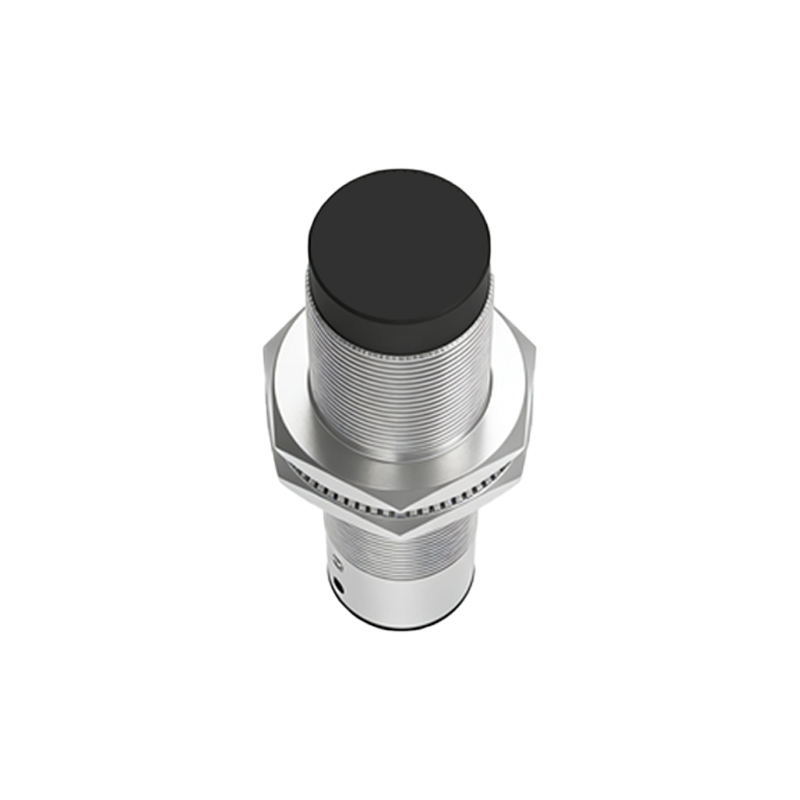
Another vital function is counting and sorting. By detecting objects as they pass a point, inductive or capacitive proximity sensors can accurately count items on a conveyor. Furthermore, sensors can differentiate between metallic and non-metallic objects or detect specific features, enabling automated sorting systems to direct products down the correct pathway.
Proximity sensors also play a crucial role in speed and rotation monitoring. When paired with a gear or a slotted wheel, they can generate pulse signals proportional to rotational speed. This is essential for monitoring motor RPM, conveyor belt speed, or detecting overspeed/underspeed conditions to trigger alarms or corrective actions.
The significance of these functions translates into profound impacts on industrial operations. The foremost advantage is enhanced reliability and longevity. Since there is no mechanical contact, there is no physical wear on the sensor or the target object. This leads to dramatically reduced maintenance, fewer failures, and a longer operational life compared to mechanical limit switches.
High-Speed Operation is another critical benefit. Proximity sensors can detect objects at incredibly high frequencies—often in the kilohertz range. This allows them to keep pace with fast-moving production lines, high-speed packaging machinery, and rapid robotic movements, where mechanical switches would be far too slow or would wear out almost immediately.
They also enable operation in harsh environments. Sealed in robust housings (often IP67 or higher), proximity sensors are immune to dust, dirt, oil, coolant, and other contaminants that would jam or damage mechanical contacts. This makes them ideal for demanding environments like metalworking, food processing, and outdoor applications.
From a system design perspective, their significance lies in enabling sophisticated automation and safety. The reliable, contact-free signal they provide is the fundamental input for Programmable Logic Controllers (PLCs). This data drives complex automated sequences, process control loops, and intricate robotic tasks. Moreover, they are integral to safety systems, providing non-contact interlocks for machine guards, monitoring safe positions, and ensuring personnel are clear of hazardous zones.
Finally, the contribution to improved product quality and process efficiency cannot be overstated. By providing consistent, accurate detection, they ensure processes are repeatable and precise. They help prevent jams, misalignments, and defective products by providing real-time feedback for corrective actions, minimizing waste and downtime.
In conclusion, the function of proximity sensors extends far beyond simple detection. They are the silent, reliable sentinels of automation, providing the essential data that controls, secures, and optimizes modern industrial processes. Their non-contact nature, durability, and speed form the bedrock upon which efficient, reliable, and advanced manufacturing systems are built. Their significance is measured not just in the tasks they perform, but in the overall productivity, quality, and safety they make possible.