In the realm of industrial automation and electrical engineering, proximity sensors are indispensable components, yet their operation and selection often pose questions even for seasoned professionals. This guide aims to demystify these critical devices, providing clarity on their principles, types, and applications.
At its core, a proximity sensor is a non-contact device that detects the presence or absence of an object within its sensing range without physical contact. This fundamental characteristic makes them ideal for harsh environments, high-speed counting, and applications where wear and tear from physical contact must be avoided. The underlying principle varies by technology, primarily revolving around changes in electromagnetic fields, capacitance, or sound waves.
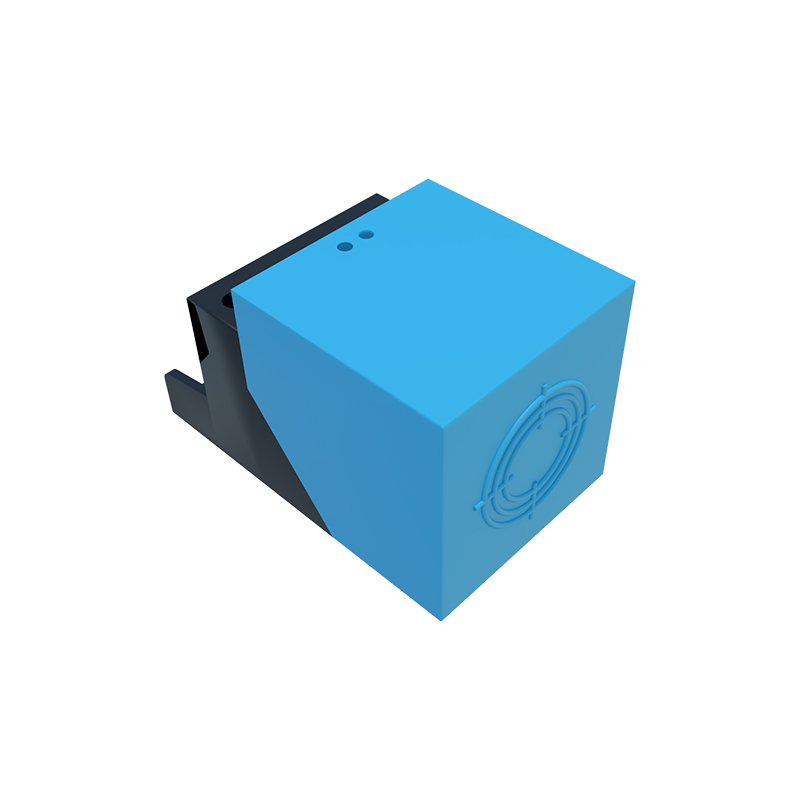
The most prevalent types are inductive, capacitive, and ultrasonic proximity sensors. Inductive sensors are the workhorses of metal detection. They generate an oscillating electromagnetic field. When a metallic object enters this field, it induces eddy currents, which dampen the oscillation. The sensor's circuitry detects this damping and triggers a switching signal. These sensors are robust, reliable, and unaffected by non-metallic materials like dust or oil, making them perfect for detecting machine parts, position verification in assembly lines, and speed monitoring of gears.
Capacitive sensors, on the other hand, can detect both metallic and non-metallic materials—liquids, plastics, wood, and even granular substances. They function by generating an electrostatic field. Any object entering this field alters the sensor's capacitance. Once this change reaches a predetermined threshold, the sensor activates. This versatility finds use in level detection for tanks (liquid or powder), material handling, and detecting non-metallic objects on conveyor belts. A key consideration is their sensitivity to environmental factors like humidity, which may require careful calibration.
Ultrasonic sensors operate on a time-of-flight principle. They emit high-frequency sound waves and measure the time taken for the echo to return after bouncing off a target object. This allows them to measure distance as well as detect presence. They are excellent for detecting objects of varying colors or surface types, transparent materials (like glass), and in applications requiring precise distance measurement, such as in roll diameter monitoring or bin level sensing.
Selecting the right sensor hinges on several critical factors beyond just the target material. The sensing distance, or nominal range, is paramount. Engineers must consider the safe operating distance, ensuring a margin to account for mechanical tolerances and potential target variations. The sensor's output type is another key decision point. Standard options include NPN (sinking) and PNP (sourcing) transistor outputs for DC sensors, and relay or solid-state outputs for AC/DC models. The choice must align with the control system's input card requirements (e.g., PLC input type).
Environmental conditions cannot be overlooked. Factors such as ambient temperature, potential for washdowns (requiring high IP ratings like IP67 or IP69K), exposure to chemicals, and intense electromagnetic interference in the vicinity will dictate the required housing material (e.g., stainless steel, PBT plastic) and shielding. For instance, a sensor in a food processing plant demands different characteristics than one on a welding robot.
Installation and wiring are often sources of practical issues. Ensuring proper shielding of cables, maintaining adequate clearance from metal surfaces (to prevent flanking or shielding effects), and following correct wiring diagrams are essential for reliable operation. A common troubleshooting step involves using the sensor's LED indicator (present on most models) to verify power, output status, and sometimes signal strength.
Furthermore, modern advancements have introduced analog-output proximity sensors, which provide a continuous signal proportional to the distance to the target, enabling more sophisticated control schemes. IO-Link enabled sensors are also gaining traction, offering digital communication for parameter setting, diagnostics, and process data exchange, moving beyond simple binary switching.
In conclusion, a deep understanding of proximity sensor technology—from the physics of detection to the practicalities of installation—is crucial for optimizing system design, ensuring reliability, and minimizing downtime. By carefully evaluating the target material, required sensing distance, environmental challenges, and output interface, electrical engineers can specify the optimal sensor, transforming a simple detection task into a robust and intelligent link within the automated control chain.