In the intricate world of industrial automation and control systems, sensors act as the critical sensory organs, providing essential data for machinery and processes. Among these, proximity sensors stand out for their non-contact detection capabilities. A specific and vital variant within this family is the Normally Closed (NC) proximity sensor. This article delves into the operational principles, key advantages, typical applications, and crucial selection criteria for normally closed proximity sensors, offering a comprehensive guide for engineers and technicians.
Fundamentally, a proximity sensor detects the presence or absence of a target object without physical contact. It does so by emitting an electromagnetic field, light beam, or ultrasonic waves and sensing changes in the return signal or field. The output of these sensors can be configured in two primary electrical states: Normally Open (NO) and Normally Closed (NC). This "normal" state refers to the condition of the sensor's output circuit when no target is within its sensing range.
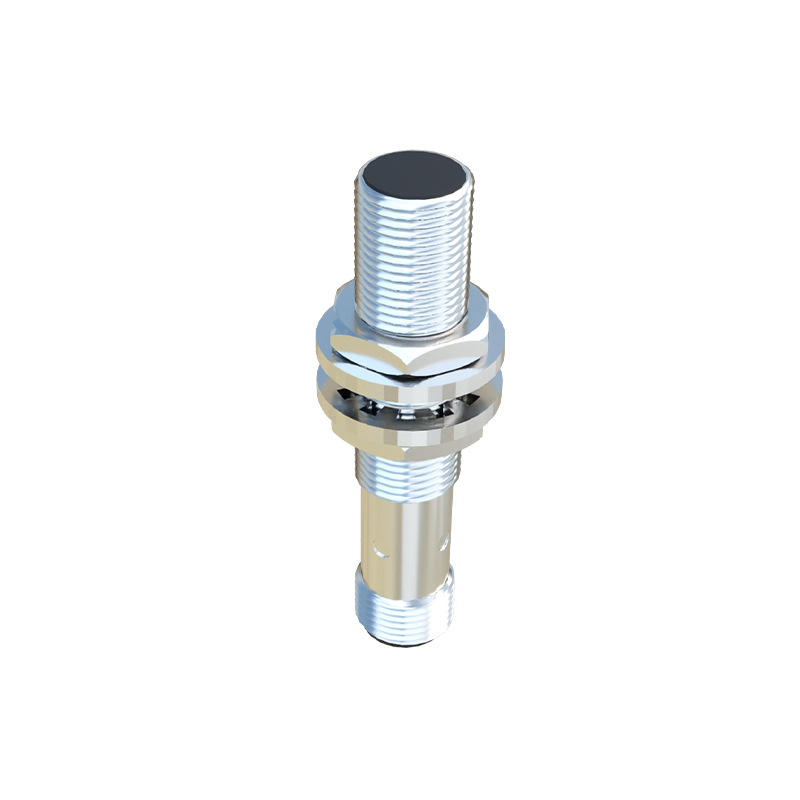
A Normally Closed proximity sensor is characterized by its output being electrically closed (allowing current to flow) in its resting state—when no target is present. When a target enters the sensor's detection field, the output circuit opens, interrupting the current flow. This behavior is the inverse of a Normally Open sensor, which remains open until a target is detected, upon which it closes.
The working principle varies by technology. Inductive NC sensors, used for detecting metals, have an oscillator coil that generates an alternating electromagnetic field. In the absence of a target, the oscillation sustains, and the output circuit remains closed. When a metal target enters the field, eddy currents are induced, damping the oscillation. This change is detected by the circuitry, which then switches the output to an open state. Capacitive NC sensors operate similarly but respond to both conductive and non-conductive materials by detecting changes in capacitance. Photoelectric NC sensors use a light beam; the output is closed when the beam is uninterrupted and opens when an object breaks the beam (in a through-beam configuration) or reflects it back (in a retro-reflective or diffuse mode).
The choice of an NC configuration offers distinct advantages, particularly in safety and fail-safe design. One of the most significant benefits is inherent fail-safe operation. In many critical applications, such as safety guarding or monitoring for machine jams, an unexpected break in the circuit (like a wire cut or sensor failure) is more dangerous than a signal indicating target presence. An NC circuit, in its resting "closed" state, continuously carries a monitoring current. If this current is interrupted due to a sensor fault, cable damage, or power loss, the control system immediately recognizes it as an alarm condition, prompting a safe shutdown. This is often preferred in safety interlock circuits. Furthermore, NC sensors can reduce energy consumption in standby mode for certain systems, as the output is active (closed) when the machine is idle.
Normally closed proximity sensors find extensive use across various industries. In automotive manufacturing, they are employed in robotic welding cells as safety interlocks on access gates; opening a gate breaks the NC circuit, stopping the robot immediately. In packaging machinery, an NC photoelectric sensor can monitor the web of material; a break in the material opens the sensor circuit, signaling the machine to stop, thus preventing jams and waste. They are also common in elevator door safety systems, where an NC sensor confirms the door is fully closed, completing a circuit that allows the elevator to move. In metal stamping presses, NC inductive sensors might be used to verify the correct positioning of a metal blank before the press cycle begins.
Selecting the right NC proximity sensor requires careful consideration of several parameters. First, identify the sensing technology: inductive for metals, capacitive for various materials including liquids and plastics, or photoelectric for long-range or precise detection. The sensing range, or the distance at which the sensor reliably detects the standard target, is critical and should include a safety margin. Environmental factors are paramount; consider the sensor's IP (Ingress Protection) rating for dust and water resistance, its temperature tolerance, and its resistance to chemicals, oils, or weld spatter in harsh industrial settings. The electrical specifications must match the control system: output type (PNP/NPN for DC sensors), voltage rating, and current capacity. Finally, the physical housing—tubular, rectangular, or block style—must suit the mounting constraints and provide mechanical durability.
Installation and wiring demand attention. Ensure the sensor is mounted securely without misalignment. For inductive sensors, maintain adequate clearance from surrounding metal to avoid false triggering. Always refer to the manufacturer's datasheet for wiring diagrams. A common mistake is confusing the NC and NO contacts; verify the sensor's status indicator and use a multimeter to check the switching behavior. Regular maintenance, including cleaning the sensing face and checking for physical damage or loose connections, ensures long-term reliability