In the realm of modern sensing technology, CMOS laser sensors have emerged as a pivotal innovation, driving advancements across numerous industries from consumer electronics to industrial automation. Unlike their predecessors, these sensors combine the efficiency of Complementary Metal-Oxide-Semiconductor (CMOS) technology with the precision of laser-based measurement, creating a powerful tool for capturing high-resolution data with remarkable speed and accuracy.
At its core, a CMOS laser sensor operates by emitting a controlled laser beam towards a target. The light reflected back is captured by a CMOS image sensor, a type of active-pixel sensor built on a CMOS integrated circuit. This setup allows for the precise measurement of distance, displacement, profile, or even the creation of detailed 3D point clouds. The integration of the laser source and the CMOS detector into compact modules is a key advantage, enabling miniaturization without sacrificing performance. This miniaturization is crucial for applications in smartphones for autofocus and facial recognition, in autonomous vehicles for LiDAR systems, and in robotics for object detection and navigation.
The fundamental principle often employed is laser triangulation. A laser diode projects a visible or infrared spot or line onto an object. The reflected light strikes the CMOS sensor at a position that shifts depending on the distance to the object. By calculating this shift with sophisticated on-chip or external processors, the sensor can determine the exact distance with micron-level precision. Another common method is Time-of-Flight (ToF), where the sensor measures the time it takes for a laser pulse to travel to the object and back, calculating distance based on the speed of light. CMOS sensors are exceptionally well-suited for ToF due to their fast readout capabilities and low power consumption.

The benefits of CMOS laser sensors are manifold. First is their high speed. CMOS technology allows for rapid data capture and processing, enabling real-time measurement and inspection even on fast-moving production lines. Second is their excellent resolution and accuracy. Modern CMOS chips boast millions of pixels, allowing them to detect minute changes in the laser's reflection point. Third is robustness and longevity. With no moving mechanical parts (in most configurations), they are less prone to wear and failure compared to contact probes or other mechanical sensors. Fourth, and critically, is their low power consumption, a hallmark of CMOS design. This makes them ideal for battery-powered portable devices. Finally, their scalability and cost-effectiveness, driven by standard semiconductor manufacturing processes, have made high-precision laser sensing accessible for mass-market applications.
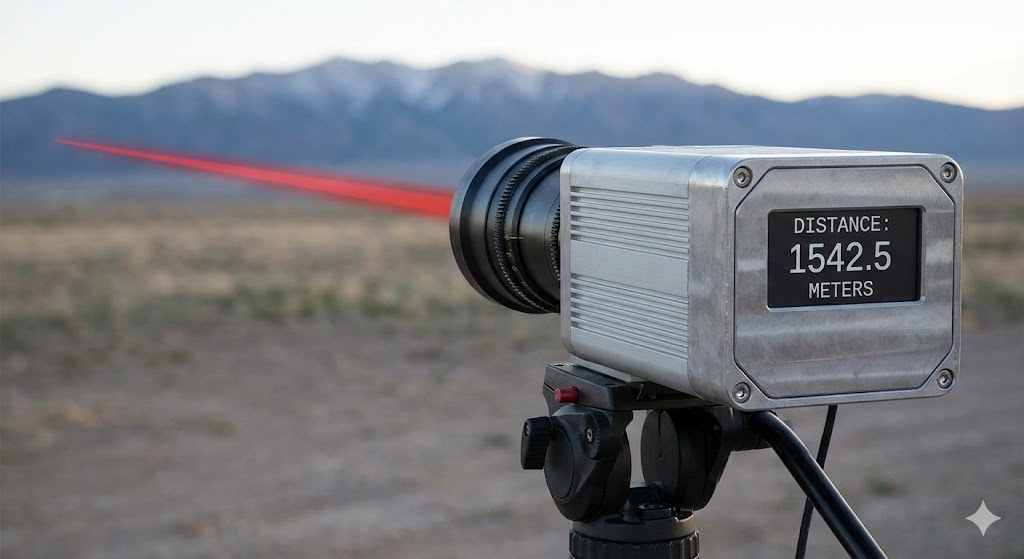
The applications are vast and growing. In industrial manufacturing, CMOS laser sensors perform non-contact inspection of component dimensions, surface defect detection, and precise alignment of parts. In logistics, they enable volume measurement for packages and palletizing. The consumer electronics sector relies on them for proximity sensing in devices, enhanced camera autofocus, and secure biometric authentication. In the automotive industry, they are the eyes of advanced driver-assistance systems (ADAS), powering adaptive cruise control and collision avoidance. Furthermore, in healthcare, they facilitate precise medical imaging and surgical guidance systems.
Looking ahead, the trajectory for CMOS laser sensors points toward even greater integration, higher speeds, and improved performance in challenging conditions. Developments in SPAD (Single-Photon Avalanche Diode) arrays built on CMOS platforms are pushing the limits of sensitivity for ToF applications, even in low-light environments. The fusion of sensor data with artificial intelligence and machine learning algorithms directly on the sensor chip—a concept known as edge AI—is set to create smarter, more autonomous sensing systems that can interpret scenes and make decisions locally.

In conclusion, CMOS laser sensors represent a significant convergence of optical engineering and semiconductor technology. They deliver a unique combination of precision, speed, compactness, and energy efficiency that is unlocking new possibilities across the technological landscape. As research continues to enhance their capabilities and reduce costs, their role as a fundamental enabling technology for the intelligent systems of tomorrow is firmly established.