In the realm of industrial automation and control systems, 12V proximity switch sensors stand as fundamental components, offering non-contact detection of metallic or non-metallic objects. These sensors operate on a 12V DC power supply, a common voltage in many control circuits, making them versatile and widely compatible. This guide delves into the various models, their operating principles, key specifications, and selection criteria to aid engineers and technicians in making informed decisions.
Proximity sensors are primarily categorized by their sensing technology. The most prevalent types for 12V DC operation include Inductive, Capacitive, and Magnetic (Reed or Hall Effect) sensors. Inductive proximity sensors are the workhorses for detecting metallic objects, typically ferrous metals like steel and iron. They generate an electromagnetic field; when a metal target enters this field, it induces eddy currents, causing the sensor to switch. Common 12V inductive models come in shielded (flush-mountable) or unshielded (non-flush) designs, with sensing ranges varying from 1mm to 30mm, depending on the housing size (e.g., M8, M12, M18, M30 cylindrical forms). Popular series include industry-standard models like the NAMUR-compliant versions for hazardous areas or those with PNP normally open (NO) or normally closed (NC) output configurations.
Capacitive proximity sensors, also operating on 12V DC, can detect both metallic and non-metallic materials such as liquids, plastics, wood, and granules. They function by measuring changes in capacitance between the sensor's face and the target. These are ideal for level detection or material handling applications. Key 12V models often feature adjustable sensitivity potentiometers to fine-tune the sensing threshold for specific materials.
Magnetic proximity switches, including reed switches and Hall-effect sensors, detect the presence of a magnetic field. Reed switches are simple, cost-effective devices activated by a permanent magnet. Hall-effect sensors, powered by 12V DC, provide solid-state reliability and can detect the polarity and strength of a magnetic field, making them suitable for speed sensing or position detection in machinery.
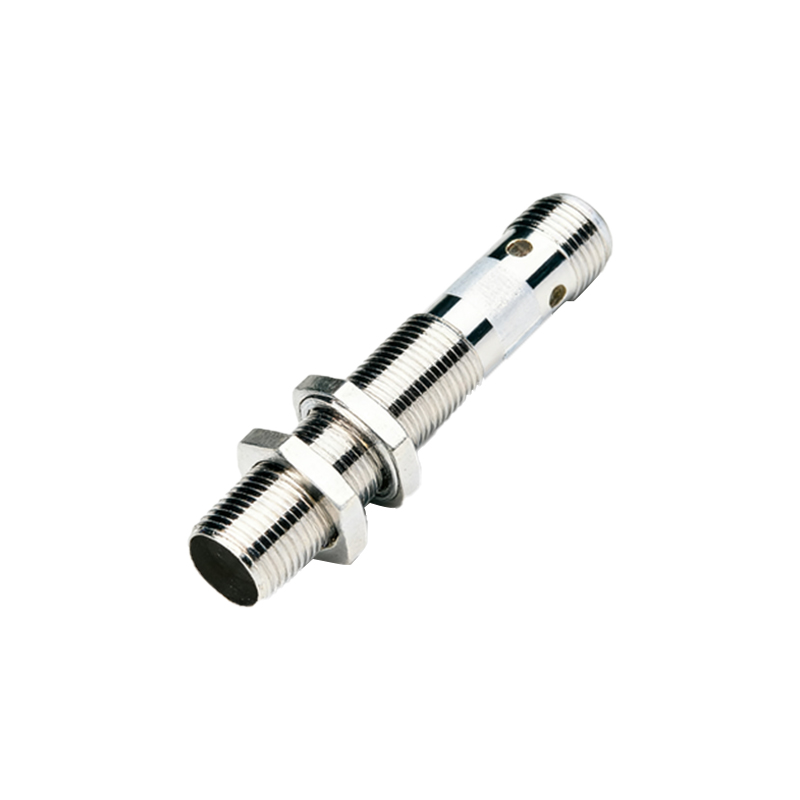
When selecting a 12V proximity sensor model, several critical specifications must be evaluated beyond just the type. The output type is paramount: PNP (sourcing) and NPN (sinking) are the two primary transistor output configurations. PNP models switch the positive voltage to the load, while NPN switches the negative. Compatibility with your PLC or controller input card is essential. The switching frequency (or response time) determines how quickly the sensor can detect objects in high-speed applications. Models are available with frequencies from 10 Hz to over 5 kHz.
Protection rating, denoted by the IP (Ingress Protection) code (e.g., IP67, IP69K), indicates the sensor's resilience against dust and water ingress, crucial for harsh industrial environments. Housing material—typically nickel-plated brass, stainless steel, or PBT plastic—affects durability and chemical resistance. Furthermore, consider the connection method: pre-wired cables, quick-disconnect (M12 or M8 connectors), or terminal boxes.
Leading manufacturers like Sick, Pepperl+Fuchs, Omron, Allen-Bradley, and Turck offer extensive ranges of 12V proximity sensors. For instance, the Pepperl+Fuchs NJ2-12GM-N is a classic 12mm inductive sensor with PNP NO output. The Sick IME12-08BPSZC0S represents a compact M8 inductive sensor. For capacitive sensing, a model like the Turck BC10-M30-VP4X-H1141 is a robust 30mm capacitive sensor. Always consult the manufacturer's datasheet for precise electrical characteristics, temperature ranges, and mounting instructions.
In application, 12V proximity sensors are ubiquitous. They serve as limit switches in automated machinery, detect piston position in pneumatic cylinders, count parts on conveyor belts, and ensure safety in guarding systems. Their reliability, long operational life (due to non-contact operation), and immunity to environmental factors like dirt and moisture make them indispensable.
In conclusion, navigating the landscape of 12V proximity switch sensor models requires a clear understanding of the application requirements: target material, required sensing distance, environmental conditions, electrical interface, and physical size constraints. By meticulously matching these parameters to the sensor's specifications, engineers can ensure robust, reliable, and efficient system performance, minimizing downtime and maintenance costs in industrial automation setups.