In the demanding world of industrial manufacturing, hydraulic presses stand as pillars of power, capable of shaping, forming, and assembling materials with immense force. The reliable and safe operation of these machines is paramount, and this is where a seemingly small but critically important component comes into play: the proximity sensor. Far from being a mere accessory, the proximity sensor is a fundamental element in modern hydraulic press control systems, acting as the machine's "eyes" to monitor position, movement, and sequence without physical contact. Its role is multifaceted, directly impacting operational safety, process precision, and overall system efficiency.
At its core, a proximity sensor in a hydraulic press system detects the presence or absence of a metallic target—typically part of the moving platen, ram, or a tooling component—within its sensing range. It achieves this through electromagnetic fields (inductive sensors) or, less commonly in this heavy-duty metal environment, ultrasonic or capacitive principles. When the target enters the sensor's field, it triggers a solid-state electronic signal. This instantaneous, non-contact detection is the key advantage over traditional mechanical limit switches, which are prone to wear, physical damage, and slower response times due to their need for direct impact.
The primary and most critical function is safety and machine guarding. Proximity sensors are integral to creating safety interlocks and monitoring guard positions. For instance, sensors ensure that the press's safety gates or light curtains are fully closed and secured before the press cycle can initiate. They can also monitor the position of the ram during its entire stroke. If a sensor detects the ram in an unexpected position during setup or maintenance—indicating a potential failure or unsafe condition—it can immediately halt all hydraulic functions, preventing catastrophic accidents like unintended ram descent. This forms a vital layer in a press's overall safety-rated control system.
Beyond safety, these sensors are indispensable for precision positioning and stroke control. Modern hydraulic presses, especially in automated stamping or molding lines, require highly repeatable positioning of the ram or moving platen. Proximity sensors provide exact feedback on the end-of-stroke position, mid-stroke positions for multi-stage operations, or the precise height of the ejection system. This feedback is sent to the Programmable Logic Controller (PLC), which continuously adjusts the hydraulic valves to stop the ram at the exact same point every cycle. This repeatability, often within micron-level tolerances, is crucial for maintaining part quality, consistency, and minimizing material waste. Without accurate positional feedback, achieving such precision would be impossible, leading to out-of-spec parts and increased scrap rates.
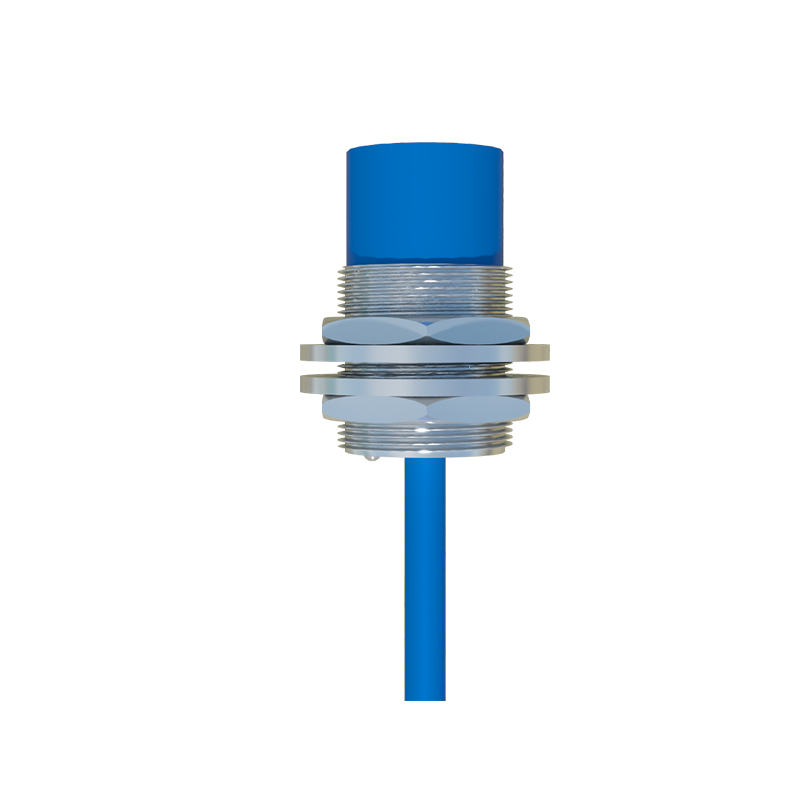
Furthermore, proximity sensors enable sequence and logic control, orchestrating the complex dance of a press cycle. They verify the correct sequence of operations. For example, a sensor confirms that a part has been successfully ejected from the die before allowing the next cycle to begin. Another sensor might confirm that a blank has been correctly fed into the press bed. This prevents the press from cycling on an empty die or attempting to form a misaligned part, which could cause severe damage to expensive tooling. By ensuring each step is completed before the next begins, sensors streamline the workflow, prevent jams, and protect capital investment in tooling.
The benefits translate directly into enhanced efficiency and reduced downtime. The non-contact nature of proximity sensors means they have an exceptionally long service life, unaffected by the constant vibration, shock, and particulate contamination common in press environments. They require no maintenance beyond occasional cleaning. Their fast response time allows for higher cycle speeds. By preventing crashes, mis-hits, and tooling damage, they avoid prolonged, costly unplanned downtime. The diagnostic capability is also valuable; a sensor's failure to trigger provides a clear, immediate fault indication to the operator, speeding up troubleshooting compared to diagnosing a failed mechanical switch or a subtle hydraulic issue.
In conclusion, the proximity sensor is a silent guardian and a precision maestro within the hydraulic press. It is not an optional add-on but a core component of a safe, reliable, and high-performing system. From ensuring the physical safety of operators to guaranteeing the micron-level accuracy required for modern manufacturing, its role is comprehensive. As hydraulic presses evolve with greater automation and connectivity under Industry 4.0 paradigms, the data provided by these robust sensors will only grow in importance, feeding into predictive maintenance algorithms and real-time performance analytics. For any engineer or operator, understanding and properly maintaining these sensors is essential for unlocking the full potential of hydraulic press technology.