In the realm of industrial automation, robotics, and precision engineering, the demand for accurate, non-contact measurement solutions has never been greater. Enter the micro laser displacement sensor, a technological marvel that packs high-performance sensing capabilities into an exceptionally small footprint. These devices represent a significant evolution from traditional larger sensors, offering unparalleled versatility for applications where space is at a premium and precision is paramount.
At its core, a micro laser displacement sensor operates on the principle of optical triangulation. It emits a focused, coherent laser beam onto a target surface. The reflected light from that surface is then received by a sensitive position-sensitive detector (PSD) or a CMOS/CCD element within the sensor. By calculating the angle of the reflected beam, the sensor's internal processor can determine the exact distance to the target with micron-level accuracy. This entire sophisticated process occurs in microseconds, enabling real-time, high-speed measurement.
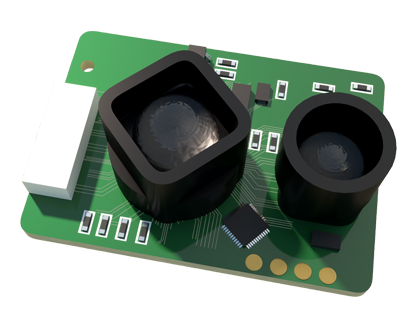
The defining characteristic of these sensors is their miniature size. Often no larger than a fingertip, they can be integrated into machinery and systems where conventional sensors simply cannot fit. This compactness does not come at the expense of performance. Modern micro laser displacement sensors boast impressive specifications, including measurement ranges from a few millimeters to several tens of millimeters, repeatability down to sub-micron levels, and high sampling rates. Their small form factor also reduces weight, minimizes inertia, and allows for more flexible mounting in dynamic applications.
The applications for these tiny powerhouses are vast and growing. In electronics manufacturing, they are indispensable for measuring component coplanarity, inspecting solder paste height on PCBs, and verifying the precise placement of microchips. In the automotive sector, they are used for gap and flush measurement between body panels, brake disc thickness monitoring, and fuel injector nozzle inspection. Precision machinery utilizes them for vibration analysis, shaft runout measurement, and thickness control of rolled materials. Furthermore, they are increasingly found in collaborative robots (cobots) for delicate object detection and alignment tasks, and in medical device assembly for verifying critical dimensions.

Selecting the right micro laser displacement sensor requires careful consideration of several key parameters. The measurement range must suit the specific distance over which data needs to be collected. Resolution and repeatability define the smallest detectable change and the consistency of measurements, respectively. The type of target surface is crucial; while most sensors work well on diffuse, matte surfaces, specialized models with coaxial designs or different wavelength lasers are needed for shiny, mirrored, or transparent objects. Environmental factors like ambient light, temperature fluctuations, and potential contamination must also be accounted for, with many sensors offering robust housings and protective lenses for harsh industrial environments.
Integration is typically straightforward, thanks to standardized digital interfaces like Ethernet/IP, PROFINET, or IO-Link, and analog outputs. This allows for seamless communication with PLCs, data acquisition systems, and industrial networks. Advanced models feature built-in logic and programmability, enabling them to perform calculations like averaging, peak-hold, or tolerance judgments internally, reducing the processing load on the central controller.
Looking ahead, the trajectory for micro laser displacement sensors points toward even greater miniaturization, enhanced intelligence, and improved robustness. The integration of AI-driven edge computing capabilities could allow sensors to perform complex classification and anomaly detection at the source. Developments in laser diode and detector technology will likely push the boundaries of speed and accuracy further. As industries continue to pursue miniaturization and higher quality standards, the role of these precise, compact sensors will only become more central, driving innovation and efficiency across the manufacturing landscape and beyond.
In conclusion, the micro laser displacement sensor is a critical enabler of modern precision measurement. By delivering high-accuracy, non-contact sensing in a minuscule package, it solves complex spatial and measurement challenges across diverse sectors. Its continued evolution will undoubtedly unlock new possibilities in automation, quality control, and research, solidifying its status as a fundamental tool in the quest for microscopic precision on a macroscopic scale.