In the seamless interaction between humans and machines, a silent, unseen technology plays a pivotal role: the proximity sensor. These devices, often no larger than a coin, detect the presence or absence of nearby objects without any physical contact. Their operation is fundamental to countless applications, from the smartphone in your pocket to complex industrial automation systems, making them a cornerstone of modern electronics.
At its core, a proximity sensor works by emitting a field or a beam of electromagnetic radiation, often infrared light, or by using an electromagnetic field. It then looks for changes in the field or the return signal. The specific technology defines its capabilities and typical uses. Inductive sensors, for instance, generate an oscillating electromagnetic field to detect metallic objects. They are incredibly robust, immune to environmental factors like dust or oil, making them the workhorse of manufacturing plants for tasks like counting metal parts or determining the position of a machine component.
Capacitive sensors operate on a different principle. They can detect both metallic and non-metallic materials—liquids, plastics, wood, or even a human hand—by measuring changes in capacitance. This versatility finds them in applications like liquid level detection in tanks, touch-sensitive buttons, and material handling. Photoelectric sensors, another major category, use a light emitter and receiver. They can be configured in through-beam, retro-reflective, or diffuse reflection modes, offering long detection ranges and high precision for detecting a wide variety of objects on assembly lines.
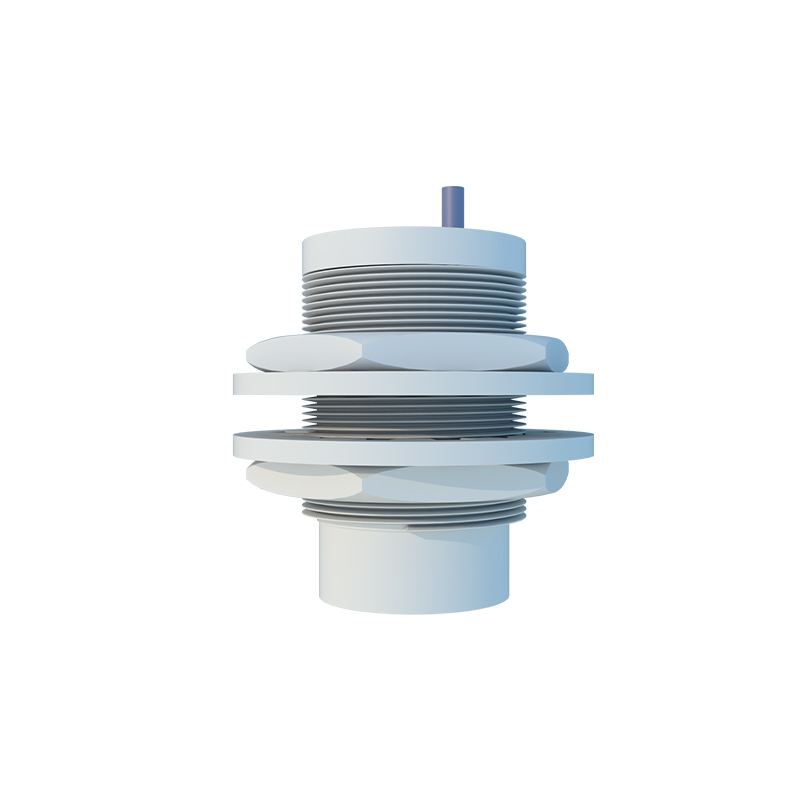
Perhaps the most ubiquitous example is in consumer electronics. The proximity sensor in a smartphone, typically an infrared LED and receiver, senses when the phone is held to the ear during a call. It automatically turns off the display to prevent accidental screen presses and saves battery power. This small feature dramatically enhances user experience through intuitive, hands-free operation.
The automotive industry relies heavily on these sensors for safety and convenience. Parking assistance systems use ultrasonic or electromagnetic proximity sensors to measure the distance to obstacles, providing audible or visual warnings to the driver. Advanced driver-assistance systems (ADAS) employ more sophisticated radar and LiDAR sensors, which are essentially high-precision, long-range proximity detectors, for features like adaptive cruise control and collision avoidance.
In industrial settings, the impact is even more profound. Proximity sensors are the eyes of automated machinery. They provide precise positional feedback, ensure safety by monitoring guard doors, control robotic arm movements, and manage inventory on conveyor belts. Their reliability, speed, and non-contact nature prevent product damage and enable high-speed operations that would be impossible with mechanical switches. For example, in food packaging, capacitive sensors can detect the presence of a liquid-filled bottle through a glass container, ensuring each box is properly filled before sealing.
The choice of sensor depends on several factors: the material of the target object, the required detection distance, environmental conditions (temperature, presence of contaminants), response speed, and cost. Engineers must balance these parameters to select the optimal device for a given task. Modern sensors also come with advanced features like programmability, digital output (IO-Link), and enhanced resistance to interference, integrating seamlessly into the Industrial Internet of Things (IIoT) ecosystem.
Looking forward, the evolution of proximity sensing is intertwined with advancements in miniaturization, energy efficiency, and intelligence. As the Internet of Things expands, smaller, lower-power sensors will be embedded in more everyday objects. Furthermore, sensor fusion—combining data from proximity sensors with cameras, accelerometers, and other inputs—will enable more context-aware and intelligent systems. From smart homes that adjust lighting based on occupancy to agricultural robots that navigate fields without damaging crops, the applications are boundless.
In conclusion, proximity sensors are a foundational yet often overlooked technology. They perform critical functions that enhance safety, efficiency, and convenience across every sector. By enabling machines to perceive their immediate environment without touch, they form a crucial bridge in human-machine interaction, quietly powering the automated and responsive world we live in today and will continue to shape tomorrow.