In the realm of industrial automation and control systems, proximity sensors are indispensable components. They perform the critical task of detecting the presence or absence of an object within a specified range without any physical contact. This non-contact detection capability makes them ideal for harsh environments, high-speed counting, and applications requiring high reliability and long operational life. Understanding the various types of proximity sensors is crucial for selecting the right technology for a specific application. This guide delves into the primary categories, their operating principles, advantages, and typical use cases.
The most common classification of proximity sensors is based on their underlying detection technology. The first major type is the Inductive Proximity Sensor. These sensors generate an electromagnetic field. When a metallic object (typically ferrous metals like steel or iron, though some models detect non-ferrous metals) enters this field, it causes eddy currents on the metal's surface. This change in the electromagnetic field is detected by the sensor's internal circuitry, triggering an output signal. Inductive sensors are renowned for their robustness, high switching frequency, and immunity to environmental factors like dust, oil, and moisture. They are predominantly used in metal detection applications such as part positioning on conveyor belts, limit switching in machine tools, and detecting the presence of metal parts in assembly lines.
The second prominent category is the Capacitive Proximity Sensor. These sensors can detect both metallic and non-metallic objects, including liquids, powders, plastics, and wood. They operate by generating an electrostatic field. Any object that enters this field alters the sensor's capacitance. Once this change reaches a predetermined threshold, the sensor activates its output. The key advantage of capacitive sensors is their versatility in material detection. They are commonly employed in level detection for tanks (liquids or granules), material handling for non-metallic products, and touch-sensitive control panels. However, they can be more susceptible to environmental changes like humidity compared to inductive types.
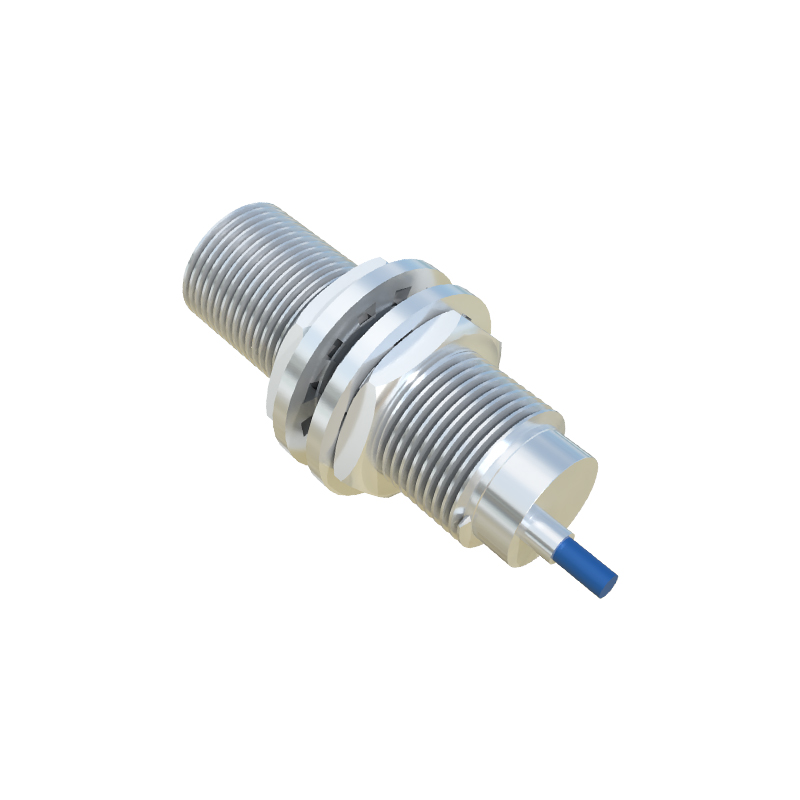
Ultrasonic Proximity Sensors form the third major type. They work on the principle of echolocation, similar to sonar. The sensor emits high-frequency sound waves (ultrasonic waves) and then listens for the echo reflected from a target object. By measuring the time interval between the emission and the reception of the echo, the sensor can calculate the distance to the object. This allows them not only to detect presence but also to provide precise distance measurement. They are excellent for detecting objects of virtually any material, shape, or color, and they perform well in challenging environments with dust, smoke, or fog. Typical applications include pallet detection in warehouses, loop control in winding machines, and distance measurement in automated guided vehicles (AGVs).
Photoelectric Sensors, while sometimes categorized separately, are a vital form of proximity detection. They use a light emitter (usually LED or laser) and a receiver. When the emitted light beam is interrupted or reflected by an object, the change in light intensity at the receiver triggers the output. There are three main sub-types used for proximity sensing: through-beam (separate emitter and receiver), retro-reflective (uses a reflector), and diffuse (reflective), where the sensor detects light reflected directly from the object. Diffuse photoelectric sensors are true proximity sensors. They offer very long sensing ranges and can detect small objects with high precision. Applications include bottle counting on fill lines, web break detection in paper processing, and object detection in packaging machinery.
A fifth, specialized type is the Magnetic Proximity Sensor or Reed Switch. These sensors detect the presence of a permanent magnet. They contain two ferromagnetic reeds sealed in a glass tube. When a magnet approaches, the reeds are magnetized and attract each other, closing the electrical contact. They are simple, cost-effective, and can operate in completely sealed environments, making them perfect for hazardous or wet locations. A classic application is in cylinder position sensing, where a magnet is embedded in the piston of a pneumatic cylinder.
Selecting the appropriate proximity sensor involves careful consideration of several factors: the target material (metal, plastic, liquid), the required sensing distance, environmental conditions (temperature, contaminants), the required output type (PNP/NPN, analog, IO-Link), and the necessary response speed. For instance, an inductive sensor is the default choice for fast, reliable detection of steel parts, while a capacitive sensor is necessary for monitoring plastic granule levels in a hopper.
In conclusion, the diverse family of proximity sensors—inductive, capacitive, ultrasonic, photoelectric, and magnetic—provides engineers with a powerful toolkit for solving a vast array of industrial automation challenges. Mastery of their distinct characteristics and operational boundaries is key to designing efficient, reliable, and cost-effective control systems that form the backbone of modern manufacturing and processing industries.