Proximity switch sensors are fundamental components in modern industrial automation, robotics, and safety systems. Their ability to detect the presence or absence of an object without physical contact makes them indispensable. Designing a reliable proximity sensor requires a systematic approach that balances electrical, mechanical, and environmental considerations. This guide outlines the key design principles and steps for electrical engineers.
The first step in designing a proximity switch is selecting the appropriate sensing technology. The four primary types are Inductive, Capacitive, Ultrasonic, and Photoelectric (Optical). Inductive sensors are ideal for detecting metallic objects. Their operation is based on generating an electromagnetic field. When a metal target enters this field, it induces eddy currents, causing a change in the oscillator's amplitude. This change is detected, processed, and converted into a switching output. Key design parameters include the sensing distance, which is influenced by the coil design, oscillator frequency, and the target material's properties (e.g., steel, aluminum, brass). Shielding is crucial; a shielded (flush-mountable) sensor has a shorter range but is immune to lateral metal interference, while an unshielded sensor offers a longer range.
Capacitive sensors can detect both metallic and non-metallic materials (plastics, wood, liquids) by measuring changes in capacitance. The sensor forms one plate of a capacitor, with the target object acting as the other plate. The dielectric constant of the target and the distance to it alter the capacitance. Design challenges include sensitivity to environmental factors like humidity and dust. Compensation electrodes and proper housing design are used to mitigate false triggers from background objects.
For photoelectric sensors, the design revolves around the light source (typically LED - Infrared, Red, or Laser), the receiver, and the sensing mode (through-beam, retro-reflective, or diffuse-reflective). Through-beam offers the longest range and highest reliability, requiring separate emitter and receiver units. Diffuse-reflective types, where the emitter and receiver are in the same housing, are simpler to install but sensitive to the target's color and surface texture. The choice of modulated light frequency is critical to avoid interference from ambient light.
Ultrasonic sensors use sound waves beyond human hearing. They measure the time-of-flight of a sound pulse reflected from a target. They are excellent for distance measurement and detecting objects regardless of color or material. However, they are sensitive to temperature variations (which affect sound speed), air turbulence, and soft, sound-absorbing materials. The transducer design and signal processing algorithms for echo detection are complex.
Once the technology is chosen, the core electronic circuit design begins. For inductive and capacitive types, the oscillator circuit is the heart. A stable high-frequency oscillator (often in the range of 100 kHz to 1 MHz for inductive) is required. The subsequent stages include an amplitude detector, a Schmitt trigger for hysteresis to prevent output chatter, and an output driver. The output can be solid-state (PNP/NPN transistor) or a relay contact. Protection circuits are mandatory: reverse polarity protection, short-circuit protection, and voltage surge suppression (e.g., using TVS diodes).
Power supply design must account for the operating voltage range (commonly 10-30V DC or 20-250V AC). For DC sensors, consider the residual current (leakage current) in the "OFF" state and the voltage drop in the "ON" state. For AC sensors, a bridge rectifier and filtering are needed.
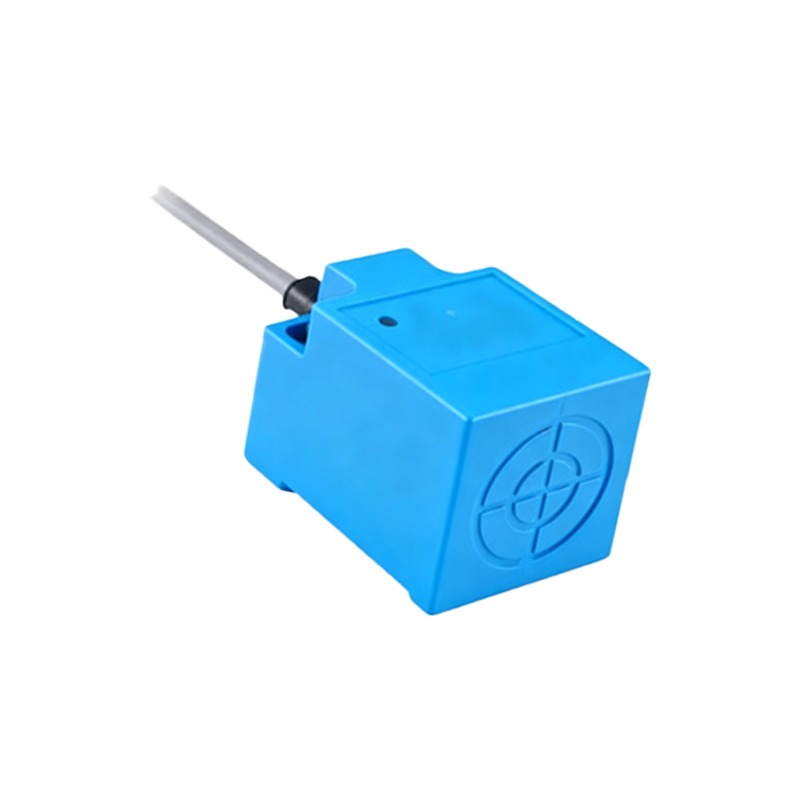
The mechanical housing design is equally critical. It must provide environmental protection, indicated by the IP (Ingress Protection) rating (e.g., IP67 for dust-tight and immersion resistance). The material is often nickel-plated brass, stainless steel, or PBT plastic. The form factor (cylindrical, rectangular, slot-style) is determined by the mounting constraints. For inductive sensors, the housing also affects the electromagnetic field shape.
Finally, rigorous testing and validation are non-negotiable. This includes testing the nominal sensing distance (Sn) under standardized conditions, temperature cycling tests, EMC (Electromagnetic Compatibility) tests for immunity to interference, and endurance testing for millions of switching cycles. The design must comply with relevant international standards such as IEC 60947-5-2.
In conclusion, designing a proximity switch sensor is a multidisciplinary task. It demands a deep understanding of electromagnetic theory, analog circuit design, signal processing, and material science. A successful design is one that delivers consistent, reliable performance in the intended application environment, with robustness against electrical noise, physical stress, and environmental extremes. By meticulously following these design stages—technology selection, circuit design, mechanical integration, and validation—engineers can create sensors that form the reliable "senses" of automated systems.