In the realm of industrial automation and precision measurement, cylindrical laser sensors have emerged as indispensable tools, offering unparalleled accuracy, reliability, and versatility. These compact, robust devices project a focused laser beam to detect, measure, or inspect objects with micron-level precision, making them critical components in manufacturing, packaging, robotics, and quality control applications. Unlike diffuse or through-beam sensors, cylindrical laser sensors typically utilize the time-of-flight or triangulation principle to calculate distance or presence, providing consistent performance even on challenging surfaces.
The core operational principle of most cylindrical laser sensors is laser triangulation. A laser diode emits a visible or invisible collimated beam onto the target surface. The reflected light is focused onto a position-sensitive detector, such as a CCD or PSD array. Any change in the target's distance causes the reflected spot to shift on the detector. The internal processor calculates this shift to determine the exact distance with high resolution. This method allows for precise measurement of height, thickness, width, and contour, as well as reliable detection of minute features, edges, or gaps. For longer ranges, time-of-flight variants measure the phase shift or time delay of the reflected laser pulse.
Key advantages define the superiority of cylindrical laser sensors. Their high precision, often down to the micrometer range, ensures stringent quality standards are met. The focused laser spot enables precise detection of small objects or specific points on a target, minimizing interference from background surfaces. Many models feature adjustable sensing ranges and programmable logic outputs, allowing for easy integration into complex control systems. The cylindrical, typically metal housing (often rated IP67 or IP69K) provides excellent resistance to dust, water, oils, and mechanical shock, ensuring durability in harsh industrial environments. Furthermore, their compact form factor allows for installation in space-constrained locations.
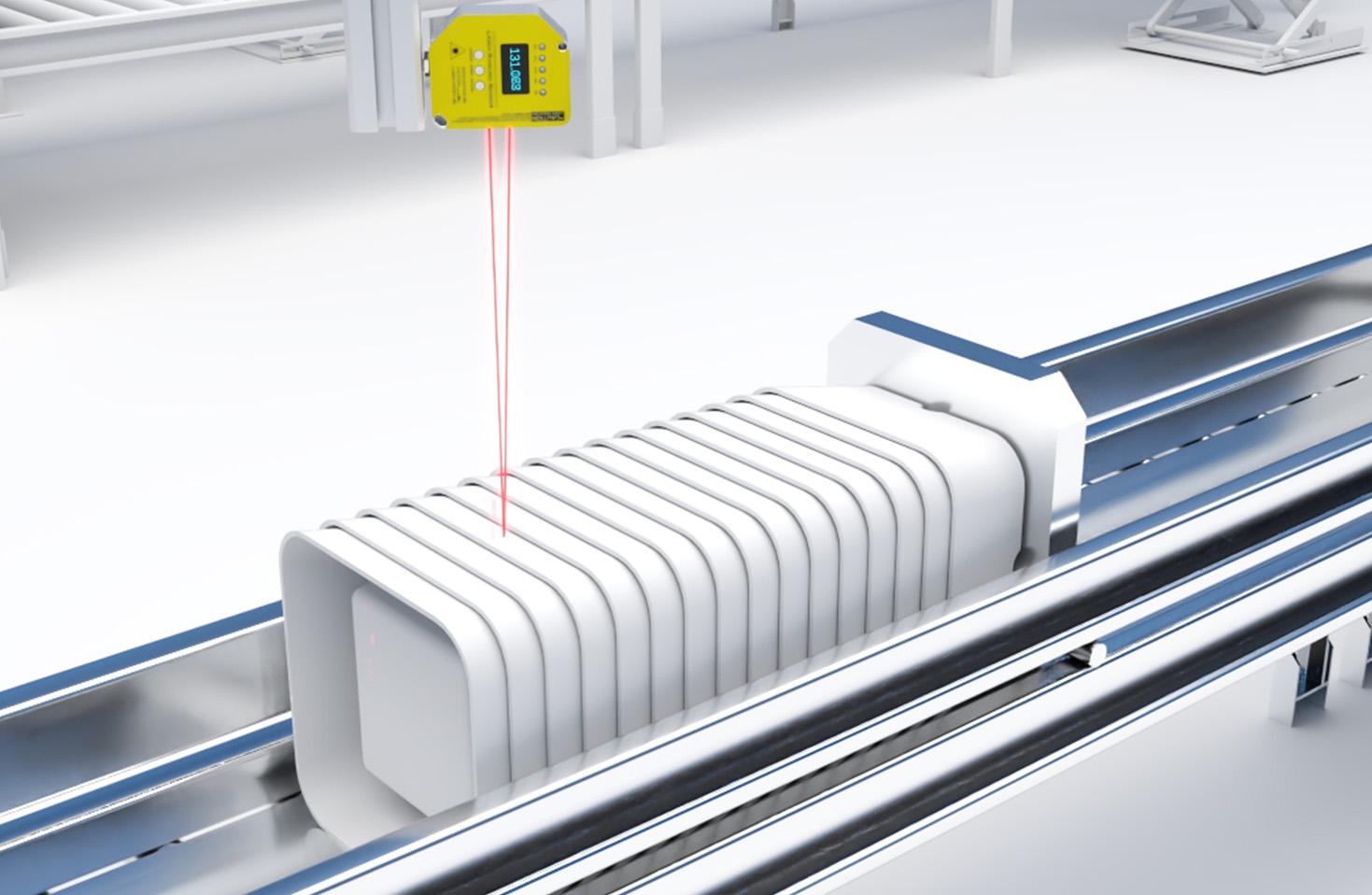
Selecting the appropriate cylindrical laser sensor requires careful consideration of several parameters. The required measuring range and stand-off distance are primary factors. Resolution and repeatability specifications must align with the application's tolerance needs. The type of output (analog voltage/current, digital switch, serial interface) must be compatible with the PLC or data acquisition system. Response time is critical for high-speed production lines. Environmental factors such as ambient light, temperature extremes, and exposure to contaminants must also be evaluated. Many modern sensors incorporate intelligent features like teach-in functions, multi-point switching, and IO-Link communication for simplified setup and advanced diagnostics.
Application examples abound across industries. In automotive assembly, they measure gap and flush between body panels. In electronics manufacturing, they verify component placement height on PCBs. In pharmaceutical packaging, they inspect fill levels in vials and blister packs. In logistics, they detect parcel dimensions for sorting systems. In metal processing, they monitor material thickness or warp. Their ability to perform non-contact measurement prevents part damage and wear, a significant advantage over mechanical probes.
Installation and maintenance are straightforward but crucial for optimal performance. Ensuring a stable mounting, proper alignment perpendicular to the target, and a clean lens are essential. Regular calibration checks against a master reference may be necessary for critical measurement tasks. Users should be aware of potential limitations, such as measurement errors on highly reflective, transparent, or absorbent surfaces, though many sensors offer filters or special modes to compensate.

The future of cylindrical laser sensors is intertwined with Industry 4.0. Integration of smarter onboard processing, enhanced connectivity via IO-Link and Ethernet-APL, and advanced data analytics capabilities are becoming standard. These developments enable predictive maintenance, tighter process integration, and real-time quality feedback loops. As demand for miniaturization and higher precision grows, sensor technology continues to evolve, offering even smaller form factors, faster response times, and greater resistance to environmental interference.
In conclusion, cylindrical laser sensors are a cornerstone of modern industrial automation. Their precision, robustness, and adaptability solve complex measurement and detection challenges, driving efficiency, quality, and productivity. A thorough understanding of their operating principles, selection criteria, and application best practices is vital for engineers and system integrators to fully leverage their potential in creating smarter, more responsive manufacturing ecosystems.