Proximity sensors are fundamental components in modern automation, robotics, and countless industrial applications. Their primary function is to detect the presence or absence of an object within a specified range without physical contact. The true intelligence of these devices lies not just in their detection capability, but in the form of the signal they output to communicate this information to a control system, such as a PLC (Programmable Logic Controller), microcontroller, or computer. Understanding these signal forms is crucial for proper sensor selection, integration, and system design. The most common output signal forms from industrial proximity sensors are Digital (Discrete), Analog, and IO-Link.
The most prevalent and straightforward signal form is the digital or discrete output. This is essentially a simple on/off, yes/no signal. When a target object enters the sensor's detection field, the sensor's internal circuitry switches its output state. This is typically represented as a voltage change. In a sinking (NPN) configuration, the output switches to 0V (ground) when activated. In a sourcing (PNP) configuration, the output switches to the positive supply voltage (e.g., 24V DC). A third type, the Namur sensor, outputs a small current change (typically from a safe low level to a higher one) and is designed for use in intrinsically safe circuits in hazardous areas. Digital outputs are ideal for applications requiring basic presence detection, counting parts on a conveyor, verifying a door is closed, or triggering a simple action. They are robust, easy to wire, and compatible with virtually all industrial controllers. Their limitation is the lack of granular information; they only tell you an object is "here" or "not here," not how close it is.
For applications where distance information is critical, analog output sensors are the solution. Instead of a simple switch, these sensors provide a continuous signal that varies proportionally with the distance between the sensor and the target. Common analog signal standards are voltage (e.g., 0-10V) and current (e.g., 4-20mA). In a 0-10V setup, 0V might represent the maximum sensing distance, and 10V the minimum. The 4-20mA current loop is particularly prized in industrial environments for its high noise immunity and ability to power the sensor over the same two wires carrying the signal (two-wire configuration). Analog signals allow for precise monitoring and control. Examples include monitoring the thickness of a material roll, controlling the tension in a web, or precisely positioning a robotic arm. The controller reads the varying voltage or current and can calculate the exact distance, enabling complex, proportional responses rather than simple binary actions.
A more advanced and increasingly popular signal form is IO-Link. IO-Link is a point-to-point serial communication protocol (IEC 61131-9) that transforms a standard digital sensor into an intelligent device. It uses the standard 3-wire sensor connection (24V, 0V, and a switched signal wire) but enables bidirectional digital communication. An IO-Link sensor doesn't just send a simple on/off signal; it transmits a rich data packet. This can include not just the switched state, but also the measured analog value, device parameters, status information (like temperature, operating hours, or signal strength), and diagnostic alerts. This wealth of data enables advanced condition monitoring and predictive maintenance. For instance, a gradual decrease in the measured signal strength of an IO-Link proximity sensor could indicate accumulating dirt on the face, alerting maintenance before a failure occurs. Furthermore, parameters like sensing distance or output delay can be remotely configured and changed via software, enabling flexible machine setups and drastically reducing downtime for changeovers.
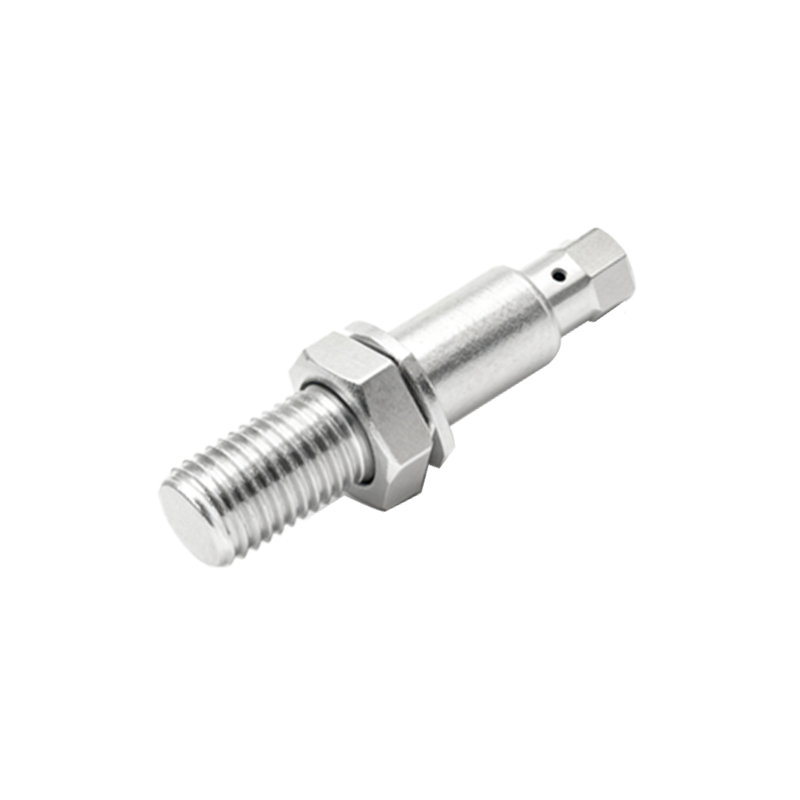
Choosing the correct signal form depends entirely on the application's requirements. For simple detection and high-speed counting, a fast-switching digital sensor is optimal and cost-effective. If precise distance measurement or proportional control is needed, an analog output is necessary. For applications demanding maximum data transparency, remote configurability, and advanced diagnostics—especially in complex or flexible production lines—IO-Link offers significant long-term benefits despite a potentially higher initial cost. Engineers must also consider the electrical compatibility with the control system, environmental factors like electrical noise, and the required speed of response. By carefully matching the sensor's signal form to the task, one can build more reliable, efficient, and intelligent automated systems.