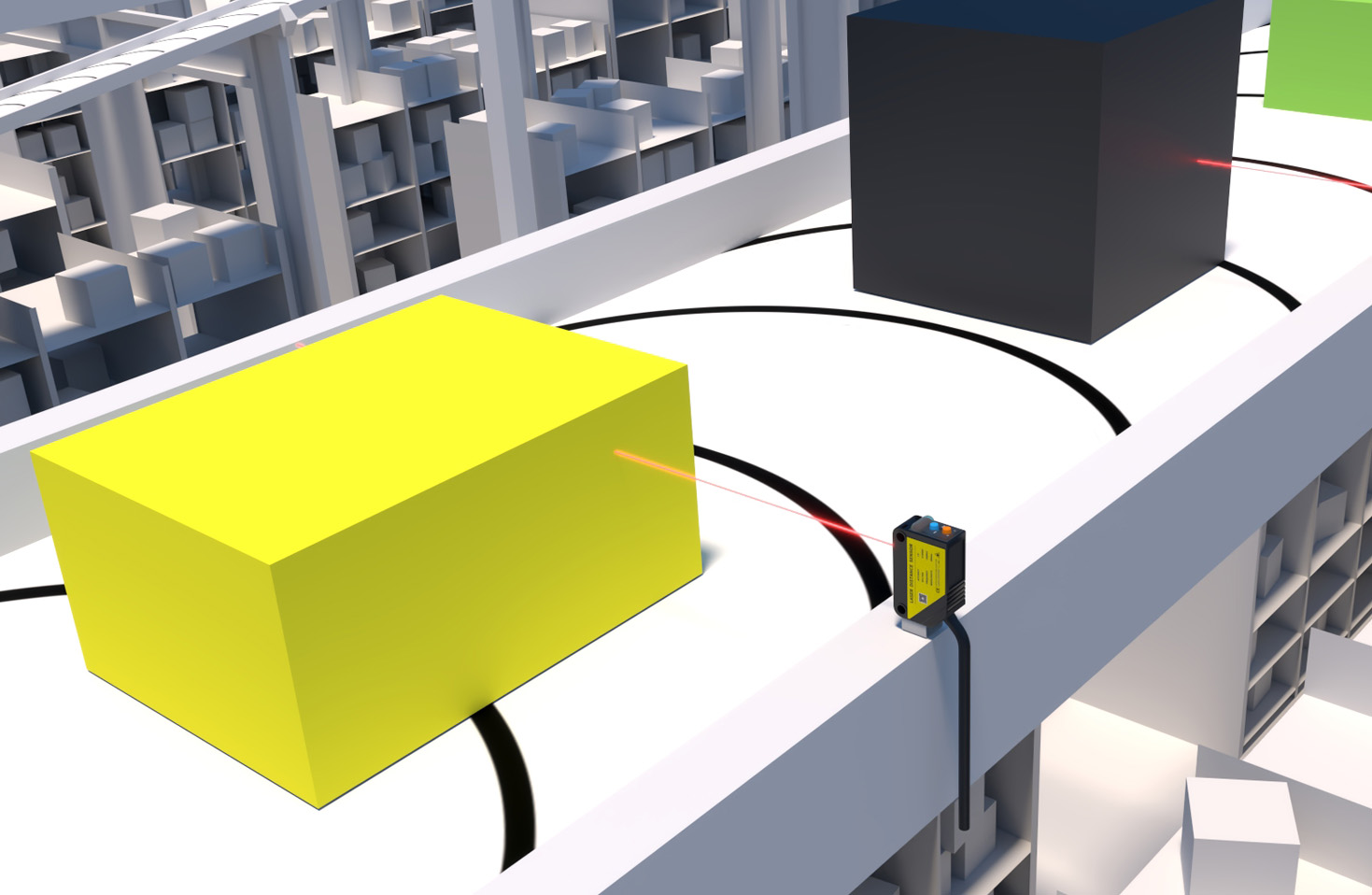
In the realm of industrial automation and precision measurement, laser sensors have become indispensable tools. A critical, yet often overlooked, aspect of their performance is the laser spot size. This parameter fundamentally influences the accuracy, resolution, and applicability of a sensor in various tasks, from displacement measurement to edge detection. The laser spot refers to the area where the laser beam intersects with the target surface. Its size and quality are not merely a function of the laser diode itself but are determined by a complex interplay of optical design, environmental factors, and target properties.
The primary determinant of spot size is the optical system within the sensor. Most laser sensors for measurement use a focused beam. The minimum achievable spot diameter is governed by diffraction limits and is often approximated for a Gaussian beam. In practical terms, factors like the laser's wavelength, the quality and focal length of the collimating and focusing lenses, and beam divergence define the spot profile. A shorter focal length lens typically produces a smaller spot at its focal point, but with a shorter depth of field. Conversely, a longer focal length yields a larger spot with a greater working distance. Engineers must select a sensor with a spot size appropriate for the feature being measured. For instance, measuring a sharp edge or a tiny component requires a very small spot to achieve high resolution and avoid averaging effects from the surrounding surface.
The impact of spot size on measurement accuracy is profound. A smaller spot generally allows for higher lateral resolution, enabling the sensor to detect finer details and sharper transitions on a target's surface. This is crucial for applications like profilometry or inspecting small mechanical parts. However, an excessively small spot can introduce noise. On rough or diffusely reflecting surfaces, a tiny spot may cause speckle patterns or signal dropout if it falls into a microscopic valley. A slightly larger spot can average out these surface irregularities, providing a more stable and repeatable signal. This trade-off between resolution and signal stability is a key consideration. Furthermore, the intensity distribution within the spot, usually Gaussian (highest intensity at the center, tapering off at the edges), means that the sensor's output is weighted. The effective measurement point is the centroid of the illuminated area, which can shift if the target surface has varying reflectivity.

Environmental and target-specific factors also play a significant role. The working distance between the sensor and the target is paramount. At the exact focal point, the spot is at its minimum size. As the target moves away from this optimal distance (within the sensor's specified range), the spot defocuses and enlarges, potentially degrading measurement accuracy. The target's surface characteristics—its color, material, roughness, and angle—interact with the spot. A dark, matte surface absorbs more light and scatters the remainder, requiring a more sensitive receiver and potentially benefiting from a slightly larger spot to capture sufficient reflected energy. A shiny, specular surface can reflect the beam coherently, often necessitating a different sensor triangulation angle and careful spot size selection to avoid saturation of the receiver.
In conclusion, selecting a laser sensor is not just about range and speed specifications. A deep understanding of laser spot size dynamics is essential for optimal system integration. By matching the spot diameter and optical characteristics to the specific application—considering feature size, surface texture, required resolution, and working environment—engineers can unlock the full potential of laser measurement technology, ensuring robust, reliable, and highly accurate results. Always consult the sensor's technical datasheet, which should provide detailed spot size diagrams relative to working distance, to make an informed choice.