Matrix area laser sensors represent a significant leap forward in industrial sensing technology, offering unparalleled precision, flexibility, and reliability for a wide range of automation and safety applications. Unlike traditional single-point or line lasers, these advanced sensors project a two-dimensional matrix of laser points onto a target surface, enabling the simultaneous measurement of an entire area. This capability is transforming processes in manufacturing, logistics, robotics, and quality control.
The core technology behind a matrix area laser sensor typically involves a laser diode that emits a beam which is then diffracted or scanned to create a dense grid of measurement points. A high-resolution CMOS or CCD camera captures the reflection of this matrix. Sophisticated onboard processors then analyze the deformation, position, and intensity of each point in the reflected pattern. Using principles of triangulation or time-of-flight, the sensor calculates precise distance information for thousands of points across the field of view, generating a detailed 3D profile or depth map of the target area in real-time.
This rich data output unlocks numerous critical applications. In automated assembly lines, matrix sensors perform high-speed, non-contact inspection of component presence, orientation, and dimensional accuracy. They can detect minute defects, such as dents on a car body panel or warping on a circuit board, that would be invisible to 2D vision systems. In robotic guidance, these sensors provide the essential 3D environmental data needed for precise bin picking, where a robot must identify and grasp randomly oriented parts from a container. The sensor generates a point cloud that allows the robot's system to calculate the optimal grip point and trajectory.
Material handling and logistics benefit immensely from area-based sensing. For palletizing and depalletizing, a matrix laser sensor can quickly scan a stack of boxes or totes to determine their exact positions and heights, enabling a robot to build or dismantle loads efficiently and without damage. In warehouse automation, these sensors are integral to dimensioning systems that measure the size and volume of parcels for optimal storage and shipping cost calculation. They ensure that autonomous mobile robots (AMRs) and automated guided vehicles (AGVs) can navigate complex, dynamic environments safely by creating a detailed map of obstacles, including their height and profile, far beyond the capabilities of simple proximity sensors.
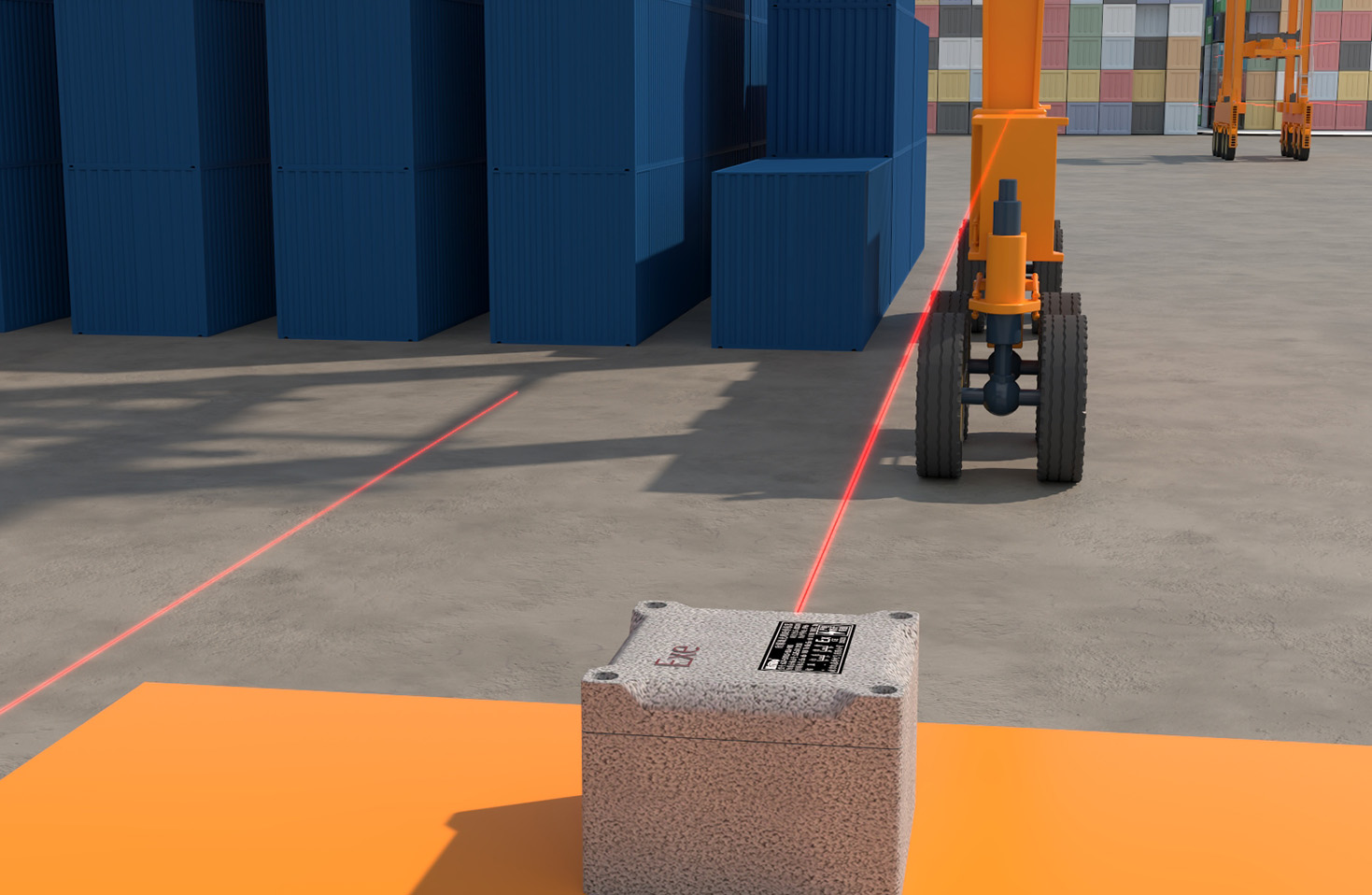
Perhaps one of the most vital applications is in the realm of industrial safety. Matrix area laser sensors form the backbone of advanced safety laser scanners and area guarding systems. Mounted around hazardous machinery like presses, robots, or conveyor intersections, they create a invisible, customizable protective field. If any object or person breaches this defined safety zone, the sensor immediately sends a stop signal to the machine. The key advantage over physical fences or light curtains is flexibility; the protected area can be easily reconfigured via software for different production setups without any mechanical changes. Furthermore, some systems can differentiate between a human limb and an inanimate object like a tool cart, reducing nuisance stops while maintaining the highest level of personnel protection.
When selecting a matrix area laser sensor, engineers must evaluate several key specifications. The measurement range, field of view (both horizontal and vertical), and resolution (point density) determine the sensor's suitability for a task. Scanning frequency or frame rate is crucial for high-speed applications. Environmental robustness is also paramount; industrial sensors must have high ingress protection (IP) ratings against dust and water, withstand significant vibration, and operate reliably across a wide temperature range. The choice of laser class (typically Class 1 or Class 2 for eye safety) and wavelength also matters for specific material properties.

The integration of these sensors into broader systems is facilitated by various industrial communication protocols like Ethernet/IP, PROFINET, EtherCAT, and TCP/IP. This allows seamless data transfer to Programmable Logic Controllers (PLCs), robotic controllers, and supervisory systems. The software provided by manufacturers is equally important, offering tools for easy configuration, data visualization, and often built-in measurement functions.
Looking ahead, the convergence of matrix laser sensing with artificial intelligence and edge computing is the next frontier. AI algorithms can be deployed directly on the sensor's processor to perform complex object classification and anomaly detection locally, reducing latency and network load. This will enable even more intelligent and autonomous systems.
In conclusion, matrix area laser sensors are indispensable tools in the modern industrial landscape. By providing detailed, real-time 3D perception, they enhance precision, efficiency, and safety across countless operations. As technology advances, their role will only expand, driving further innovation in smart factories and automated systems worldwide. Their ability to "see" and understand space in three dimensions is fundamentally changing how machines interact with their environment.