In the realm of commercial and utility vehicles, vans serve as indispensable workhorses across industries such as logistics, delivery, and service trades. Among the critical yet often overlooked components ensuring their operational safety and efficiency is the tailgate proximity switch sensor. This article delves into the technical specifications, operational principles, installation considerations, and maintenance best practices for these sensors, tailored for automotive engineers and technical professionals.
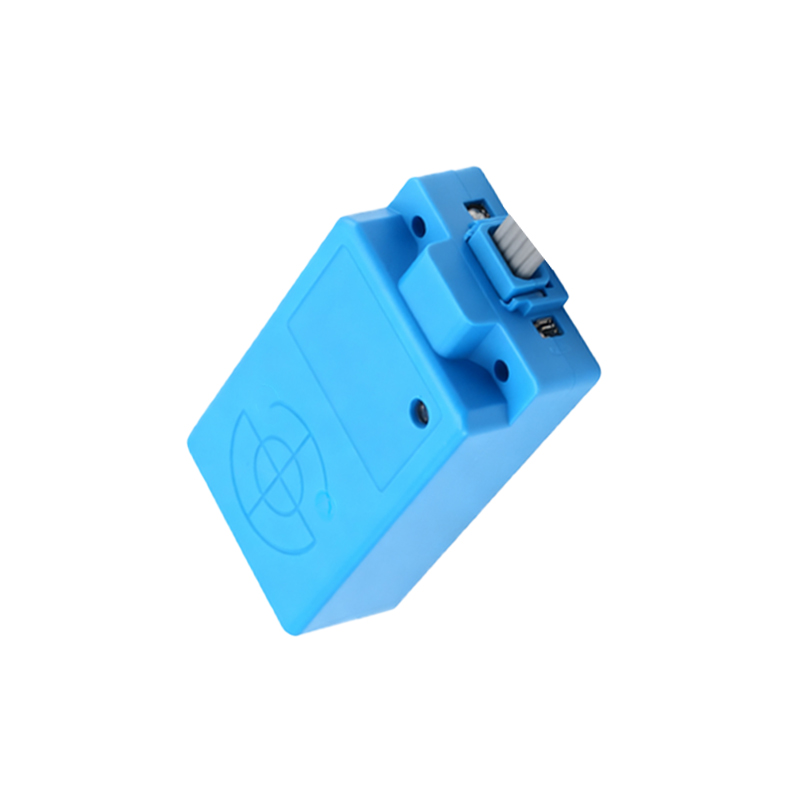
Proximity switch sensors, specifically inductive or magnetic types, are predominantly employed in van tailgate systems. Their primary function is to detect the open or closed status of the tailgate without physical contact, thereby triggering related electrical functions. A typical inductive proximity sensor generates an electromagnetic field; when a metallic target (like the tailgate frame) enters this field, it induces eddy currents, causing a change in the sensor's oscillation amplitude. This change is processed by the internal circuitry to switch the output state, signaling the vehicle's body control module (BCM) or dedicated logic controller. Magnetic sensors, often reed switches or Hall effect sensors, react to the presence or absence of a magnetic field from a magnet mounted on the tailgate.
The integration of these sensors enhances vehicle safety and functionality. For instance, they can illuminate interior cargo lights upon opening, alert the driver via dashboard indicators if the tailgate is ajar while driving, or interface with central locking systems to prevent accidental openings. In advanced telematics systems, sensor status may be relayed to fleet management software, providing real-time data on cargo access—a vital feature for security and operational auditing.
From an engineering standpoint, selecting the appropriate sensor involves evaluating several parameters. Sensing range, typically between 2mm to 15mm for tailgate applications, must align with the mechanical gap between the sensor mount and the target. Environmental resilience is paramount; sensors should be rated at least IP67 to withstand water, dust, vibration, and temperature extremes from -40°C to 85°C, common in automotive environments. Electrical compatibility—operating voltage (commonly 12V DC for vehicles), output type (PNP/NPN, NO/NC), and current rating—must match the vehicle's electrical architecture to avoid malfunctions or damage.

Installation precision is crucial for reliable performance. Sensors are usually mounted on the vehicle body near the tailgate hinge or latch area, with the target (metal plate or magnet) on the moving tailgate. Misalignment beyond the specified offset can lead to false triggering or failure to detect. Engineers must account for mechanical tolerances, potential flexing of body panels under load, and long-term wear. Conformal coating on sensor PCBs and corrosion-resistant housings (often made from PBT or stainless steel) are recommended to combat exposure to road salts, chemicals, and UV radiation.
Diagnosing issues requires a systematic approach. Common failures include sensor damage from impact, wiring harness faults (opens, shorts, or corrosion), or magnetic field interference in the case of magnetic sensors. Using a multimeter to check supply voltage and output switching, alongside an oscilloscope to analyze signal integrity, can pinpoint problems. Regular maintenance should involve visual inspections for physical damage, cleaning of sensing faces to remove mud or metallic debris, and verifying secure connections during routine service intervals.
Future trends point toward smarter sensor integration. With the rise of electric vans and autonomous logistics vehicles, proximity sensors may incorporate IoT capabilities, enabling predictive maintenance alerts or seamless communication with automated loading systems. Furthermore, the adoption of non-contact sensing technologies like capacitive or ultrasonic sensors could offer alternatives for non-metallic tailgate materials, such as composites used in next-generation lightweight vans.
In conclusion, proximity switch sensors for van tailgates are deceptively simple components that play a vital role in vehicle safety, security, and operational intelligence. A thorough understanding of their technical aspects—from selection and installation to troubleshooting—empowers engineers to design robust systems that endure the rigors of daily use while paving the way for innovation in commercial vehicle technology.