In the realm of industrial automation, precision, speed, and reliability are paramount. Laser marking sensors have emerged as a critical technology, enabling permanent, high-quality marking and coding on a vast array of materials and products. Unlike traditional contact methods or ink-based systems, laser marking utilizes a focused beam of light to alter the surface of a material, creating a clean, durable, and often microscopic mark. This process is non-contact, eliminating tool wear and contamination, and is governed by sophisticated sensors that ensure unparalleled accuracy.
The core principle involves a laser source, typically a fiber, CO2, or UV laser, generating the beam. This beam is then directed and focused onto the target surface by a scanning head containing precisely controlled mirrors. The role of the sensor system is integral throughout this operation. Position sensors, often high-resolution CMOS or CCD cameras integrated into vision systems, first locate the part and its exact marking coordinates. This step is crucial for handling products on fast-moving conveyor belts where placement may vary. The sensor captures an image, software processes it to identify the target area, and then sends corrected coordinates to the laser's galvanometer scanners.
Following the marking process, verification sensors come into play. These are typically high-resolution vision sensors or specialized read heads that inspect the applied mark. They verify critical parameters such as contrast, legibility, alignment, and the presence of the mark itself. This closed-loop feedback is essential for quality assurance, ensuring that every product leaving the line meets specifications. Any deviation or failed mark can trigger an automatic reject mechanism or alert operators, preventing non-conforming products from progressing downstream.
The applications for laser marking sensors are extensive and cross-industry. In the automotive sector, they are used to mark Vehicle Identification Numbers (VINs), component codes, and 2D Data Matrix codes on metal and plastic parts. The electronics industry relies on them for marking tiny, precise serial numbers and logos on circuit boards and microchips. In pharmaceuticals, they ensure track-and-trace compliance by marking unique codes and expiration dates on blister packs and vials. The food and beverage industry uses them for non-porous packaging to imprint batch codes and best-before dates, while medical device manufacturing depends on them for creating permanent, biocompatible UDI (Unique Device Identification) marks.
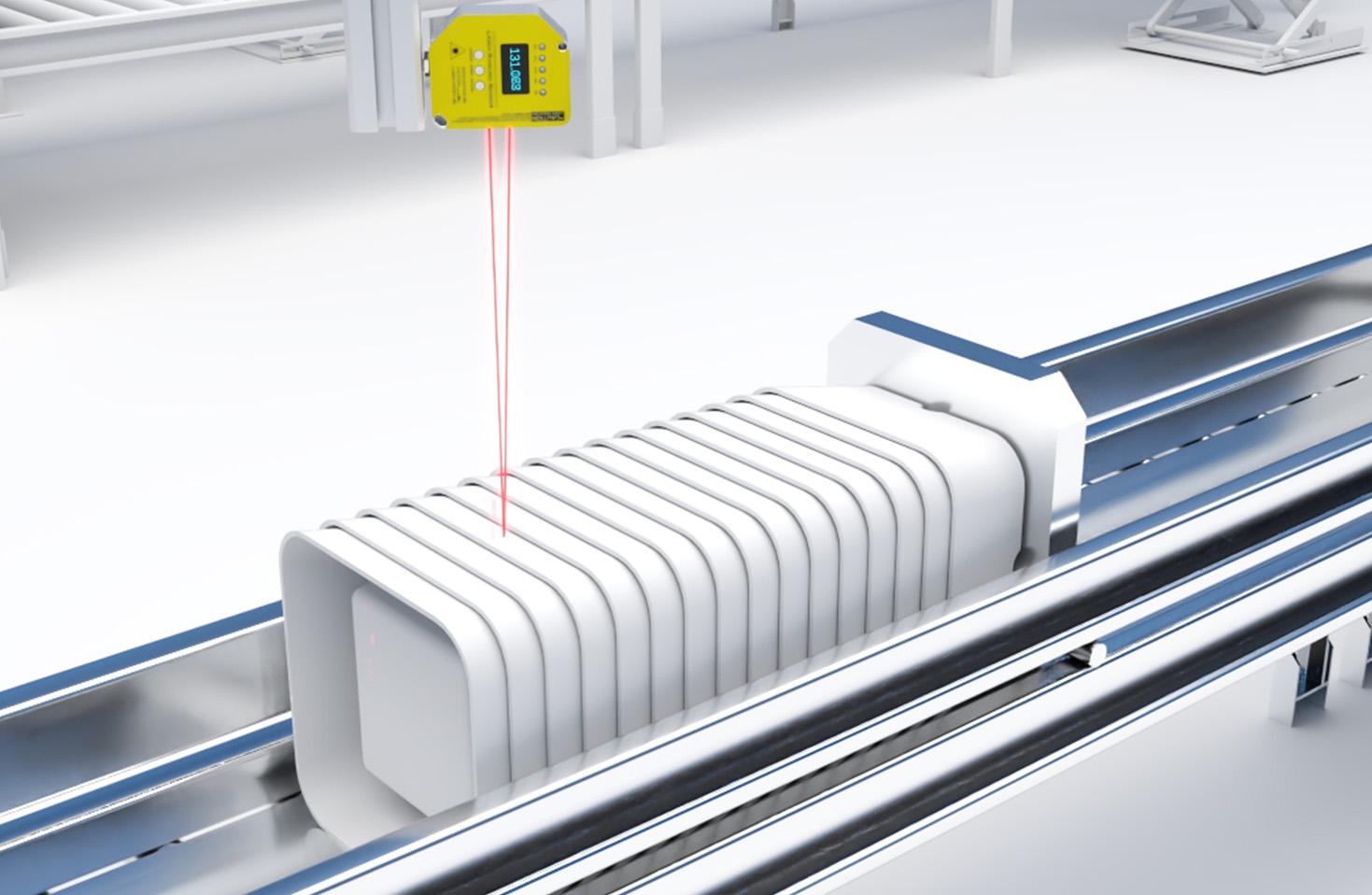
Selecting the right laser marking sensor system requires careful consideration of several factors. The material composition—metal, plastic, glass, ceramic, or organic material—dictates the optimal laser wavelength (e.g., fiber lasers for metals, CO2 for organics). Mark contrast requirements (e.g., annealing, engraving, foaming, ablation) influence the needed laser power and sensor sensitivity for verification. Production line speed determines the required processing and sensor cycle times. Environmental conditions such as dust, vibration, or temperature fluctuations necessitate sensors with appropriate ingress protection (IP) ratings and robust housings. Finally, integration capabilities with existing factory networks (Ethernet/IP, PROFINET, etc.) and supervisory systems (SCADA, MES) are vital for data collection and process control.
Modern advancements are pushing the boundaries of what laser marking sensors can achieve. The integration of Artificial Intelligence (AI) and machine learning with vision sensors allows for smarter mark verification, adapting to natural variations in material surfaces. 3D profiling sensors are now used to map contoured surfaces before marking, ensuring consistent focus and mark quality on uneven parts. Furthermore, the trend towards miniaturization and reduced costs is making high-precision laser marking accessible for smaller-scale operations and new applications.
In conclusion, laser marking sensors represent a synergistic fusion of optical, software, and control technologies. They are not merely components but complete systems that guarantee the integrity of the marking process from start to finish. By providing precise positioning, non-contact operation, and reliable verification, they deliver the traceability, quality, and efficiency demanded by modern manufacturing. As industries continue to prioritize automation and data-driven quality control, the role of intelligent laser marking sensor systems will only become more central to smart factory operations.