In the realm of industrial automation, precision, reliability, and durability are non-negotiable. The PRT124DO proximity sensor stands as a quintessential component engineered to meet these rigorous demands. This article provides a comprehensive technical overview of the PRT124DO, delving into its operational principles, key specifications, and diverse application scenarios within modern industrial environments.
Fundamentally, the PRT124DO is an inductive proximity sensor. Its core operating principle is based on electromagnetic induction. The sensor generates a high-frequency oscillating electromagnetic field from its active face. When a metallic target object enters this detection field, eddy currents are induced on the target's surface. This causes a change in the oscillation amplitude within the sensor's internal LC oscillator circuit. The sensor's integrated circuitry detects this change and triggers a switching action at its output. The "DO" in its designation typically signifies a Digital Output, often in the form of a solid-state NPN or PNP transistor switch, providing a clear on/off signal to a Programmable Logic Controller (PLC) or other control system.
The technical specifications of the PRT124DO define its performance envelope and suitability for various tasks. A critical parameter is its sensing distance, which is precisely calibrated, often in the range of a few millimeters (e.g., 4mm), ensuring accurate and repeatable detection. It is designed to be flush-mountable, meaning it can be installed embedded in a metal bracket without a reduction in its nominal sensing range, a feature that simplifies mechanical design and protects the sensor from physical damage. The housing is invariably constructed from robust materials like nickel-plated brass or stainless steel, offering exceptional resistance to mechanical impact, vibration, and harsh industrial fluids including oils and coolants. Its IP67 or higher ingress protection rating guarantees reliable operation in environments with dust and temporary immersion in water.
Electrical characteristics are equally paramount. The PRT124DO operates on a standard DC supply voltage, commonly 10-30V DC. The output is a discrete signal, compatible with standard industrial control voltages. Key performance indicators include a high switching frequency, allowing it to detect rapidly moving objects on production lines, and minimal hysteresis, which ensures the switch-on and switch-off points are consistent. Furthermore, these sensors incorporate built-in protection against common electrical hazards such as short-circuits, reverse polarity, and voltage transients, enhancing system longevity.
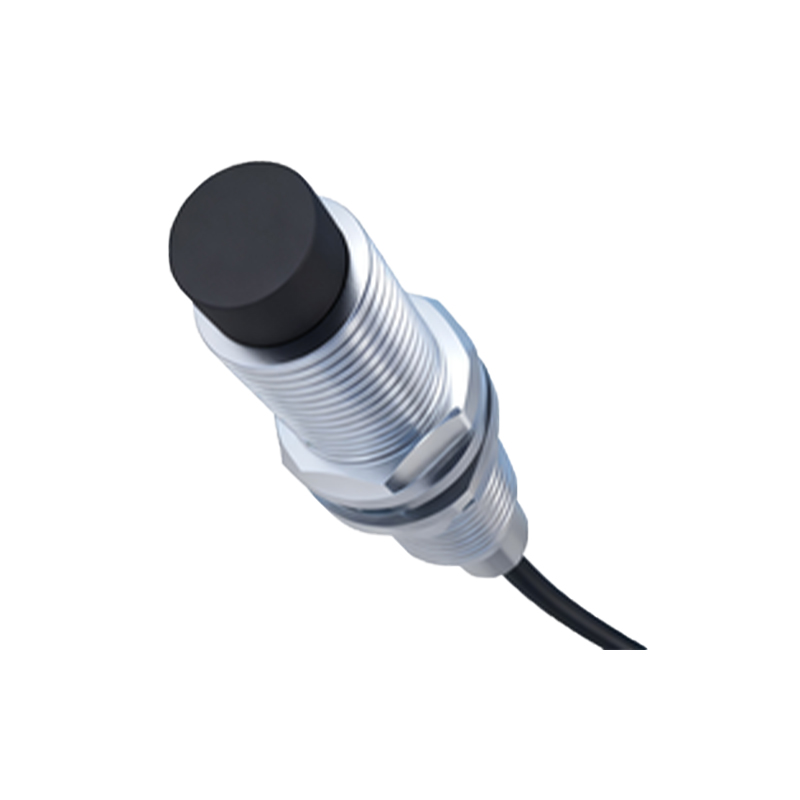
The application landscape for the PRT124DO proximity sensor is vast. In automated assembly lines, it is indispensable for part presence verification, ensuring a component is in the correct position before a robotic arm performs a weld or an insertion. It serves as a precise limit switch in CNC machinery, confirming the end-of-travel position of a tool slide or spindle. Within material handling systems, these sensors count metallic objects on conveyors, control sorting gates, and monitor the position of lifters and actuators. In packaging machinery, they detect the presence of metallic foils, caps, or cans, synchronizing the operation of fillers, cappers, and labelers.
Installation and maintenance practices significantly influence sensor performance and lifespan. Proper alignment between the sensor face and the target is crucial; misalignment can reduce the effective sensing range. Engineers must ensure the target material is ferrous (like iron or steel) or non-ferrous (like aluminum, copper) as specified, as different metals affect the sensing distance. For non-ferrous targets, the rated sensing distance is typically reduced, a factor accounted for in sensor datasheets. Regular cleaning of the sensing face to remove accumulated metal chips, dirt, or oil film is a simple yet effective maintenance task. When troubleshooting, a systematic approach—checking power supply, output load, target characteristics, and environmental conditions—is recommended before concluding a sensor fault.
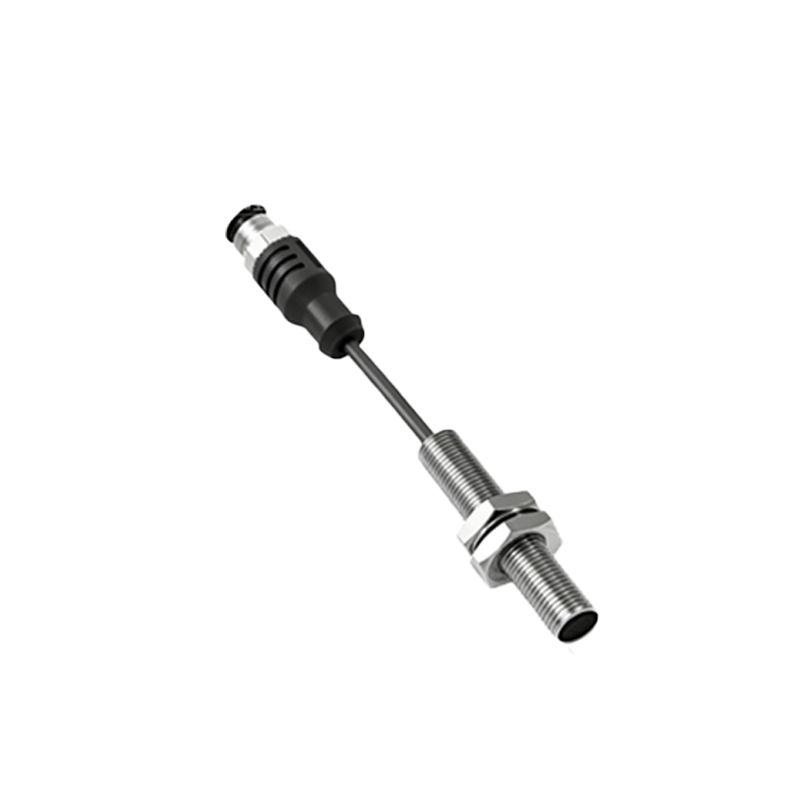
In conclusion, the PRT124DO inductive proximity sensor exemplifies the synergy of robust engineering and practical functionality. Its non-contact sensing capability eliminates mechanical wear, its solid-state design ensures millions of reliable switching cycles, and its rugged construction withstands the punishing conditions of factory floors. For engineers and system integrators designing or maintaining automated systems, understanding the nuances of the PRT124DO's technology and its correct implementation is fundamental to achieving high levels of operational efficiency, machine safety, and production throughput. As Industry 4.0 continues to evolve, such reliable, foundational components remain the critical sensory nodes that feed data into increasingly intelligent control systems.