In the realm of industrial automation and machine design, proximity sensors are indispensable components for non-contact object detection. Among the diverse technologies available, two fundamental types dominate a vast majority of applications: Inductive Proximity Sensors and Capacitive Proximity Sensors. Understanding their distinct operating principles, strengths, and limitations is crucial for engineers and technicians to select the optimal sensor for a given task, ensuring system reliability, efficiency, and cost-effectiveness.
Inductive Proximity Sensors: The Metal Detectors
Inductive proximity sensors operate on the principle of electromagnetic induction. The core component is a coil wound around a ferrite core, which is part of an oscillator circuit. When an alternating current passes through this coil, it generates an oscillating electromagnetic field at the sensor's active face. When a conductive metal target enters this field, eddy currents are induced on the target's surface. These eddy currents draw energy from the oscillator, causing a reduction in the oscillation amplitude. An evaluation circuit within the sensor monitors this amplitude change. Once the amplitude drop exceeds a predefined threshold, the sensor's output state switches, signaling the presence of the target.
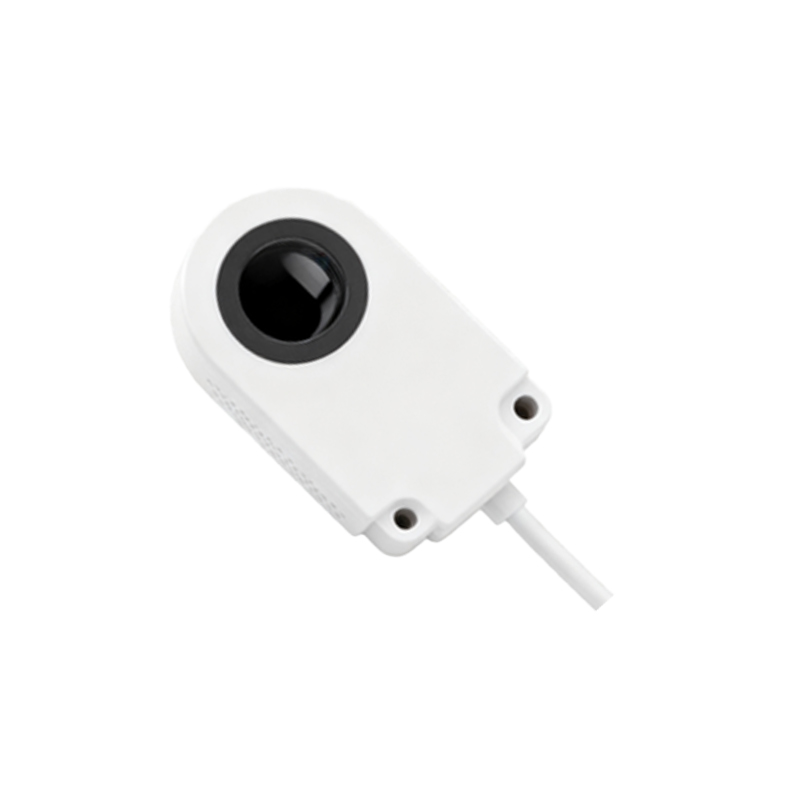
The defining characteristic of inductive sensors is their exclusive sensitivity to metallic objects. They are virtually unaffected by non-metallic materials like plastics, wood, liquids, or dust, making them exceptionally robust in dirty industrial environments. Common applications include detecting the presence of metal parts on a conveyor, counting metal gears, monitoring piston position in cylinders, and ensuring machine tool positioning. Their typical sensing ranges are relatively short, often from 1mm to 60mm, depending on the sensor size and the target material's properties (ferrous metals like iron and steel offer longer ranges than non-ferrous metals like aluminum or copper). They are renowned for their high switching frequency, long operational life, and excellent resistance to environmental factors like oil and coolants.
Capacitive Proximity Sensors: The Versatile Detectors
Capacitive proximity sensors function by detecting changes in capacitance. The sensor's active face acts as one plate of a capacitor, with the ground potential (or sometimes a separate internal electrode) acting as the other. The surrounding environment establishes the dielectric. When an object approaches the active face, it alters the dielectric properties of the space between the plates, thereby changing the capacitance. The sensor's internal circuit, typically an RC oscillator, is tuned to a specific capacitance value. The intrusion of a target changes this capacitance, which is detected by the circuit, leading to a change in the output state.
The key advantage of capacitive sensors is their ability to detect a wide variety of materials, both conductive and non-conductive. This includes metals, plastics, glass, wood, paper, ceramics, and even liquids or granular materials. This versatility makes them ideal for applications where material diversity is a factor. Common uses include liquid level detection in tanks (through a non-metallic wall), monitoring fill levels of powders or granules, detecting the presence of plastic bottles or glass containers on a line, and touch-sensitive control panels. Their sensing range is generally similar to or slightly less than inductive sensors for metallic targets but can be adjusted via a potentiometer to fine-tune sensitivity for different materials. A notable consideration is their susceptibility to environmental changes; humidity, temperature, and dust accumulation can affect the dielectric constant and potentially cause false triggers if not properly accounted for in the design.
Comparative Analysis and Selection Guidelines
Choosing between an inductive and capacitive sensor hinges on the application's specific parameters. The primary question is: What material is the target? If the target is exclusively metallic and operates in a harsh, contaminant-rich environment, an inductive sensor is almost always the superior choice due to its immunity to non-metallic substances. For applications involving non-metallic targets, or a mix of materials, a capacitive sensor is necessary.
Other critical factors include the required sensing distance, switching frequency, environmental conditions (presence of moisture, dust, or chemicals), and the need for flush mounting. Inductive sensors can often be mounted flush with a metal surface without affecting performance, while capacitive sensors typically require a non-metallic surrounding area. Engineers must also consider output types (PNP/NPN, analog, IO-Link) and housing materials (often nickel-plated brass or stainless steel for inductive, plastics for capacitive in certain applications).
In summary, inductive proximity sensors are the specialized, robust solution for metallic object detection, offering high precision and environmental resilience. Capacitive proximity sensors provide a flexible, all-material detection capability at the cost of being more sensitive to ambient changes. A thorough analysis of the target material and operating environment will guide the design engineer to the correct technology, ensuring seamless integration and reliable performance in any automated system.
SEO描述