In the rapidly evolving landscape of industrial automation and smart building management, the demand for precise, reliable, and non-intrusive sensing technology has never been higher. Among the array of available solutions, Laser Human Presence Sensors have emerged as a superior choice for applications requiring high accuracy, long range, and minimal environmental interference. This article delves into the operational principles, key advantages, and diverse applications of these sophisticated devices, providing a technical overview for engineers and system integrators.
At its core, a Laser Human Presence Sensor operates on the principle of Time-of-Flight (ToF) or phase-shift measurement. The sensor emits a modulated, low-power laser beam, typically in the infrared spectrum, which is invisible and safe for human exposure. When this beam encounters an object, such as a person, it is reflected back to the sensor's receiver. By precisely measuring the time delay or phase shift between the emitted and reflected signals, the sensor can calculate the distance to the object with exceptional accuracy, often within millimeter ranges. Advanced signal processing algorithms then analyze this distance data in real-time to distinguish human presence from static background objects or other moving entities, triggering predefined outputs.
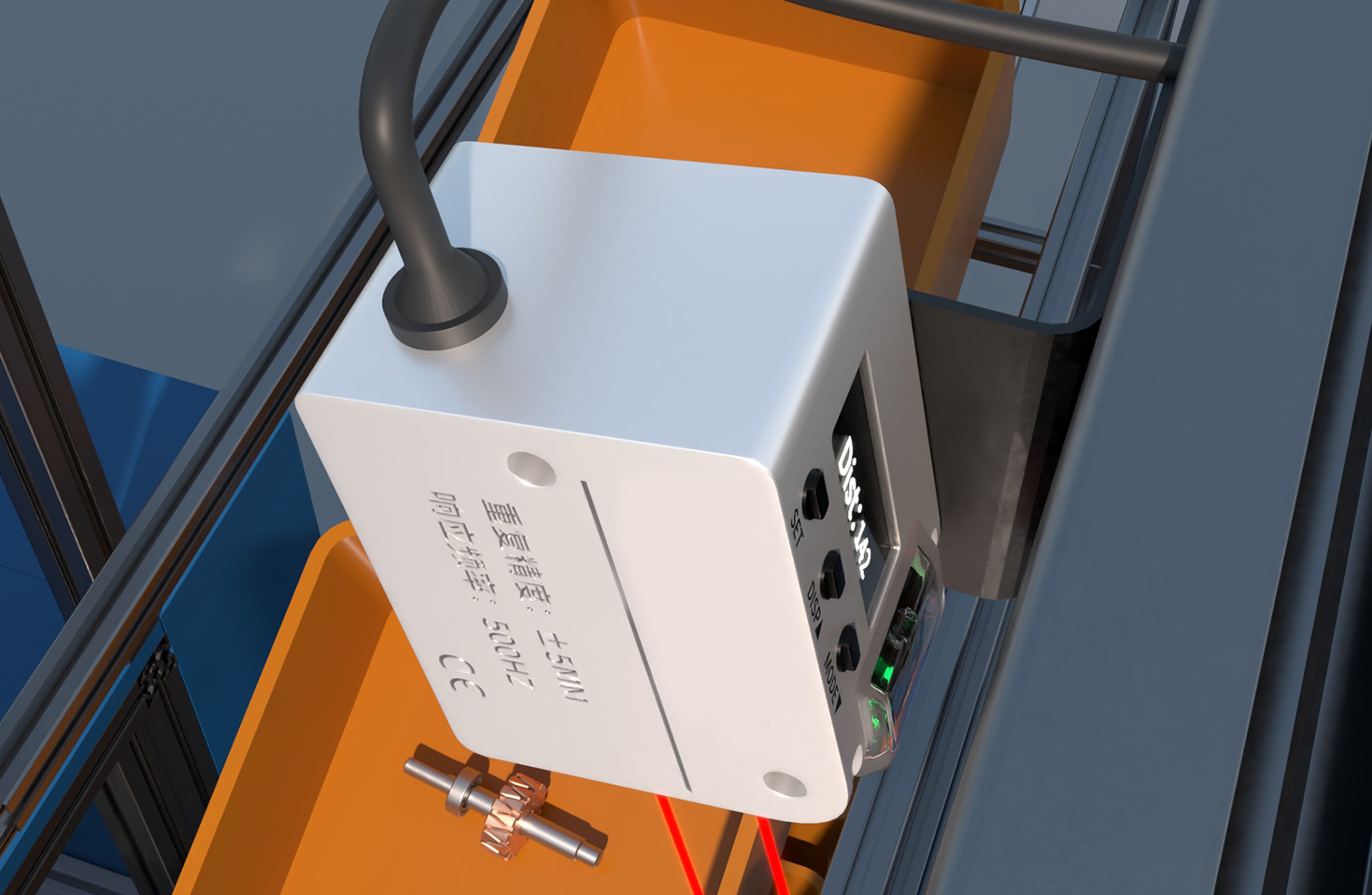
The superiority of laser-based sensors over traditional alternatives like Passive Infrared (PIR), ultrasonic, or microwave sensors is pronounced. Firstly, they offer unparalleled precision and spatial resolution. While a PIR sensor might detect motion within a broad zone, a laser sensor can pinpoint the exact location and even track the movement trajectory of an individual. This is critical in applications like robotic collaborative workspaces, where machinery must know the precise position of a human operator to ensure safety. Secondly, laser sensors are largely immune to common environmental disturbances. They are not affected by ambient temperature fluctuations, air currents, or acoustic noise, which can plague PIR and ultrasonic sensors, respectively. Their focused beam also minimizes the risk of false triggers from activity outside the intended detection zone.
Another significant advantage is the extended operational range. Laser sensors can reliably detect presence over distances exceeding 20 meters, far surpassing the typical range of PIR sensors. This makes them ideal for monitoring large areas such as warehouse aisles, airport hangars, or expansive manufacturing floors. Furthermore, their response time is extremely fast, enabling real-time safety interlocks in high-speed automation environments.
The applications for Laser Human Presence Sensors are vast and growing. In industrial safety, they are integral to creating sophisticated safety light curtains and perimeter guarding systems for hazardous machinery. They can halt a robot's operation the instant a worker's hand enters a predefined danger zone. In building automation, they drive energy efficiency by providing occupancy data for HVAC and lighting control in offices, conference rooms, and restrooms, ensuring systems are active only when needed. In the logistics sector, they monitor loading docks and conveyor systems to optimize workflow and prevent accidents. Emerging uses also include advanced driver-assistance systems (ADAS) and smart retail analytics.

When selecting a laser human presence sensor, engineers must consider several parameters: detection range, field of view (which can be a precise point, line, or area scan), response speed, output type (digital I/O, analog, or industrial bus protocols like IO-Link or PROFINET), and the required ingress protection (IP) rating for the operating environment. Integration is typically straightforward, but attention must be paid to alignment and potential optical interference from highly reflective surfaces.

In conclusion, Laser Human Presence Sensors represent a paradigm shift in detection technology. By offering centimeter-level accuracy, long-range capability, and robust performance in challenging environments, they provide the critical data backbone for the next generation of safe, efficient, and intelligent automated systems. As technology advances, we can expect these sensors to become even more compact, cost-effective, and integrated with AI for predictive behavioral analysis, further solidifying their role as an indispensable tool for modern engineers.