In the rapidly evolving landscape of industrial automation and quality control, Laser Distance Measurement (LDM) sensors have emerged as a cornerstone technology. These devices, often referred to as laser rangefinders or laser displacement sensors, utilize the principle of time-of-flight or phase-shift measurement to determine the distance between the sensor and a target object with exceptional accuracy. The core mechanism involves emitting a focused laser beam towards the target. The sensor then precisely measures the time it takes for the reflected light to return or analyzes the phase shift of the modulated laser signal. This data is processed to calculate the distance, often achieving micron-level resolution.
The applications of LDM sensors span a vast array of industries, underscoring their versatility and critical role. In manufacturing and robotics, they are indispensable for precise positioning, contour profiling, and dimensional inspection of components on assembly lines. For instance, in automotive manufacturing, LDM sensors ensure the exact placement of parts and verify the thickness of coatings and gaps with unwavering consistency. The logistics and warehousing sector leverages these sensors for palletizing, volume measurement of packages, and automated guided vehicle (AGV) navigation, enabling efficient and error-free material handling. Furthermore, in the construction and civil engineering fields, LDM technology facilitates tasks such as terrain mapping, structural deformation monitoring, and alignment checks, contributing significantly to safety and project accuracy.
When selecting an LDM sensor for a specific application, several key technical parameters must be carefully evaluated. Measurement range is a primary consideration, with sensors available for short-range (a few millimeters to centimeters), medium-range (up to several meters), and long-range (hundreds of meters) applications. Accuracy and repeatability are paramount; high-end industrial sensors can offer repeatability down to a few micrometers. The type of laser used, typically Class 1 or Class 2 for safety, and its wavelength (common red lasers at 650nm or invisible infrared lasers) also influence performance, especially concerning target material and ambient light conditions. Output interfaces, such as analog voltage/current, digital protocols (RS-232, RS-485), or industrial Ethernet (EtherCAT, PROFINET), determine how the sensor integrates into a larger control system. Additionally, factors like measurement rate (how many samples per second), beam spot size, and environmental ratings (IP67 for dust and water resistance) are crucial for reliable operation in harsh industrial environments.
The advantages of LDM sensors over traditional contact measurement tools or ultrasonic sensors are substantial. They provide non-contact measurement, eliminating mechanical wear and preventing damage to delicate surfaces. The high speed of laser light allows for extremely fast measurement cycles, suitable for high-throughput production lines. Their small beam spot enables measurements on very small features or within confined spaces. Moreover, modern LDM sensors are increasingly intelligent, featuring built-in processors for real-time data analysis, multi-point measurement, and programmable logic functions, reducing the computational load on central controllers.
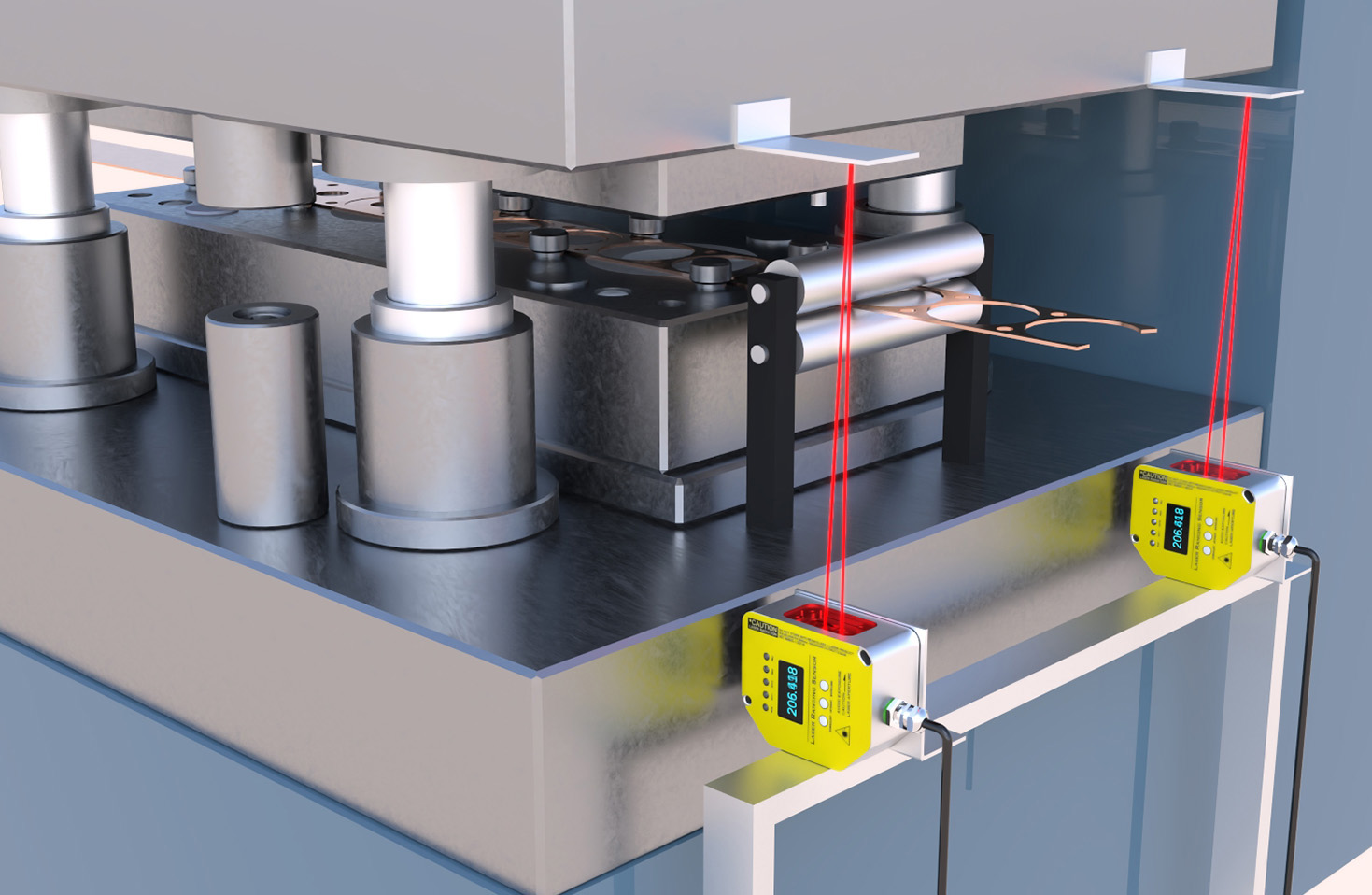
Looking ahead, the integration of LDM sensors with Industry 4.0 frameworks is a defining trend. Smart sensors with integrated IO-Link communication provide detailed diagnostic data and parameterization capabilities, facilitating predictive maintenance and seamless integration into digital twin models. Advancements in miniaturization and power efficiency are also expanding their use in mobile robotics and portable devices. As machine vision systems become more sophisticated, the fusion of 1D distance data from LDM sensors with 2D/3D image data from cameras is creating powerful hybrid solutions for complex inspection tasks.

In conclusion, Laser Distance Measurement sensors represent a mature yet continuously advancing technology that is fundamental to precision, efficiency, and automation across modern industry. Their ability to deliver fast, accurate, and reliable distance data in a non-contact manner makes them an invaluable tool for engineers and system integrators aiming to optimize processes, ensure quality, and drive innovation in an increasingly automated world.
