In the realm of industrial automation and electrical control systems, proximity sensors are indispensable components. They provide non-contact detection of objects, enabling precise, reliable, and wear-free operation in countless applications. Understanding the different types of proximity sensors is crucial for selecting the right technology for a specific task. This guide delves into the primary categories, their operating principles, and typical use cases.
The fundamental principle behind all proximity sensors is the detection of a target object's presence or absence within a specified sensing range without physical contact. This is achieved through various physical phenomena. The main types can be classified based on their sensing technology: inductive, capacitive, ultrasonic, photoelectric, and magnetic (Reed switch or Hall effect).
Inductive Proximity Sensors are arguably the most common in industrial settings. They generate an electromagnetic field from a coil in the sensor's face. When a metallic object (ferrous or non-ferrous) enters this field, it induces eddy currents within the target. The sensor detects this change in the oscillation amplitude or frequency. Key characteristics include their ability to detect only metals, robustness in harsh environments (resistant to dust, oil, and water with appropriate housing), and typically short sensing ranges (from a few millimeters to about 60 mm). They are ideal for counting metal parts, detecting piston position in cylinders, or as limit switches in machine tools.
Capacitive Proximity Sensors operate by generating an electrostatic field. They can detect both metallic and non-metallic materials, including liquids, powders, plastics, and glass. The sensor forms one plate of a capacitor, the target object forms the other, and the air gap is the dielectric. As a target enters the field, it changes the capacitance, which is detected by the sensor's circuitry. Their sensing range is similar to inductive types but can be influenced by the material's dielectric constant. Common applications include level detection of liquids or granular materials in tanks, detecting non-metallic objects on conveyor belts, and touch-sensitive controls.
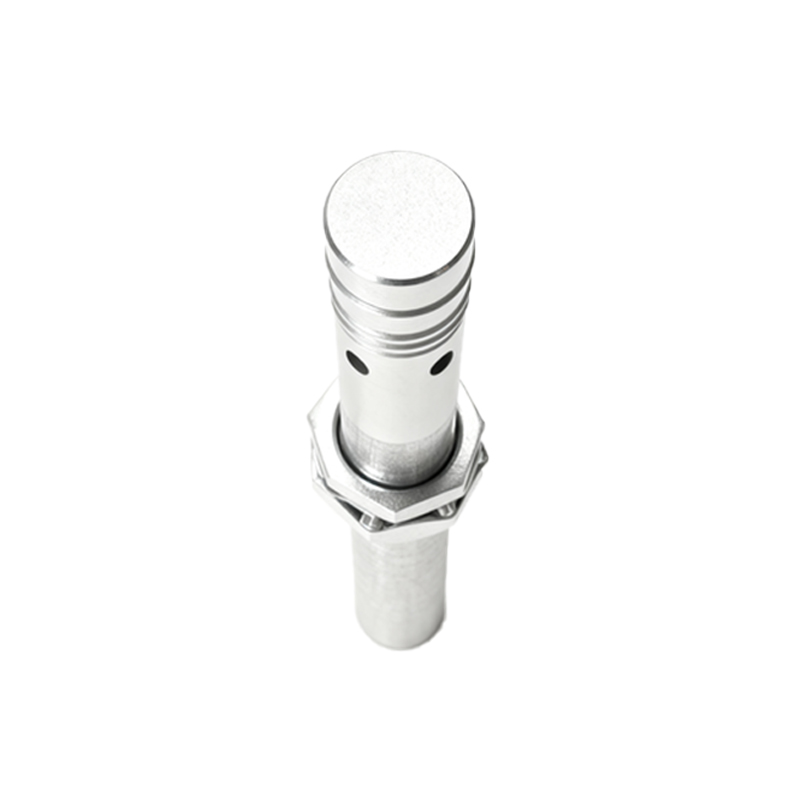
Ultrasonic Proximity Sensors use sound waves beyond the human hearing range. They emit high-frequency ultrasonic pulses and measure the time it takes for the echo to return from a target object. This time-of-flight principle allows them to measure distance as well as simple presence detection. They can detect almost any material, regardless of color, transparency, or surface texture, as long as it reflects sound sufficiently. Sensing ranges can be much longer, from centimeters to several meters. They are used in parking assist systems, liquid level sensing, object profiling, and collision avoidance in automated guided vehicles (AGVs).
Photoelectric Sensors utilize light beams, typically infrared, visible red, or laser. They consist of an emitter (light source) and a receiver. Detection occurs when the target object interrupts or reflects the light beam. There are three main operating modes: Through-beam (separate emitter and receiver, object breaks the beam), Retro-reflective (sensor and reflector, object breaks the beam), and Diffuse (reflective), where the sensor detects light reflected directly from the target. They offer the longest sensing ranges (up to hundreds of meters for some through-beam models) and can detect virtually any object. Applications are vast, including object counting on high-speed lines, bottle detection in packaging, and edge guiding in web processing.
Magnetic Proximity Sensors include Reed switches and Hall effect sensors. Reed switches consist of two ferromagnetic reeds sealed in a glass tube. When a permanent magnet approaches, the reeds attract and close the contact. They are simple, low-cost, and used in door/window security systems and float level switches. Hall effect sensors detect changes in a magnetic field and output a proportional voltage. They are solid-state, more robust, and used for sensing speed (e.g., RPM of a motor using a ring magnet), position in linear actuators, and in brushless DC motors.
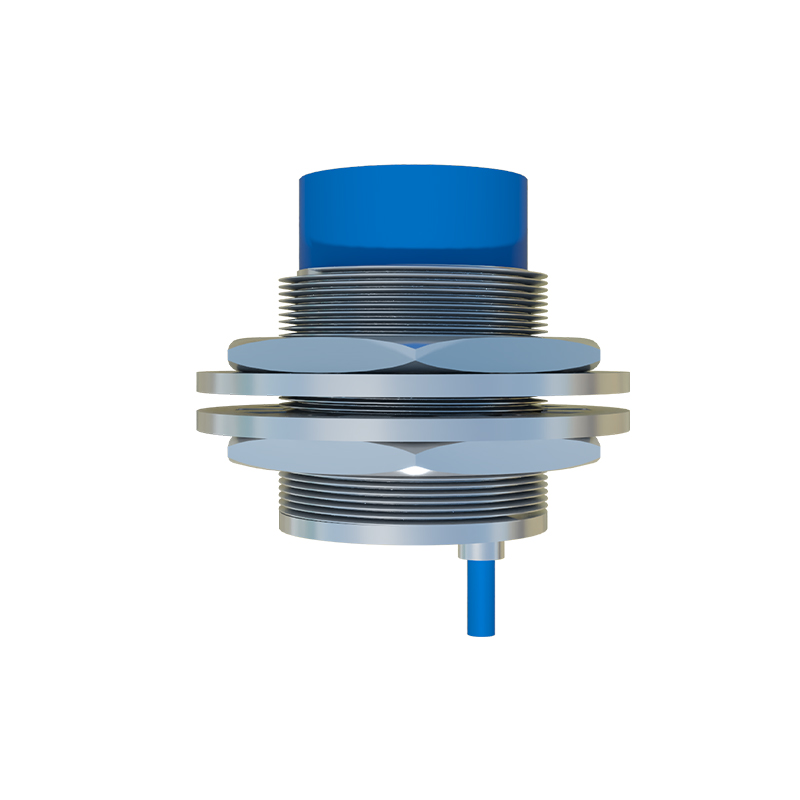
Selection criteria extend beyond the type. Engineers must consider factors like sensing distance, target material, environmental conditions (temperature, contaminants), output type (PNP/NPN, analog, IO-Link), switching frequency, and housing style (cylindrical, rectangular). For instance, an inductive sensor is perfect for detecting a steel gear tooth but useless for detecting a plastic bottle. A capacitive sensor might false-trigger in environments with high humidity variations if not properly adjusted.
In conclusion, the "best" proximity sensor does not exist; only the most appropriate one for the application. Inductive sensors dominate metal detection, capacitive sensors handle diverse materials including liquids, ultrasonic sensors excel in distance measurement and challenging surfaces, photoelectric sensors offer versatility and long range, and magnetic sensors provide simple, reliable detection of magnetic fields. A deep understanding of these technologies empowers electrical engineers to design more efficient, reliable, and innovative automated systems, forming the backbone of modern smart manufacturing and process control