In the realm of industrial automation and control systems, proximity sensors are indispensable components for non-contact object detection. Among the various configurations available, the 3-wire 24V DC Normally Open (NO) proximity sensor stands out as a prevalent and reliable choice for countless applications. This article delves into the operational principles, wiring methodology, key advantages, and practical considerations for integrating these sensors into modern electrical systems.
Fundamentally, a 3-wire 24V DC NO proximity sensor operates by generating an electromagnetic field. When a metallic or sometimes non-metallic target enters this sensing field, it causes a change in the oscillator's amplitude or frequency. This change is detected by the sensor's internal circuitry, which subsequently triggers a switching action in its solid-state output. The "Normally Open" designation means that in the absence of a target (its default state), the output switch is open, and no current flows through the load. When a target is detected within the specified sensing range, the switch closes, completing the circuit and allowing current to power the connected load, such as a PLC input, relay coil, or indicator lamp.
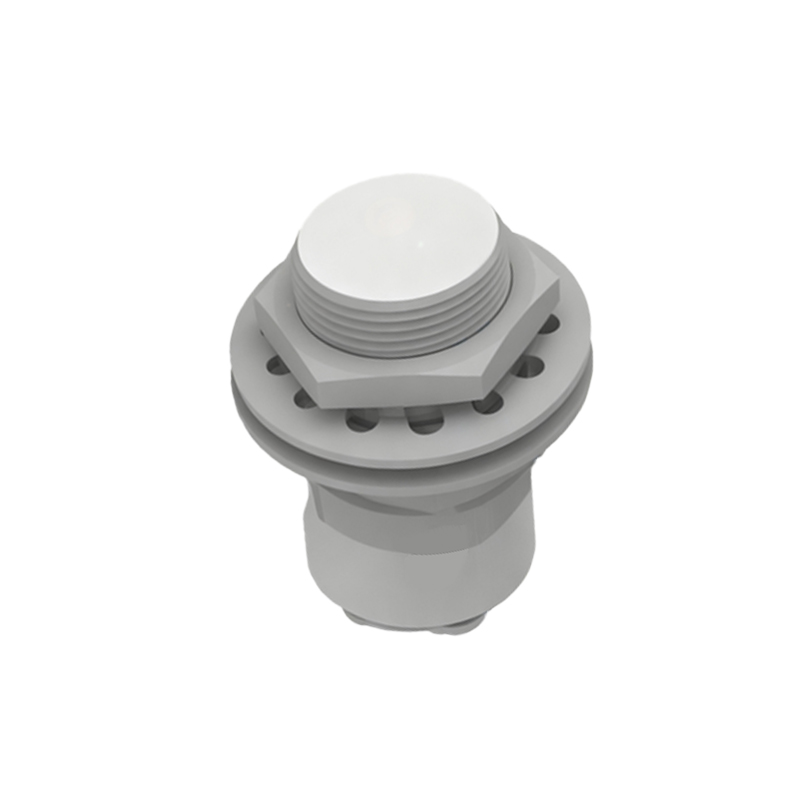
The "3-wire" configuration is a key feature that simplifies installation and enhances functionality compared to 2-wire sensors. These three wires are universally color-coded for standardization: Brown, Blue, and Black. The brown wire is connected to the positive DC supply voltage (+24V). The blue wire is connected to the common or negative side of the power supply (0V). The black wire is the signal or output wire. In a Normally Open sensor, the black wire provides a switched positive voltage relative to the blue wire when the target is detected. This sourcing (PNP) configuration is common, though sinking (NPN) types also exist, where the black wire would switch the negative side. It is crucial to verify the sensor's datasheet for the specific output type (PNP NO vs. NPN NO) to ensure compatibility with the control system's input card.
The choice of a 24V DC power standard is deliberate. It offers a safe low-voltage operational environment, reducing risks associated with electric shock and simplifying compliance with safety regulations. Furthermore, 24V DC is less susceptible to electrical noise and voltage drops over long cable runs compared to lower voltages, ensuring stable and reliable sensor operation in electrically noisy industrial settings. The solid-state output provides fast switching speeds, high switching frequency, and exceptional longevity, as there are no mechanical contacts to wear out.
Selecting and applying a 3-wire 24V NO proximity sensor requires attention to several technical parameters. The sensing range, typically a few millimeters to tens of millimeters, must be appropriate for the application, often with a safety margin. The sensing object material (e.g., mild steel, stainless steel, aluminum, brass) affects the effective range, as different materials have different damping effects on the electromagnetic field. Environmental factors are critical; sensors are rated with an Ingress Protection (IP) code (e.g., IP67) to define their resistance to dust and water ingress. For harsh environments involving coolants or chemicals, sensors with specific housing materials like PTFE or nickel-plated brass are necessary. Additionally, considering electrical characteristics like residual current (leakage current) and short-circuit protection is vital for system integrity.
A significant advantage of the 3-wire design is its ability to provide a clear, unambiguous signal state. Unlike 2-wire sensors that have a residual current even when "off," a 3-wire NO sensor's output, when open, presents a high impedance, allowing it to cleanly interface with programmable logic controllers (PLCs) and other sensitive electronic inputs without false triggering. This makes them ideal for precise counting, positioning, and end-of-travel detection tasks in machinery, conveyor systems, and automated assembly lines.
In conclusion, the 3-wire 24V DC Normally Open proximity sensor is a cornerstone of industrial sensing. Its robust design, straightforward wiring, compatibility with standard control voltages, and reliable solid-state output make it a versatile and trusted solution. By understanding its operating principle, correctly interpreting wiring diagrams, and carefully considering application-specific requirements, engineers and technicians can ensure optimal performance and reliability in their automated systems, contributing to enhanced productivity and operational safety.