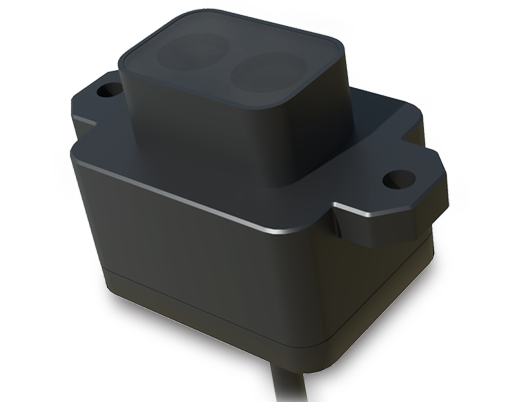
Laser sensors represent a cornerstone of modern industrial automation and precision measurement. Operating on the principle of emitting a focused beam of coherent light and analyzing its reflection, these devices provide non-contact, high-accuracy detection and measurement capabilities far surpassing traditional mechanical or photoelectric methods. The core technology hinges on evaluating parameters such as time-of-flight, phase shift, or triangulation of the laser beam to determine distance, presence, or profile of a target object with micron-level resolution.
The market offers a diverse array of laser sensor types, each engineered for specific operational demands. Laser Distance Sensors utilize time-of-flight or phase-shift measurement for long-range applications, such as level monitoring in silos or vehicle positioning. Laser Displacement Sensors, often based on triangulation, excel in ultra-precise, short-range measurements for thickness gauging, vibration analysis, or component inspection. Laser Contrast Sensors are optimized for detecting marks, colors, or subtle surface differences on packaging lines. Furthermore, Laser Profile Sensors project a line of laser light to capture the complete 2D or 3D contour of an object for quality control in manufacturing. Key selection criteria include measuring range, spot size, response time, environmental resistance (to dust, ambient light, or temperature fluctuations), and output interfaces (analog, digital, or fieldbus).
Industrial applications are vast and transformative. In automotive assembly, laser sensors ensure perfect gap and flush measurements between body panels. In electronics manufacturing, they verify component placement on PCBs with incredible speed. Logistics and warehousing rely on them for parcel dimensioning and automated guided vehicle (AGV) navigation. Beyond presence detection, they enable complex tasks like edge detection, width measurement, and robotic guidance, providing the "eyes" for collaborative robots (cobots). Their robustness allows reliable operation in harsh environments where oil, coolant, or metal shavings are present.
Implementing a laser sensor system requires careful consideration. Proper alignment and mounting are critical to avoid interference or erroneous readings from background objects. The material, color, and surface finish of the target significantly affect reflectivity and must be accounted for during sensor selection and calibration. For instance, a dark, matte surface absorbs more light, potentially requiring a sensor with higher output power or a specialized receiver. Regular maintenance, primarily lens cleaning, is essential to sustain optimal performance. Modern sensors integrate intelligent features like teach-in functions, IO-Link communication for parameterization and diagnostics, and built-in algorithms to filter out environmental noise.

The future trajectory of laser sensor technology points toward miniaturization, enhanced intelligence, and multi-sensor fusion. Integration with AI and machine vision systems will enable more sophisticated analysis, such as defect classification beyond simple dimensional checks. Developments in blue laser technology offer advantages for measuring hot or shiny metals that traditionally challenge red lasers. As Industry 4.0 and smart factories evolve, laser sensors will become even more integral, providing the critical, reliable data stream necessary for predictive maintenance, digital twins, and fully autonomous production systems. Their unparalleled precision, speed, and versatility ensure they remain an indispensable tool for engineers driving efficiency, quality, and innovation across countless sectors.