In the realm of industrial automation and control, the selection of sensing technology is a critical decision that directly impacts efficiency, reliability, and safety. Among the diverse array of sensors available, capacitive proximity sensors have carved out a significant and enduring niche. The question of whether they are "good" is not a simple yes or no, but rather an exploration of their inherent characteristics, advantages, limitations, and ideal application scenarios. This article provides a detailed, industry-focused analysis to help engineers and system integrators make informed decisions.
Fundamentally, a capacitive proximity sensor operates by generating an electrostatic field. The sensor, which acts as one plate of a capacitor, emits this field. When a target object enters this field, it effectively becomes the second plate, altering the capacitance of the system. The sensor's internal oscillator detects this change, triggering a switch in its output state. Unlike inductive sensors that only detect metals, capacitive sensors can detect a vast range of materials—liquids, plastics, glass, wood, and granular substances—provided the material has a dielectric constant different from air. This material versatility is their primary and most celebrated strength.
The advantages of capacitive sensors are substantial in specific contexts. Their ability to detect non-metallic objects makes them indispensable in industries like packaging, food and beverage, wood processing, and chemical handling. They are excellent for level detection of liquids, powders, or granules through non-metallic container walls, enabling non-contact monitoring that prevents contamination. Modern capacitive sensors offer impressive sensing ranges for their technology, with some models detecting objects several tens of millimeters away. They are also largely unaffected by the target's color, surface finish, or reflectivity, which can plague optical sensors. Furthermore, they provide consistent performance in the presence of dust, light smoke, or vapors, where optical beams might scatter or fail.
However, to declare them universally "good" would be misleading. They come with distinct limitations that must be carefully considered. Capacitive sensors are highly sensitive to environmental changes. Fluctuations in humidity and temperature can affect the dielectric constant of air, potentially leading to false triggering or reduced sensing distance. Their sensitivity can also be a drawback; they can be influenced by non-target materials in the background or adjacent to the sensing face, requiring careful shielding and installation. Adjusting the sensitivity potentiometer is often necessary to tune out parasitic effects from mounting brackets or container walls, adding to commissioning time. Compared to rugged inductive sensors, their sensing faces can be more vulnerable to physical damage or coating by the material they are detecting (like sticky liquids), which can impair function.
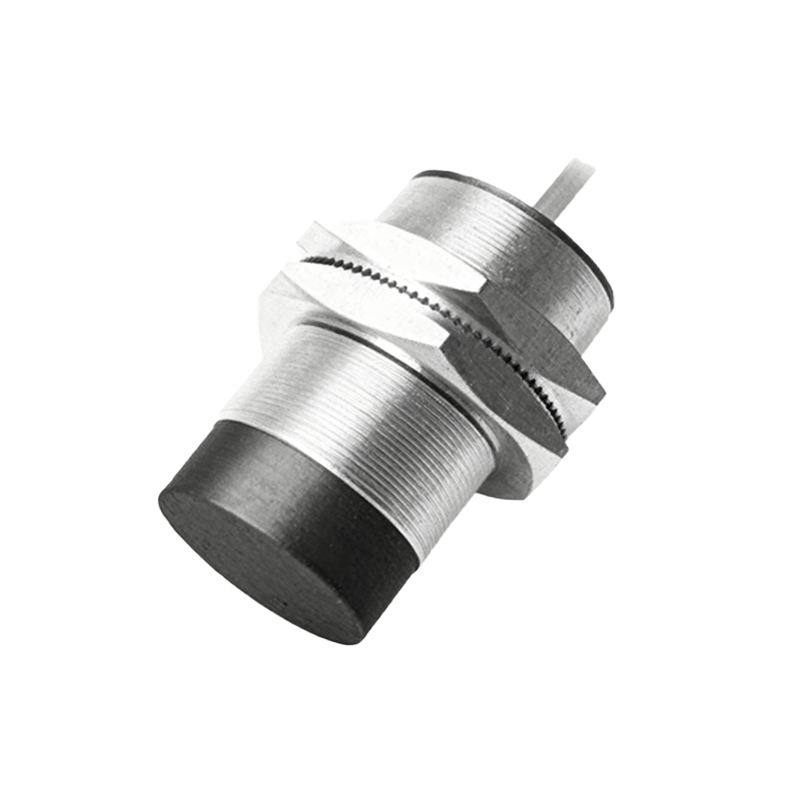
So, are they good? The answer is a resounding yes, but with crucial caveats. They are exceptionally good at solving specific problems where other sensor types fall short. For detecting the presence of a plastic bottle cap, monitoring the fill level of detergent in a PVC tank, or counting stacked cardboard boxes, they are often the optimal and most cost-effective solution. They are less ideal in environments with extreme or rapid environmental changes, or where very high-speed detection of small metallic parts is required (here, inductive sensors excel). In applications involving clear liquids or very thin plastic films, achieving reliable detection may require fine-tuning.
Best practices are key to leveraging their goodness. Proper installation is paramount: ensuring a stable mounting, maintaining the recommended clearance from surrounding metal (to prevent shielding effects), and correctly adjusting the sensitivity for the specific target and background. Regular maintenance, including cleaning the sensing face from buildup, ensures long-term reliability. Modern advancements have also mitigated some traditional weaknesses. Newer designs feature robust housing materials, improved immunity to environmental interference, and even teach-in functionality for simplified setup.
In conclusion, capacitive proximity sensors are a powerful and versatile tool in the industrial sensor toolkit. Their "goodness" is not inherent but contextual. They are not a one-size-fits-all solution but a specialized instrument. For the right application—where the target is non-metallic, non-contact is essential, and environmental conditions are relatively stable—they perform superbly, offering reliable, maintenance-free operation. A thorough evaluation of the target material, operating environment, and performance requirements against the sensor's specifications is the only way to determine if a capacitive proximity sensor is the good choice for your specific application. Their continued evolution and integration into smarter industrial systems ensure their relevance will persist across countless automation challenges.