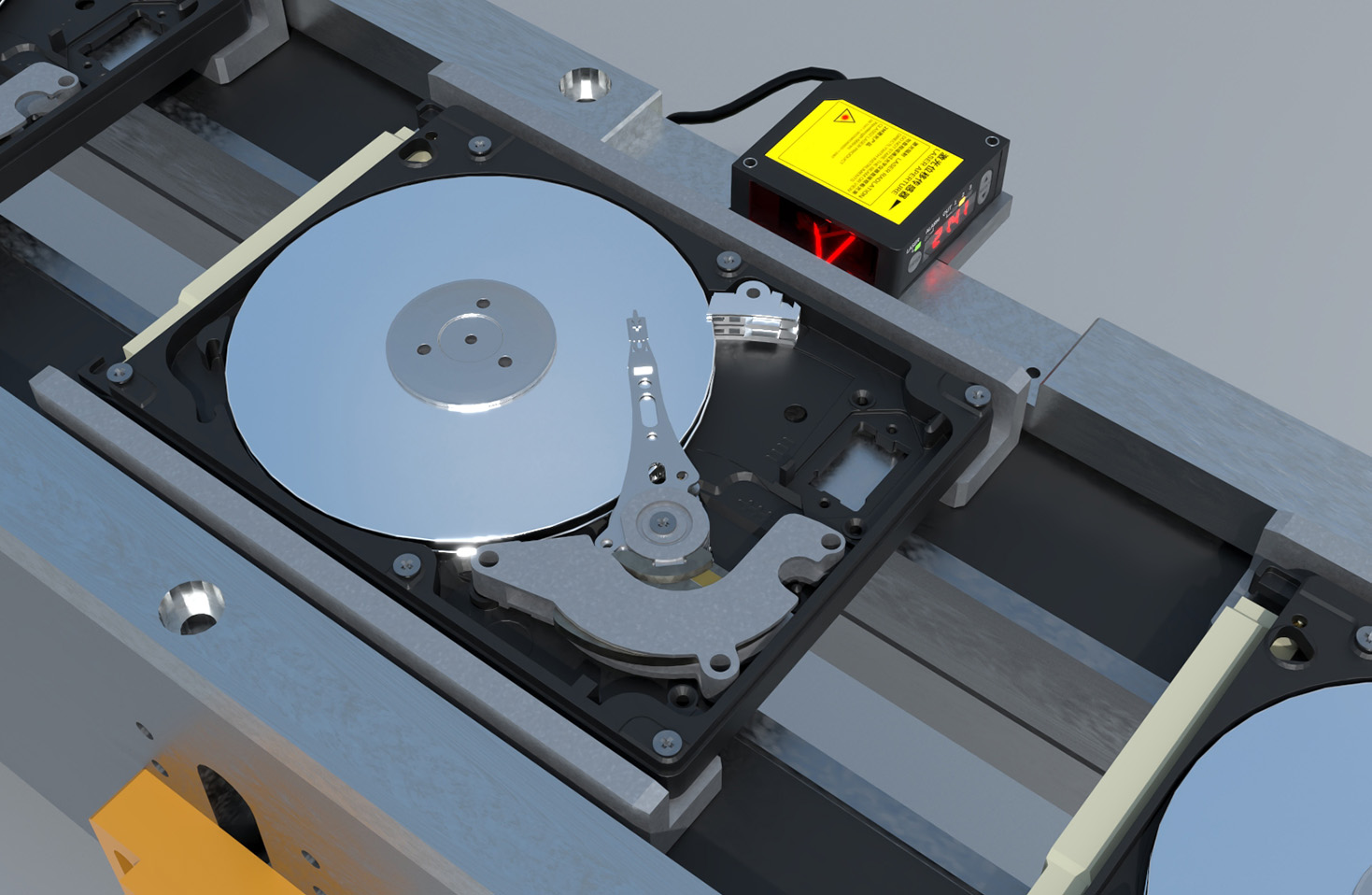
In the rapidly evolving landscape of industrial automation and precision measurement, laser area sensors have emerged as a critical technology. Unlike traditional single-point laser sensors or contact measurement tools, these advanced devices project a laser line or pattern onto a target surface, capturing a two-dimensional profile or area data through a high-resolution camera or receiver. This fundamental principle enables non-contact, high-speed inspection of an object's dimensions, shape, position, and surface defects with remarkable accuracy.
The core working mechanism involves triangulation. A laser diode emits a focused line of light. When this line strikes an object, it deforms according to the object's contour. A CMOS or CCD imaging sensor, positioned at a known angle to the laser emitter, captures this deformed line. Sophisticated onboard processors then analyze the displacement of each point along the line in the camera's field of view. Using trigonometric calculations, the sensor generates a precise height profile or a detailed cross-sectional map of the target. More advanced models can scan the laser line across an object or utilize patterned light to capture full 3D area data, creating a dense point cloud representation.
The applications for laser area sensors are vast and transformative across multiple sectors. In automotive manufacturing, they are indispensable for gap and flush measurement between body panels, ensuring quality and aesthetic consistency. They verify the precise assembly of components like brake pads and engine blocks. In electronics, these sensors inspect solder paste volume on PCBs, measure component coplanarity, and detect minute cracks or warping. The packaging industry relies on them for checking fill levels in bottles, inspecting seal integrity, and verifying package dimensions at high line speeds. Furthermore, in logistics, they facilitate robotic bin picking by providing 3D guidance and perform volume measurement for warehouse management.

Selecting the appropriate laser area sensor requires careful consideration of several technical parameters. Measurement range and stand-off distance define the operational envelope. Resolution, often in microns, determines the smallest detectable feature. The scanning speed or profile rate, measured in Hertz, must match the production line's velocity to avoid bottlenecks. Environmental robustness is crucial; factors like IP rating for dust/water resistance, tolerance to ambient light interference, and operational temperature range must align with the factory floor conditions. The choice between a blue laser (often for dark or organic materials) and a standard red laser also impacts performance on different surface types.

Integration is another key facet. Modern laser area sensors offer versatile communication protocols such as Ethernet/IP, PROFINET, EtherCAT, and simple I/O connections for seamless incorporation into PLC-controlled systems. Software suites provided by manufacturers allow for easy setup, real-time data visualization, and creation of complex inspection logic without extensive programming.
The advantages over conventional methods are compelling. Non-contact operation eliminates wear and tear and prevents damage to delicate parts. High-speed data acquisition enables 100% inline inspection rather than slow, statistical sampling. The richness of area data provides a comprehensive quality picture that single-point sensors cannot match, allowing for the detection of defects like dents, scratches, and complex shape deviations.
In conclusion, laser area sensors represent a pinnacle of optical metrology, driving quality, efficiency, and flexibility in smart manufacturing. By converting physical contours into precise digital data, they form the "eyes" of automated systems, enabling real-time decision-making and process control. As industries continue to pursue higher standards of precision and traceability, the role of these sensors will only become more central, evolving with advancements in laser technology, processing algorithms, and integration with Industry 4.0 data ecosystems.