Proximity sensors are essential devices in modern automation and electronics, designed to detect the presence or absence of objects without physical contact. Their functionality relies on several key components that work together to ensure accurate and reliable detection. Understanding these parts is crucial for engineers, technicians, and enthusiasts working with industrial machinery, consumer electronics, or robotics.
At the core of a proximity sensor is the sensing element, which varies depending on the type of sensor. Inductive proximity sensors use a coil and oscillator to generate an electromagnetic field, detecting metallic objects through changes in inductance. Capacitive sensors employ electrodes to measure capacitance shifts caused by both conductive and non-conductive materials. Photoelectric sensors rely on a light emitter and receiver, often using infrared or laser beams to sense objects by interruptions or reflections. Ultrasonic sensors utilize a transducer to emit and receive sound waves, calculating distance based on the time-of-flight principle. Each sensing element is tailored to specific applications, such as metal detection in factories or object presence in automated doors.
The oscillator circuit is another vital component, particularly in inductive and capacitive sensors. It generates a high-frequency signal that interacts with the sensing element. When an object enters the detection zone, it alters the oscillator's output—either by damping oscillations in inductive sensors or changing capacitance in capacitive ones. This change triggers the sensor's response. The oscillator's stability directly impacts detection accuracy, making it a critical part for precision tasks like assembly line positioning or material handling.
Signal processing units convert raw data from the sensing element into usable outputs. These include amplifiers to boost weak signals, filters to eliminate noise from environmental interference, and comparators to set detection thresholds. In advanced sensors, microcontrollers or integrated circuits (ICs) handle complex processing, enabling features like adjustable sensing ranges or digital communication protocols (e.g., IO-Link or PROFINET). This component ensures the sensor can operate reliably in harsh conditions, such as high temperatures or electromagnetic interference, common in automotive or manufacturing settings.
The output stage translates processed signals into actions. Most proximity sensors provide switching outputs, including transistor-based (NPN or PNP) or relay contacts. These outputs connect to control systems like PLCs (Programmable Logic Controllers) or microprocessors, triggering operations like stopping a conveyor belt or activating a robotic arm. Some sensors offer analog outputs (e.g., 4-20 mA or 0-10 V) for continuous distance measurement, useful in level monitoring or thickness gauging applications. The output stage must match the load requirements of the connected equipment to prevent malfunctions.
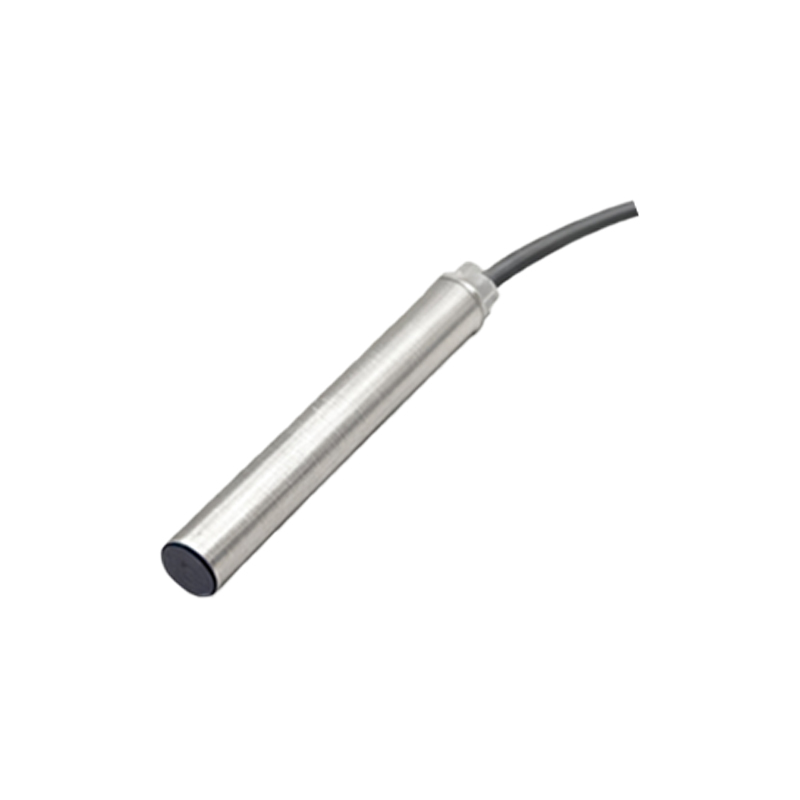
Housing and protective elements safeguard internal components. Proximity sensors often feature rugged enclosures made of materials like stainless steel, nickel-plated brass, or PBT plastic, chosen for durability and resistance to corrosion, moisture, or chemicals. Sealing ratings (e.g., IP67 or IP69K) indicate protection against dust and water ingress, essential for outdoor or washdown environments. Additionally, shielding mechanisms prevent false triggers from adjacent sensors or metal surfaces, ensuring stable performance in crowded installations.
Power supply units regulate voltage for consistent operation. Many sensors operate on DC (e.g., 10-30 V) or AC (e.g., 90-250 V) power, with built-in voltage regulators or surge protectors to handle fluctuations. Low-power variants are used in battery-driven devices, such as IoT sensors or portable gadgets. Proper power management extends the sensor's lifespan and reduces energy costs in large-scale deployments.
In summary, proximity sensors integrate multiple specialized parts—from sensing elements and oscillators to signal processors and housings—to deliver non-contact detection. Their design balances sensitivity, durability, and adaptability, making them indispensable in industries like automotive, packaging, and smart infrastructure. By selecting sensors with appropriate components, users can optimize performance for specific challenges, such as high-speed detection or harsh environmental conditions.