The automotive industry is undergoing a seismic shift, propelled by the relentless march toward autonomy. At the heart of this transformation lies a critical enabling technology: LiDAR, or Light Detection and Ranging. Often described as the "eyes" of a self-driving car, LiDAR sensors create high-resolution, three-dimensional maps of the surrounding environment by emitting pulsed laser light and measuring the time it takes for the reflections to return. This capability is paramount for precise object detection, classification, and distance measurement, especially in conditions where cameras or radar may falter. Within this burgeoning ecosystem, a select group of companies has emerged as the definitive leaders, shaping the technological roadmap and commercial deployment of automotive-grade LiDAR.
The role of LiDAR in advanced driver-assistance systems (ADAS) and autonomous driving cannot be overstated. While cameras provide rich visual data and radar excels at measuring speed and distance in all weather, LiDAR offers unparalleled precision in spatial awareness. It generates a precise point cloud, a detailed 3D representation that allows vehicles to distinguish between a pedestrian, a cyclist, and a stationary object like a fire hydrant with high reliability. This redundancy and complementary data fusion with other sensors are essential for achieving the high levels of safety required for SAE Level 3 and above automation. Consequently, automakers and technology integrators are increasingly viewing sophisticated LiDAR not as an optional luxury but as a foundational component for the next generation of mobility.
Identifying the leaders in this space requires examining several key dimensions: technological innovation, production scalability, automotive-grade reliability, and strategic partnerships with major OEMs. One prominent leader is Velodyne Lidar, a pioneer that helped define the early market with its iconic rotating mechanical sensors. While facing intense competition, the company has aggressively pivoted towards solid-state and semi-solid-state designs like the Velarray, focusing on compact, embeddable solutions suitable for series production vehicles. Its extensive patent portfolio and experience remain significant assets.
Another formidable contender is Luminar Technologies, which has gained considerable traction through its long-range, high-performance Iris LiDAR. Luminar's approach utilizes a unique 1550nm laser wavelength, which allows for higher power output and longer detection ranges while remaining eye-safe. This technological differentiation has secured landmark production contracts with major automakers like Volvo Cars, Mercedes-Benz, and Nissan, embedding Luminar's sensors into future consumer vehicle lines starting around the mid-2020s. Their vertical integration, from lasers to perception software, strengthens their market position.
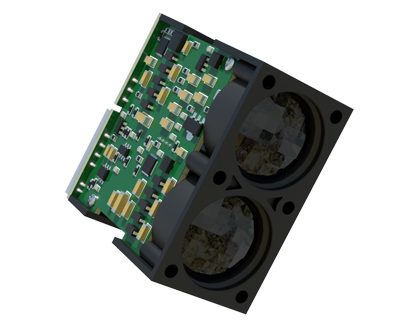
Innoviz Technologies has also established itself as a key player, particularly through its solid-state LiDAR solutions designed for mass-market adoption. Its InnovizOne and InnovizTwo sensors are notable for their balance of performance, cost, and size, making them attractive for high-volume automotive programs. A major validation of its technology was the selection by BMW to supply LiDAR for its Level 3 autonomous vehicles, a significant step towards mainstream deployment. The company's focus on perception software that processes raw LiDAR data into actionable information for the vehicle's computer adds another layer of value.
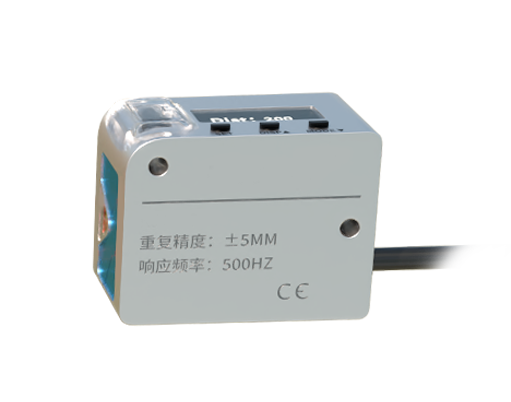
Beyond these, companies like Aeva and Cepton are making notable strides with unique technological approaches. Aeva's "4D LiDAR" goes beyond traditional point clouds by instantaneously measuring the velocity of each point, a feature enabled by its Frequency Modulated Continuous Wave (FMCW) technology. This built-in velocity data can simplify perception algorithms. Cepton, meanwhile, has secured a monumental, long-term partnership with General Motors, aiming to integrate its lidar across the automaker's vehicle portfolio, highlighting the industry's shift towards wide-scale adoption.
The path forward for these LiDAR leaders is fraught with both immense opportunity and significant challenges. The primary hurdle remains reducing the cost per unit to a level palatable for consumer vehicles without compromising performance or reliability. Achieving this requires mastering mass manufacturing techniques, a challenge that is as much about industrial engineering as it is about photonics. Furthermore, the industry must navigate evolving regulatory standards and prove the long-term durability of these complex optical systems in harsh automotive environments over a vehicle's lifetime.

In conclusion, the race to define the standard for automotive LiDAR is in a critical phase. Leaders like Velodyne, Luminar, and Innoviz, among others, are no longer just developing prototypes; they are transitioning into tier-1 suppliers, locking in production contracts that will bring this technology to millions of drivers. Their success will be measured not merely by the sophistication of their lasers, but by their ability to deliver safe, reliable, and affordable sensors at a global scale. The outcome of this competition will fundamentally determine the pace and safety profile of the autonomous future, making these LiDAR leaders true architects of the next automotive revolution.