In today's rapidly evolving technological landscape, off-the-shelf proximity sensors often fall short of meeting the unique demands of specialized applications. Custom proximity sensor development has emerged as a critical solution, bridging the gap between standard component limitations and precise operational requirements. This process involves a collaborative engineering effort to design sensors that deliver optimal performance, reliability, and integration for specific use cases.
The journey toward a custom proximity sensor typically begins with a thorough analysis of the application environment. Factors such as the target material, required sensing distance, response speed, environmental conditions (like temperature extremes, humidity, or exposure to chemicals), and physical space constraints are meticulously evaluated. For instance, an automotive assembly line requiring detection of metallic components through layers of grease presents vastly different challenges compared to a medical device needing to sense the presence of a patient's skin without contact. Understanding these parameters is foundational to selecting the appropriate sensing technology—whether inductive, capacitive, ultrasonic, or optical.
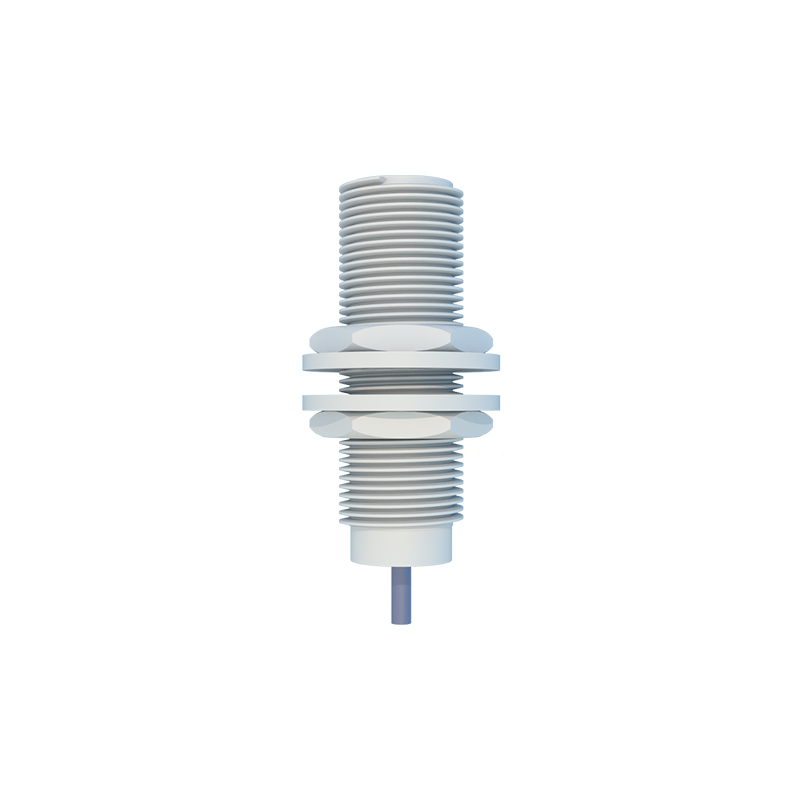
Inductive sensors, ideal for detecting metallic objects, can be customized in terms of housing material, sensing range, and output type to withstand harsh industrial environments. Capacitive sensors, sensitive to both metallic and non-metallic materials, can be tailored for specific dielectric constants, allowing for precise level detection in tanks or presence detection of materials like glass, wood, or liquids. The customization extends to the electrical interface, with engineers specifying output signals (PNP/NPN, analog, IO-Link), voltage ranges, and connection types to ensure seamless communication with the host controller or PLC.
Mechanical design is another cornerstone of customization. The sensor housing can be engineered from specialized materials like stainless steel for washdown applications in food processing, or from PEEK plastic for high-temperature resistance. The form factor—cylindrical, rectangular, or ring-shaped—is designed to fit into confined spaces or unique mounting configurations. Key specifications such as ingress protection (IP) ratings are defined to guarantee performance under dust, water, or pressure exposure.
Beyond hardware, firmware and software customization play an increasingly vital role. Smart sensors can be programmed with specific algorithms to filter out environmental noise, implement multi-point sensing logic, or provide diagnostic data for predictive maintenance. This programmability allows a single sensor platform to be adapted for multiple, slightly varied tasks within a facility, reducing inventory complexity.
The benefits of investing in custom proximity sensors are substantial. Enhanced reliability and accuracy directly reduce false triggers and production downtime. A sensor designed for a specific task often has a longer operational life, as it is not subjected to stresses outside its design parameters. Furthermore, perfect integration can streamline assembly processes, reduce the need for additional components or brackets, and ultimately lower the total system cost.
Successful customization relies on a strong partnership between the client and the sensor manufacturer. Clients must clearly articulate their operational challenges and performance goals. Reputable manufacturers bring expertise in sensor physics, material science, and electronics to translate these needs into a viable design. The process often involves prototyping, rigorous testing in simulated real-world conditions, and iterative refinement before full-scale production.
From robotic guidance systems and automated packaging machinery to advanced consumer electronics and safety interlocks, custom proximity sensors are enabling innovation across industries. They provide the precise, reliable detection that modern automated systems demand, proving that when standard solutions are insufficient, a tailored approach is not just an option—it is a necessity for achieving peak efficiency, safety, and technological advancement.