In the realm of laser sensor technology, precision and stability are paramount. Among the myriad components that ensure optimal performance, the humble 50 ohm resistor plays a critical, often understated role. This article delves into the significance, application, and technical considerations of the 50 ohm resistor within laser sensor systems, providing insights for engineers and technicians dedicated to refining sensor accuracy and reliability.
Laser sensors operate by emitting light beams and detecting reflections to measure distance, position, or presence. These systems rely on high-frequency signals and sensitive electronic circuits, where impedance matching becomes crucial. The 50 ohm standard impedance, widely adopted in RF and high-speed digital applications, is integral to minimizing signal reflections and maximizing power transfer in laser sensor interfaces. When a laser sensor's output or input stage is designed with a 50 ohm characteristic impedance, incorporating a 50 ohm resistor ensures that signals propagate without significant loss or distortion. This is particularly vital in pulsed laser sensors or those used in LiDAR applications, where fast rise times and precise timing are essential. Without proper impedance matching, signal integrity can degrade, leading to measurement errors, reduced range, or increased noise.
The 50 ohm resistor is commonly employed in termination networks, attenuation circuits, and as part of feedback loops in laser driver circuits. In termination, it absorbs excess signal energy at the end of transmission lines, preventing echoes that could interfere with the sensor's operation. For instance, in a time-of-flight laser sensor, accurate distance calculation depends on clean signal edges; any reflection due to impedance mismatch can blur these edges, compromising resolution. Additionally, in laser diode drivers, a 50 ohm resistor might be used in series or parallel configurations to control current flow, stabilize output power, and protect the diode from transient spikes. Engineers must select resistors with low parasitic inductance and capacitance to maintain performance at high frequencies, often opting for thin-film or surface-mount technologies.
Material choice and power rating are key factors when integrating a 50 ohm resistor into laser sensor designs. Carbon film or metal film resistors are typical, with metal film offering better tolerance and temperature stability—critical for sensors operating in varying environmental conditions. The power dissipation should be calculated based on the sensor's operating current and voltage; for example, a laser sensor emitting pulses at 5V with a 50 ohm load would dissipate 0.5W (using P=V²/R), necessitating a resistor rated for at least 1W to ensure longevity and avoid thermal drift. In compact sensor modules, space constraints may drive the use of 0805 or 0603 SMD packages, but heat management must be addressed via PCB layout or heatsinking.
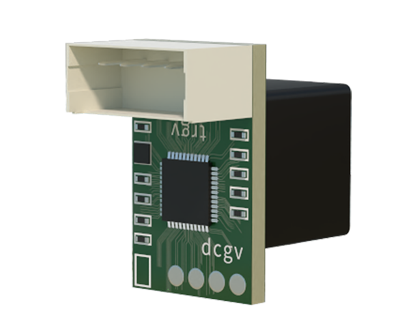
Practical implementation often involves testing and calibration. Engineers use network analyzers or time-domain reflectometers to verify impedance matching across the sensor's frequency spectrum. A well-matched 50 ohm system can enhance signal-to-noise ratio, extend the sensor's effective range, and improve repeatability. Case studies from industrial automation show that laser sensors with optimized 50 ohm terminations achieve sub-millimeter accuracy in object detection, vital for robotics or quality control. Moreover, in telecommunications-oriented laser sensors, such as those in fiber optic networks, the 50 ohm resistor aids in maintaining signal clarity over long distances.
Despite its simplicity, neglecting the 50 ohm resistor can lead to systemic failures. Common pitfalls include using resistors with high tolerance (e.g., 10%) that deviate from the ideal impedance, causing mismatches, or overlooking PCB trace impedance, which should also be designed to 50 ohms for consistency. Best practices involve simulation with tools like SPICE before prototyping, followed by empirical validation under operational loads. As laser sensors evolve toward higher speeds and integration—think autonomous vehicles or precision medical devices—the role of precise impedance control via components like the 50 ohm resistor will only grow in importance.
In summary, the 50 ohm resistor is a cornerstone of reliable laser sensor performance, enabling clean signal transmission and robust circuit design. By understanding its principles and applications, engineers can harness this component to build sensors that meet the demanding standards of modern technology, from factory floors to advanced research labs. Continuous attention to impedance matching and component selection will drive innovation in laser sensing, ensuring accuracy in an increasingly data-driven world.