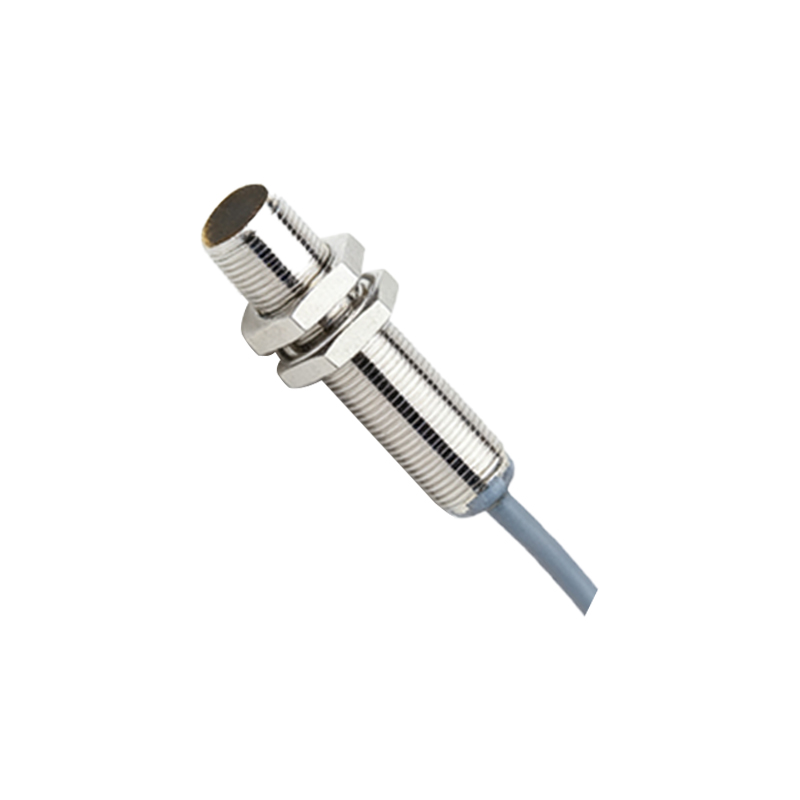
In the rapidly evolving landscape of industrial automation, the demand for compact, high-performance sensing solutions has never been greater. Ultra-thin proximity sensors represent a significant leap forward, offering unparalleled precision in a remarkably slim form factor. These advanced devices are engineered to detect the presence or absence of objects without physical contact, utilizing technologies such as inductive, capacitive, or magnetic principles. Their ultra-thin design, often measuring less than 5 millimeters in thickness, allows for seamless integration into tight spaces where traditional sensors cannot operate, enabling new possibilities in machine design and assembly line optimization.
The core advantage of ultra-thin proximity switches lies in their ability to enhance system efficiency while minimizing footprint. In applications like robotic arms, conveyor systems, and precision manufacturing equipment, these sensors provide reliable detection of metallic and non-metallic objects, ensuring accurate positioning and reducing downtime. Their low-profile construction eliminates interference with moving parts, contributing to safer and more streamlined operations. Moreover, advancements in materials and circuitry have improved their resistance to environmental factors such as dust, moisture, and temperature fluctuations, making them suitable for harsh industrial settings.
From an engineering perspective, the development of ultra-thin sensors involves meticulous attention to signal stability and response time. Modern variants feature embedded microprocessors that enable programmable functions, such as adjustable sensing ranges and output configurations, allowing customization for specific tasks. This flexibility is crucial in industries like automotive, electronics, and packaging, where rapid adaptation to production changes is essential. Additionally, their energy-efficient design aligns with sustainability goals, reducing overall power consumption in automated systems.
Looking ahead, the integration of IoT capabilities with ultra-thin proximity sensors is set to transform smart factories. By providing real-time data on machine performance and object detection, these sensors facilitate predictive maintenance and data-driven decision-making. As industries continue to prioritize miniaturization and intelligence, ultra-thin proximity switches will play a pivotal role in driving innovation, offering a blend of reliability, compactness, and advanced functionality that meets the demands of tomorrow's automated world.