The mining industry demands robust and reliable safety solutions to mitigate risks in hazardous environments. Among the critical components ensuring operational safety and efficiency, the intrinsically safe proximity sensor GUD5 stands out as a premier choice. Designed specifically for mining applications, this sensor integrates advanced technology with stringent safety standards, making it an indispensable tool in modern mining operations.
Intrinsic safety (IS) is a protection technique for safe operation of electrical equipment in explosive atmospheres. The GUD5 proximity sensor adheres to this principle by limiting electrical and thermal energy to levels insufficient to ignite a hazardous mixture. Certified for use in potentially explosive environments, such as those containing methane, coal dust, or flammable gases, the GUD5 ensures that mining activities can proceed without compromising safety. Its design prevents sparks or excessive heat, even under fault conditions, thereby reducing the risk of explosions.
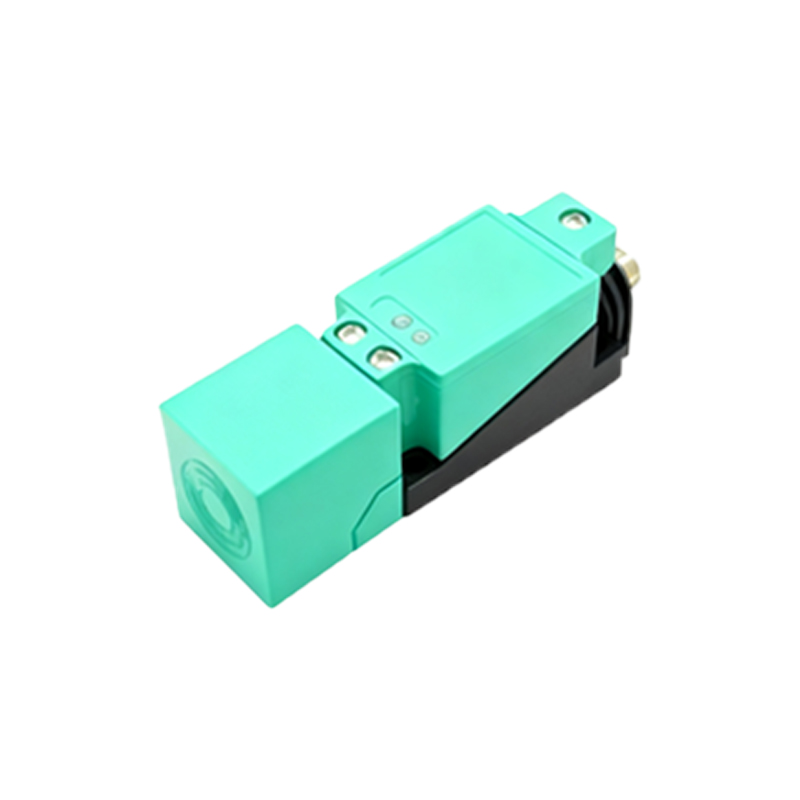
The GUD5 sensor operates on non-contact detection principles, typically utilizing inductive or capacitive technology to sense the presence of metallic or non-metallic objects. In mining, this capability is leveraged for various applications, including conveyor belt monitoring, equipment positioning, and automated control systems. For instance, on conveyor belts, the GUD5 can detect blockages or misalignments, triggering alarms or shutdowns to prevent damage and downtime. Its high sensitivity and fast response time enhance operational efficiency by enabling precise control over machinery movements.
Durability is a key feature of the GUD5, as mining environments are characterized by extreme conditions such as high humidity, dust, vibrations, and temperature fluctuations. Constructed with rugged materials like stainless steel or reinforced polymers, the sensor is resistant to corrosion, impact, and wear. Its IP67 or higher ingress protection rating ensures that it remains operational despite exposure to water and particulate matter. This robustness translates to reduced maintenance needs and longer service life, contributing to lower total cost of ownership.
Installation and integration of the GUD5 are straightforward, thanks to its compact design and compatibility with standard mining control systems. The sensor typically features adjustable sensing ranges and output options, such as PNP or NPN configurations, allowing for flexible deployment in diverse setups. Wiring is simplified with color-coded cables or plug-and-play connectors, minimizing installation time and errors. Additionally, the GUD5 often includes diagnostic LEDs that indicate power status and detection signals, facilitating quick troubleshooting and maintenance.
In terms of performance, the GUD5 offers high accuracy and repeatability, with sensing distances tailored to mining requirements. It can detect objects from a few millimeters to several centimeters away, depending on the model and target material. False triggering is minimized through advanced filtering algorithms, ensuring reliable operation even in noisy electrical environments. The sensor's low power consumption aligns with energy-efficient practices, supporting sustainable mining initiatives.
Regulatory compliance is paramount in the mining sector. The GUD5 meets international standards such as ATEX, IECEx, and MSHA, certifying its suitability for hazardous locations worldwide. These certifications validate that the sensor has undergone rigorous testing for safety and performance, providing peace of mind to operators and regulators alike. Regular calibration and adherence to manufacturer guidelines further ensure ongoing compliance and optimal functionality.
Looking ahead, the integration of the GUD5 with Industry 4.0 technologies is transforming mining operations. By connecting to IoT platforms or supervisory control and data acquisition (SCADA) systems, the sensor enables real-time monitoring and data analytics. This connectivity allows for predictive maintenance, where potential failures are identified before they occur, reducing unplanned downtime. Moreover, data collected from GUD5 sensors can optimize production processes, enhance safety protocols, and support decision-making for resource management.
In conclusion, the intrinsically safe proximity sensor GUD5 represents a fusion of safety, reliability, and innovation tailored for the mining industry. Its ability to operate in explosive atmospheres, coupled with durable construction and versatile applications, makes it a vital component in safeguarding personnel and assets. As mining continues to evolve toward automation and digitalization, the GUD5 will play an increasingly important role in driving efficiency and safety standards. For engineers and operators seeking a proven solution for proximity detection in hazardous environments, the GUD5 stands as a trusted and effective choice.