In the realm of industrial automation, the reliability and precision of sensing technology are paramount. Among the myriad of components that form the backbone of modern manufacturing and control systems, proximity sensors hold a critical position. The TRD30-25DN, a specific model within the broad category of inductive proximity sensors, exemplifies the engineering excellence required for demanding applications. This article provides a detailed technical examination of the TRD30-25DN, covering its operating principles, key specifications, typical applications, and installation considerations.
The TRD30-25DN is a cylindrical, shielded (flush-mountable), inductive proximity sensor. Its core operating principle is based on electromagnetic induction. The sensor generates a high-frequency oscillating electromagnetic field from its active face. When a metallic object—specifically a ferrous (iron-based) or non-ferrous (like aluminum, copper, brass) target—enters this field, eddy currents are induced on the surface of the target. This causes a change in the oscillation amplitude within the sensor's coil circuit. An integrated evaluation circuit detects this change and triggers a solid-state switching output. The "DN" suffix typically denotes a Normally Open (NO) output configuration, meaning the output switches to the "on" state when a target is detected within the sensing range.
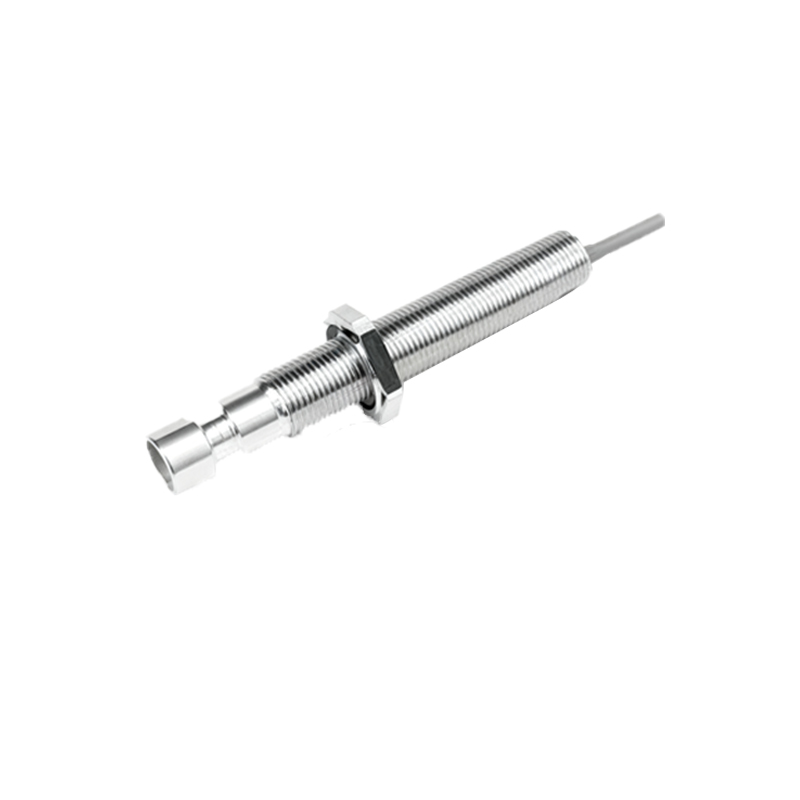
Key technical specifications define the performance envelope of the TRD30-25DN. The model number itself is descriptive: '30' often refers to the housing diameter, which is 30 mm, a standard size offering robust physical construction. '25' indicates the rated sensing distance (Sn), which is 25 mm for this model. It is crucial to note that the effective operating distance can vary slightly based on the target material. For a standard mild steel (Fe360) target, the sensor achieves the full 25 mm. For stainless steel (SUS304), the sensing distance is typically reduced to approximately 21 mm, and for aluminum, it may be around 10 mm. This factor must be carefully accounted for during system design. The sensor operates on a wide range DC supply voltage, commonly 10-30 VDC, making it compatible with standard industrial control voltages. Its output is typically a 3-wire configuration (brown: +V, blue: 0V, black: signal) with a PNP (sourcing) transistor output, capable of switching loads up to 200 mA. This is sufficient to directly drive relays, PLC inputs, or small solenoids. Key performance metrics include a high switching frequency, often around 500 Hz, allowing for the detection of rapidly moving objects, and a high degree of immunity to electrical noise (EMI/RFI) due to its built-in shielding and circuitry.
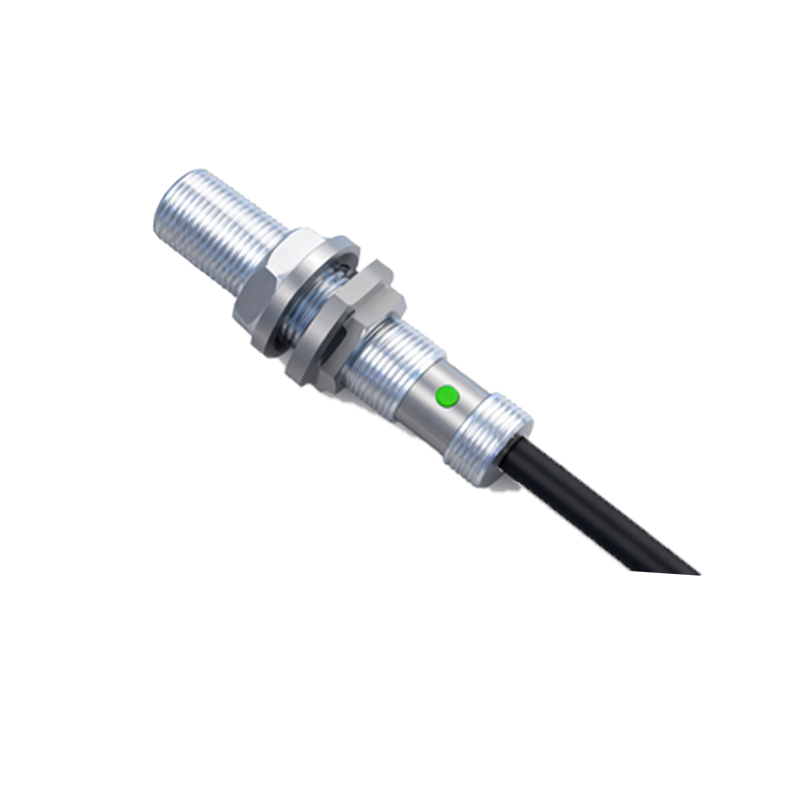
The application scope for the TRD30-25DN is vast within factory automation. Its robust M30 housing and 25mm sensing range make it ideal for position detection in heavy machinery. Common uses include verifying the presence or absence of metal parts on conveyor lines, monitoring the end positions of pneumatic or hydraulic cylinders (using the piston rod or a separate metal flag as a target), and ensuring correct indexing on rotary tables or turntables. In material handling, it can detect metal pallets or racks. Its flush-mountable design is particularly advantageous in tight spaces or where surrounding metal structures are present, as it minimizes the risk of side- or face-on interference from adjacent metallic objects.
Proper installation and environmental consideration are vital for optimal performance and longevity. While the TRD30-25DN is designed to be flush-mounted, maintaining the recommended lateral spacing between multiple sensors is necessary to prevent mutual interference. The sensor body is usually constructed from nickel-plated brass or stainless steel, with sensing face materials like PBT or PTFE, offering good resistance to oils, coolants, and mild chemicals. However, it is not submersible unless specified with a higher IP (Ingress Protection) rating, such as IP67, which many variants possess, allowing it to withstand temporary immersion and harsh washdown environments. When wiring, attention must be paid to polarity for the DC models, and load compatibility should be verified. For inductive loads like relays or solenoids, the use of a protective diode or varistor across the load is recommended to suppress voltage spikes.
In summary, the TRD30-25DN proximity sensor represents a mature, reliable, and versatile solution for non-contact metal detection in industrial settings. Its combination of a substantial sensing range, robust mechanical design, and stable electronic performance makes it a workhorse component in automation panels and machinery. Engineers and technicians selecting this sensor can expect consistent operation in detecting a wide array of metallic targets, contributing to enhanced machine safety, precise process control, and overall system reliability. Understanding its specifications and application nuances is key to leveraging its full potential within a controlled industrial ecosystem.