Proximity sensors are indispensable components in modern industrial automation, providing non-contact detection of objects within their sensing range. Their operation is fundamental to countless processes, from assembly line sequencing and robotic guidance to safety interlocks and material handling. Understanding the various operation methods is crucial for selecting, installing, and maintaining these devices for optimal performance and reliability.
The core principle of a proximity sensor is to generate an electromagnetic field or beam and detect changes caused by the presence of a target object. The primary operation methods are categorized by their underlying technology: inductive, capacitive, ultrasonic, and photoelectric.
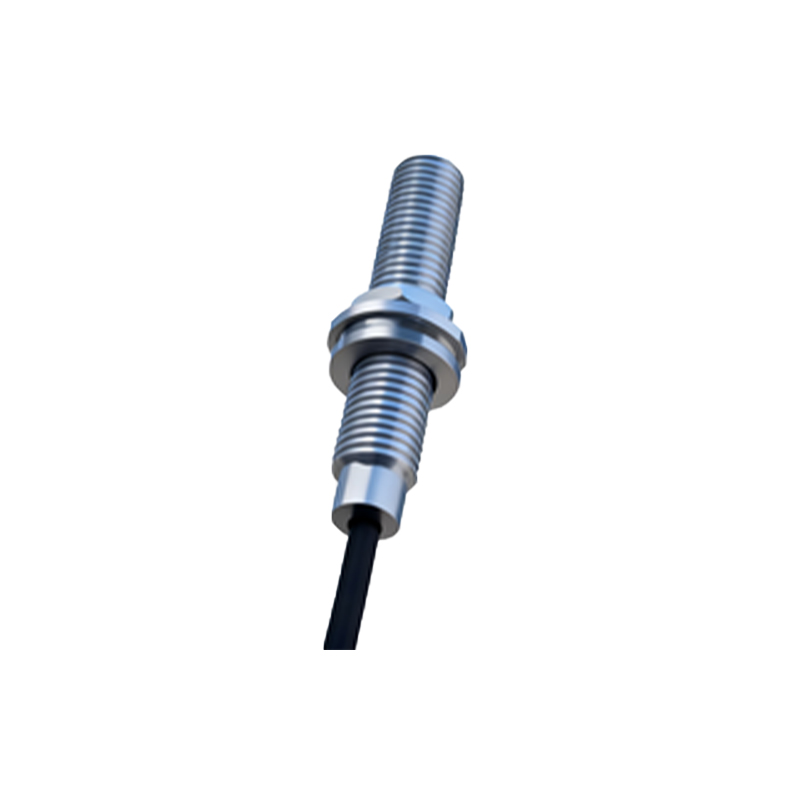
Inductive proximity sensors are the workhorses of metal detection. They operate by generating a high-frequency oscillating electromagnetic field from a coil in the sensing face. When a metallic target enters this field, eddy currents are induced on the target's surface. This causes a load on the oscillator, leading to a reduction in oscillation amplitude. The sensor's detection circuit monitors this amplitude change and triggers a solid-state output switch. These sensors are ideal for detecting ferrous and non-ferrous metals, with sensing ranges typically up to 60mm. Their robust construction makes them resistant to environmental factors like dust, oil, and coolant, perfect for harsh machining and automotive environments.
Capacitive proximity sensors can detect both metallic and non-metallic materials, including liquids, plastics, wood, and granular substances. They function by generating an electrostatic field. The sensor and the target act as two plates of a capacitor. As a target approaches, it alters the dielectric constant of the space between them, changing the capacitance of the oscillator circuit. Once this change reaches a predetermined threshold, the output state switches. A sensitivity adjustment potentiometer allows tuning for different materials and to ignore unwanted backgrounds. Common applications include level detection in tanks (liquid or powder), material presence verification on non-metallic conveyor belts, and detecting filled containers.
Ultrasonic sensors utilize sound waves beyond human hearing. They operate on either the through-beam or time-of-flight (echo) principle. In the through-beam method, a separate transmitter and receiver are used; an object is detected when it interrupts the ultrasonic beam. The more common method is the time-of-flight, where a single transducer emits a pulse of ultrasonic waves and then listens for the echo. The sensor's electronics calculate the time difference between the emitted pulse and the received echo to determine the distance to the target. This allows for precise distance measurement and presence detection, even for transparent, dark, or acoustically absorbent objects. They are widely used in parking assistance systems, liquid level control, and loop control in winding applications.
Photoelectric sensors employ light, typically infrared, visible red, or laser. Their operation methods are more varied: through-beam, retro-reflective, and diffuse (proximity). Through-beam sensors, with separate emitter and receiver units, offer the longest range and highest reliability, detecting any object that breaks the beam. Retro-reflective types use a single unit and a reflector; detection occurs when the target interrupts the light beam to the reflector. Diffuse or proximity-mode sensors rely on the reflection of light directly from the target itself. Advanced versions, like background suppression sensors, use triangulation to detect objects only within a precise range, ignoring more distant surfaces. Photoelectric sensors are versatile for detecting objects of various colors, shapes, and materials at high speeds.
Beyond selecting the correct technology, proper operation hinges on installation and configuration. Key considerations include the sensing distance, which is rated for a standard target (e.g., mild steel for inductive). Real-world sensing distance (effective operating distance) can vary with target material, size, and shape. Hysteresis, a built-in difference between the switch-on and switch-off points, prevents output chatter when a target is at the edge of the detection zone. Environmental factors are critical: temperature extremes can affect sensing range and electronics; strong electromagnetic fields can interfere with inductive sensors; ambient light may disrupt photoelectric sensors; and dust or acoustic noise can impact ultrasonic performance. Always consult the manufacturer's datasheet for specific derating and environmental ratings.
Wiring and output configuration are equally important. Most industrial proximity sensors are 3-wire DC devices (Brown/+V, Blue/Common, Black/NPN or White/PNP output) or 2-wire AC/DC devices. NPN (sinking) and PNP (sourcing) outputs must be matched correctly with the PLC or controller input module. Proper shielding and grounding are essential to minimize electrical noise interference. For analog output sensors (e.g., 4-20mA, 0-10V), ensure the receiving device is correctly scaled to interpret the signal representing distance or presence intensity.
Regular maintenance, though minimal, ensures long-term reliability. Periodically clean the sensing face of debris, oil, or buildup that could attenuate the field or beam. Check for mechanical damage to the