In the realm of modern sensor technology, laser light sources have emerged as a critical component, enabling high-precision measurements and reliable detection across numerous industries. Unlike conventional light sources such as LEDs or halogen lamps, lasers provide coherent, monochromatic, and highly directional light, which significantly enhances sensor performance in terms of accuracy, range, and stability. This article delves into the fundamental principles, types, and applications of laser light sources in sensor systems, offering insights for engineers and technical professionals.
At its core, a laser (Light Amplification by Stimulated Emission of Radiation) generates light through optical amplification. The process involves exciting a gain medium—which can be a gas (e.g., helium-neon), solid-state crystal (e.g., Nd:YAG), semiconductor (e.g., laser diodes), or fiber—to produce photons that are then amplified in a resonant cavity. This results in a beam with unique properties: coherence, where light waves are in phase; monochromaticity, emitting a single wavelength; and low divergence, maintaining focus over long distances. These characteristics make lasers ideal for sensors requiring precise control, such as in LiDAR (Light Detection and Ranging), interferometry, and spectroscopy.

Several types of laser light sources are commonly integrated into sensor designs. Laser diodes, particularly edge-emitting and vertical-cavity surface-emitting lasers (VCSELs), are widely used due to their compact size, efficiency, and modulation capabilities. They are prevalent in proximity sensors, barcode scanners, and optical encoders. Solid-state lasers, including fiber lasers, offer higher power and beam quality, suitable for industrial metrology and environmental monitoring. Gas lasers, like CO2 lasers, provide specific wavelengths for chemical sensing, while emerging technologies like quantum cascade lasers enable mid-infrared detection for gas analysis.

The selection of a laser source for a sensor depends on key parameters. Wavelength determines compatibility with the target material or phenomenon; for instance, near-infrared lasers are optimal for moisture sensing, while ultraviolet lasers suit fluorescence detection. Output power affects signal-to-noise ratio and measurement range, with higher power enabling longer-distance sensing but requiring careful safety considerations. Modulation speed is crucial for time-of-flight sensors, where rapid pulse generation allows precise distance calculation. Additionally, factors like beam profile, stability, and thermal management must be evaluated to ensure long-term reliability in harsh environments.
Applications of laser-based sensors span diverse sectors. In automotive and aerospace, LiDAR systems use pulsed lasers for 3D mapping and obstacle detection, enhancing autonomous navigation. Manufacturing relies on laser triangulation sensors for non-contact dimensional inspection, while laser Doppler vibrometers measure vibrations in machinery for predictive maintenance. Environmental sensors employ tunable diode lasers for trace gas monitoring, aiding in pollution control. In healthcare, laser sources enable optical coherence tomography for medical imaging and glucose sensing through photonic techniques.
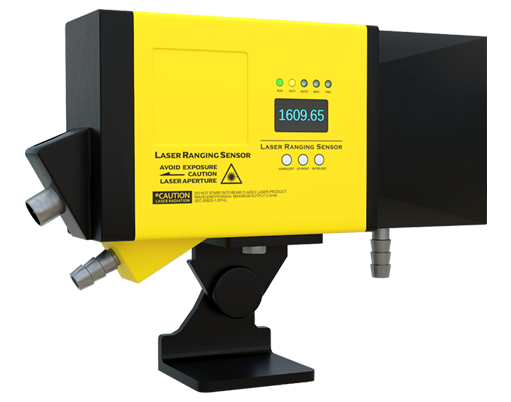
Despite their advantages, laser light sources pose challenges. Safety is paramount, as high-intensity beams can cause eye damage or fire hazards, necessitating compliance with standards like IEC 60825. Cost and complexity may be higher compared to non-laser alternatives, though advancements in semiconductor fabrication are reducing prices. Engineers must also address issues like speckle noise in coherent systems and wavelength drift due to temperature fluctuations, often incorporating feedback mechanisms or cooling solutions.
Future trends point toward miniaturization and integration, with silicon photonics enabling on-chip laser sources for portable sensors. Developments in wavelength versatility, such as supercontinuum lasers, will expand sensing capabilities across broader spectra. Additionally, the rise of quantum sensors leveraging entangled photon sources promises unprecedented sensitivity for gravitational or magnetic field detection.
In summary, laser light sources are indispensable in advancing sensor technology, offering unparalleled precision and versatility. By understanding their principles and tailoring choices to application needs, engineers can design robust sensing solutions that drive innovation in automation, safety, and scientific research. As technology evolves, lasers will continue to illuminate new frontiers in measurement and detection.