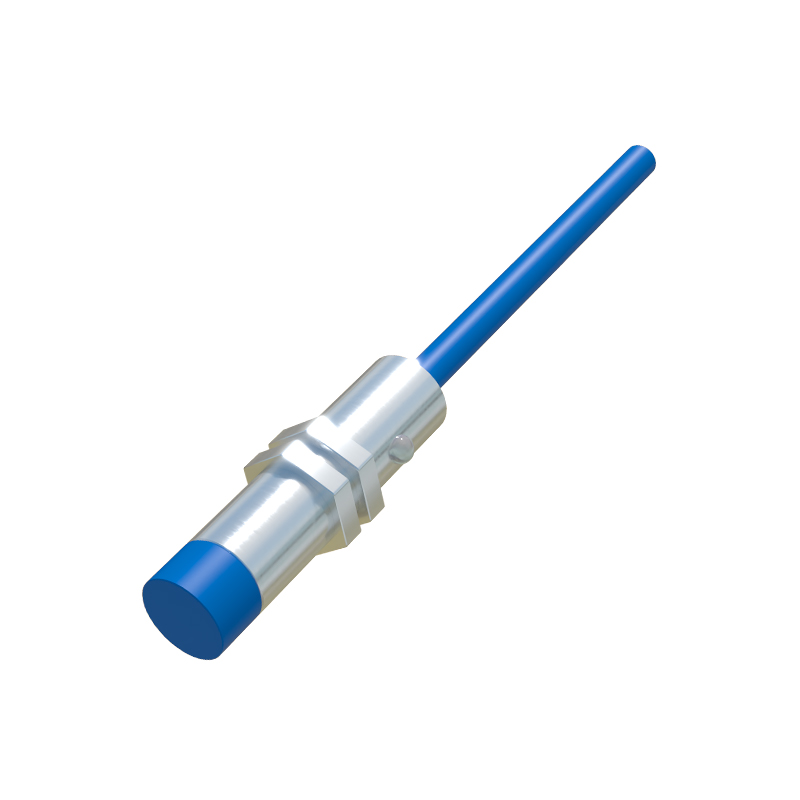
In the intricate world of industrial automation, where precision and reliability are non-negotiable, the humble proximity sensor stands as a silent sentinel. Among the diverse technologies available, capacitive proximity sensors, particularly compact models like the Janbos series, have carved out a critical niche. Unlike their inductive counterparts that detect only metals, capacitive sensors possess the unique ability to sense a vast array of materials—liquids, plastics, wood, glass, and granular substances—by detecting changes in capacitance. This versatility makes them indispensable in complex manufacturing and packaging environments.
The operational principle is elegantly straightforward. The sensor's active surface, along with the target object, forms a capacitor plate. As an object enters the sensing field, it alters the dielectric constant, causing a change in the oscillator's amplitude. This change is processed by the evaluation circuit, triggering a solid-state output switch. The genius of modern micro-sensors, such as the Janbos miniature capacitive sensors, lies in their ability to pack this sophisticated functionality into an extremely small form factor. This miniaturization is not merely about saving space; it enables installation in locations previously deemed impossible, solving intricate detection challenges on compact machinery, robotic arms, and within densely packed control panels.
Key performance parameters define their application scope. The sensing range, though typically shorter than inductive sensors (often a few millimeters to 20mm for micro models), is precisely calibrated for high-precision tasks. Factors like the target material's dielectric constant, size, and the presence of non-target materials significantly influence the effective sensing distance. For instance, detecting a water-filled bottle requires a different setup than detecting a dry powder. This is where the adjustable sensitivity feature, common in units like the Janbos E2K-C series, becomes paramount. A potentiometer allows engineers to fine-tune the sensor, ignoring interfering background materials (like a container wall) to focus solely on the target, thereby eliminating false triggers and enhancing system robustness.
The environmental resilience of these sensors is a cornerstone of their design. Encased in robust PBT or stainless-steel housings, high-quality models offer impressive ingress protection ratings (e.g., IP67), safeguarding against dust, oils, and temporary immersion. They are engineered to withstand typical industrial electrical noise, voltage fluctuations, and temperature variances from -25°C to 70°C. This durability ensures consistent performance in harsh settings, from food and beverage processing, where they might detect liquid levels through non-metallic tanks, to pharmaceutical packaging lines, verifying the presence of plastic caps or glass vials.
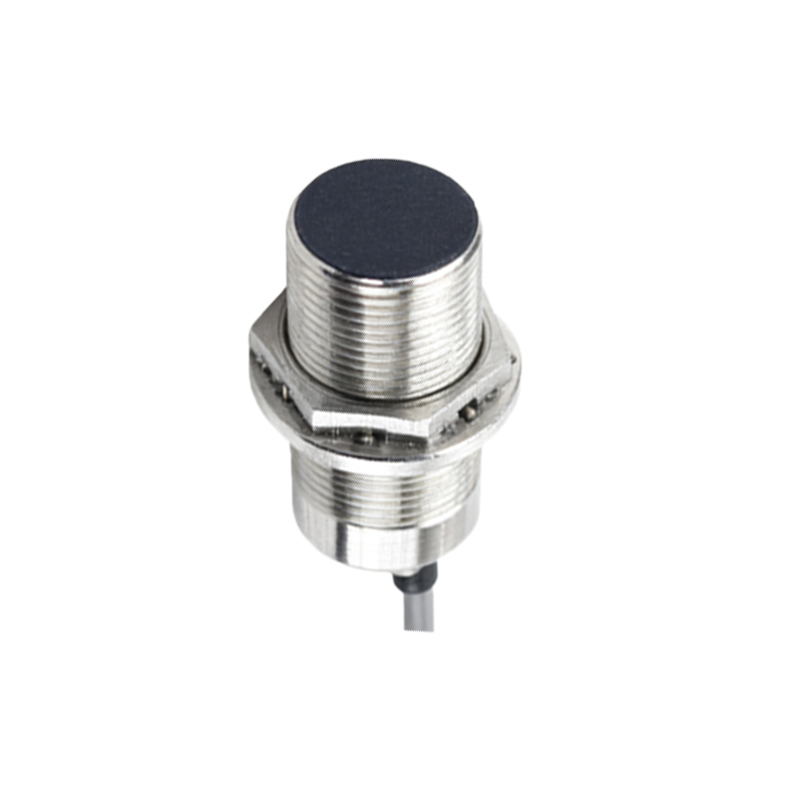
When integrating a miniature capacitive sensor, several best practices ensure optimal performance. First, proper mounting is crucial. Flush-mounted sensors have a reduced sensing range but are immune to lateral interference from the mounting bracket. Non-flush models offer longer ranges but require a clear surrounding area. Second, the electrical connection must be correct, adhering to the specified wiring for NPN (sinking) or PNP (sourcing) outputs to match the PLC's input card. Third, during commissioning, sensitivity should be adjusted with the actual target present, gradually increasing it until a stable detection signal is achieved. It is also vital to consider the sensor's hysteresis—the difference between the switch-on and switch-off points—which prevents chattering when a target is at the edge of the detection field.
Looking ahead, the evolution of capacitive micro-sensors is intertwined with Industry 4.0 trends. The next generation is moving towards IO-Link capability, transforming the sensor from a simple switch into an intelligent data point. With IO-Link, parameters like sensitivity can be remotely configured and monitored, diagnostic data (such as operating hours or temperature warnings) can be retrieved, and process values (like approximate distance) can be communicated. This digital transformation enables predictive maintenance and greater process transparency. Furthermore, advancements in materials and circuitry are pushing the boundaries of size reduction and noise immunity, promising even more reliable and versatile solutions for the smart factories of tomorrow.
In conclusion, capacitive proximity sensors, exemplified by compact and reliable lines like Janbos, are far more than simple on/off devices. They are sophisticated, adaptable components that solve complex material detection challenges. Their miniaturization, environmental toughness, and growing intelligence are key drivers in enhancing the flexibility, efficiency, and reliability of automated systems across countless industries. For engineers designing the automated lines of today and tomorrow, understanding and leveraging the full potential of these micro powerhouses is essential for innovation and operational excellence.