In industrial automation, proximity sensors are indispensable components for detecting the presence or absence of objects without physical contact. However, their reliable operation is severely challenged in dusty or particulate-laden environments commonly found in industries like mining, woodworking, food processing, cement production, and metal grinding. Dust, powder, and other airborne contaminants can coat sensor lenses, interfere with sensing fields, infiltrate housings, and ultimately lead to false triggers, reduced sensing ranges, or complete sensor failure. Selecting the right proximity sensor for such demanding conditions is not merely a preference but a critical engineering decision impacting safety, productivity, and maintenance costs. This guide outlines key considerations and best practices for engineers tasked with this selection.
The primary challenge in dusty environments is the potential for material accumulation on the sensor's active face. For optical and ultrasonic sensors, a layer of dust can attenuate or block the emitted and received signals. For inductive sensors (used for metal detection), metallic dust accumulation can cause a permanent "target present" state. Capacitive sensors, sensitive to changes in the dielectric constant, can be triggered by the dust layer itself if it is conductive or has high moisture content. Therefore, the first step is a thorough analysis of the contaminant: its composition (conductive, non-conductive, abrasive, oily), particle size, concentration, and whether it is dry or likely to form a cake-like layer.
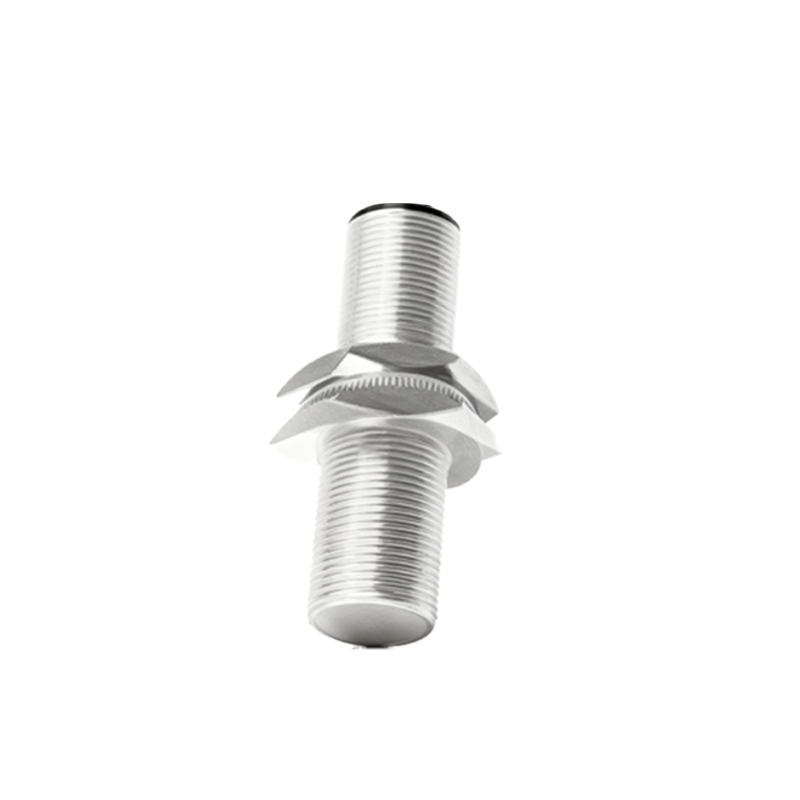
Given these challenges, the sensor technology choice is paramount. Inductive proximity sensors are often a robust choice for detecting metallic objects in dusty conditions, as their sensing principle is based on generating an electromagnetic field. They are inherently immune to non-metallic dust accumulation on their face. However, they are blind to non-metallic targets and can be fooled by heavy accumulations of ferrous (iron-based) dust or chips. Selecting models with a "shielded" or "embed-mountable" design, where the magnetic field is concentrated at the front, offers better resistance to interference from metallic dust on the sides. For severe metallic dust, sensors with a "wear-resistant" or "hard-metal" face are recommended to prevent abrasion.
Capacitive proximity sensors can detect both metallic and non-metallic materials (like wood, plastic, grains) but are more susceptible to environmental factors. In dusty settings, false triggering is a major risk. To mitigate this, look for models featuring environmental compensation circuits that can ignore slow-building layers of contamination. Some advanced capacitive sensors allow for sensitivity adjustment and teach-in functions to set the detection threshold above the background noise caused by dust.
Ultrasonic sensors emit sound waves and measure their reflection. They are excellent for bulk material level detection in silos containing powders or granules. Dust in the air can attenuate the signal over long distances, but modern ultrasonic sensors with powerful sound transducers and intelligent echo processing algorithms can often compensate. Key features to seek are automatic gain control (AGC) and temperature compensation to maintain stability despite changing environmental conditions, including dust density.
Optical sensors (photoelectric sensors) are the most vulnerable in heavy dust. However, they are sometimes unavoidable for specific applications. If optical sensing is necessary, prefer diffuse reflective sensors with background suppression or retro-reflective models over through-beam types, as alignment issues compound with lens contamination. The most critical feature is a high IP (Ingress Protection) rating, specifically IP67 or, better yet, IP69K for environments with high-pressure washdowns. Sensors with air purge connections or built-in air blast nozzles can be employed to keep the lens clear continuously. Alternatively, sensors with a "teach-in" function for sensitivity adjustment can be recalibrated to see through a thin, consistent dust layer.
Beyond the sensing technology, the mechanical design and housing are equally critical. The IP rating is the first specification to check. For dry, dusty environments, IP65 (dust-tight) is the minimum. IP67 (protected against temporary immersion) and IP69K (protected against high-pressure, high-temperature jet sprays) offer superior protection. The housing material should be resistant to abrasion—stainless steel (V2A, V4A) or ruggedized PBT plastic are common. The sensor face or window should be made of a hard, scratch-resistant material like mineral glass or ceramic. A smooth, steeply angled housing design helps prevent dust from settling on top.
Electrical output and connectivity also play a role in reliability. Sensors with short-circuit, overload, and reverse polarity protection are more resilient to wiring faults that can occur during maintenance in harsh areas. For long cable runs in electrically noisy industrial plants, choosing sensors with analog current outputs (4-20 mA) instead of voltage outputs can improve signal integrity. For digital networks, IO-Link sensors offer significant advantages: they can provide