In the realm of industrial automation and control systems, photoelectric sensors are indispensable components for non-contact detection. Among the diverse form factors available, the M5 photoelectric sensor rod, often referred to as an "M5 light rod" or "M5 sensing rod," represents a specific and highly versatile configuration. This article delves into the technical specifications, operational principles, typical applications, and selection criteria for M5 photoelectric sensor rods, providing a detailed resource for electrical engineers and industry professionals.
Fundamentally, an M5 photoelectric sensor rod is a cylindrical sensing device with an M5 threaded barrel. The "M5" designation refers to the metric thread size, specifically a 5mm diameter thread, which is a standard for mounting and installation in many industrial fixtures and panels. This compact form factor allows for easy integration into machinery where space is at a premium. The rod itself houses the core photoelectric sensing components: an emitter (typically an LED that produces infrared, red, or laser light) and a receiver (a phototransistor or photodiode). These components are arranged in either a through-beam, retro-reflective, or diffuse-reflective sensing mode, depending on the model.
The operational principle is based on the modulation and detection of a light beam. In a through-beam type M5 rod, the emitter and receiver are housed in separate units facing each other. An object is detected when it interrupts the light beam between them. This type offers the longest sensing distance and highest reliability for precise detection. Retro-reflective models house both emitter and receiver in a single rod, using a reflector to bounce the light beam back. Detection occurs when the beam is blocked. Diffuse-reflective sensors, also with a single rod, detect objects by measuring the light reflected directly from the target's surface, making them ideal for detecting objects at varying distances or without a reflector.
Key technical parameters for specifying an M5 photoelectric rod include sensing distance, light source type, output configuration, and supply voltage. Sensing distances can range from a few centimeters to several meters, with laser-based models providing the most precise, long-range detection. Common light sources are infrared (for immunity to ambient light), red light (for visible beam alignment), and laser red. Outputs are typically transistor-based (NPN or PNP) or relay-based, providing a switching signal to a PLC (Programmable Logic Controller) or other control device. Standard supply voltages are 12-24V DC, aligning with common industrial control circuits.
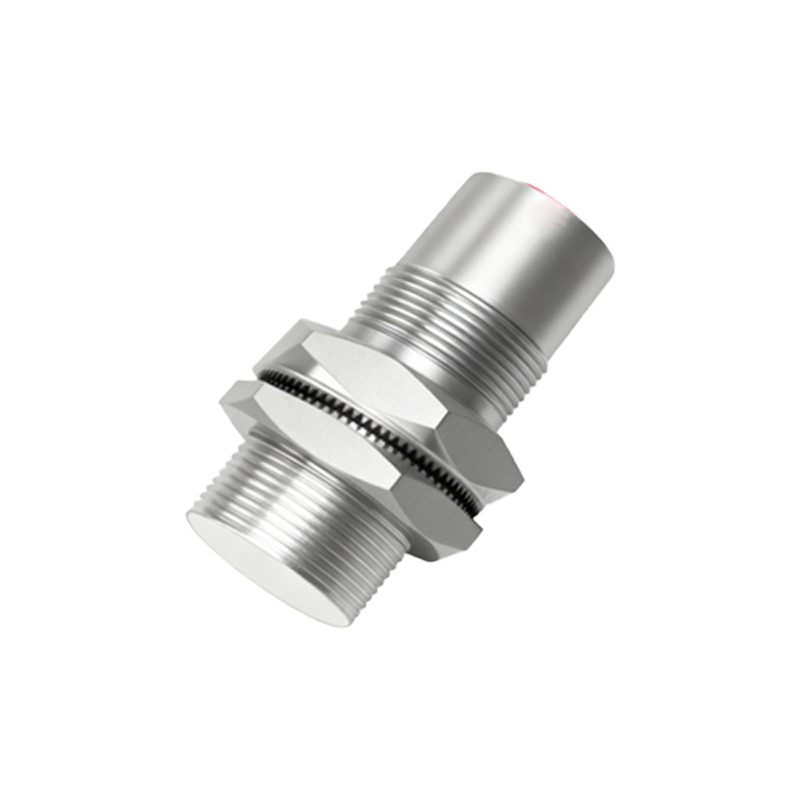
The applications for M5 photoelectric sensor rods are vast across manufacturing, packaging, material handling, and automotive industries. They are commonly used for object presence detection on conveyor lines, part counting, jam detection, limit sensing in automated machinery, and verifying the position of components in assembly processes. Their slender, threaded design makes them perfect for mounting in tight spaces, such as inside small enclosures, on robotic end-effectors, or on circuit board handling equipment. The robust metal or high-grade plastic housing often provides ingress protection ratings like IP67, ensuring reliable operation in environments with dust, moisture, or oil mist.
When selecting an M5 photoelectric sensor rod, engineers must consider several factors beyond just the thread size. The sensing mode (through-beam, retro-reflective, diffuse) must match the application's requirements for accuracy, target material, and installation constraints. The sensing distance should have a sufficient margin for reliable operation. The response time is critical for high-speed production lines. Environmental conditions dictate the necessary housing material and protection rating. Furthermore, special features like background suppression (for ignoring objects beyond a set distance) or fiber optic versions of the M5 rod are available for challenging applications involving high temperatures or extreme miniaturization.
In conclusion, the M5 photoelectric sensor rod is a precision-engineered component that offers a reliable and compact solution for a multitude of non-contact detection tasks. Its standardized M5 threaded housing facilitates easy installation and replacement, while the underlying photoelectric technology provides fast, accurate, and wear-free operation. For electrical engineers designing or maintaining automated systems, a thorough understanding of its capabilities and specifications is crucial for optimizing machine performance, ensuring safety, and enhancing overall production efficiency. Proper selection and integration of these sensors can significantly reduce downtime and improve the reliability of complex industrial processes.