In modern industrial automation, laser sensors play a critical role in precision measurement, object detection, and quality control. Their effectiveness, however, heavily relies on the communication protocols that enable data exchange between sensors, controllers, and higher-level systems. This article delves into the key communication protocols used with laser sensors, their operational principles, and selection criteria for optimal industrial performance.
Laser sensors typically generate digital or analog signals containing measurement data such as distance, presence, or profile information. To integrate this data into automated processes, a communication protocol defines the rules, formats, and timing for data transmission. Common protocols include analog interfaces (e.g., 0-10V, 4-20mA), serial communication (RS-232, RS-485), and industrial network protocols like IO-Link, PROFINET, EtherNet/IP, and Modbus TCP.
Analog protocols, such as 4-20mA current loops, are straightforward and robust for point-to-point connections over moderate distances. They transmit a continuous signal proportional to the measured value, offering simplicity and noise resistance. However, they lack advanced diagnostics, parameterization capabilities, and support for multiple devices on a single line. Serial protocols like RS-485 enable multi-drop networks, allowing several sensors to communicate on a single bus with higher data rates and longer cable runs. RS-232 is simpler but limited to short distances and point-to-point links.
For smart sensor integration, IO-Link has gained prominence as a point-to-point serial communication standard (IEC 61131-9). It operates on standard 3-wire sensor cables and provides bidirectional digital communication beyond simple switching signals. IO-Link allows for remote configuration, real-time parameter changes, and detailed diagnostic data (e.g., temperature, contamination warnings), enhancing maintenance and flexibility. It serves as a bridge to higher-level fieldbus or Ethernet systems.

Industrial Ethernet protocols, including PROFINET, EtherNet/IP, and Modbus TCP, are increasingly adopted for high-speed, deterministic communication in networked automation environments. These protocols support large data volumes, real-time control, and seamless integration with PLCs, HMIs, and SCADA systems. PROFINET offers real-time (RT) and isochronous real-time (IRT) variants for motion control applications. EtherNet/IP uses the Common Industrial Protocol (CIP) for unified device integration. Modbus TCP provides a simple, open standard for basic data exchange.
Selecting the appropriate protocol depends on application requirements: data speed, network topology, distance, noise immunity, diagnostic needs, and system compatibility. For simple presence detection with a single sensor, analog or basic digital I/O may suffice. In complex systems with multiple smart sensors requiring configuration and health monitoring, IO-Link or Industrial Ethernet protocols are preferable. Environmental factors like electromagnetic interference (EMI) in factory settings may favor protocols with inherent noise resistance, such as RS-485 or current-loop analog.
Implementation considerations include cable selection, connector types, and adherence to standards to ensure reliable communication. For instance, shielded cables are essential for Ethernet in noisy environments, while proper termination is critical for RS-485 networks. Additionally, protocol gateways or converters can bridge different systems, enabling legacy sensor integration.
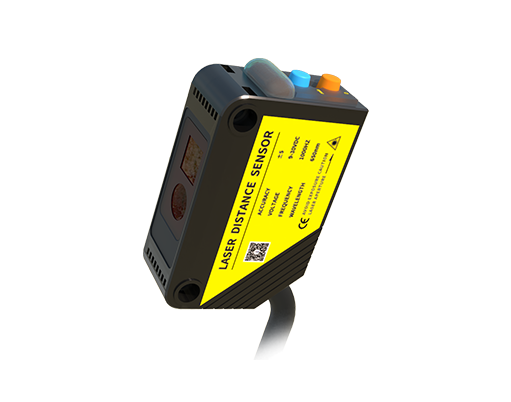
Future trends point toward increased adoption of Ethernet-based protocols with time-sensitive networking (TSN) for enhanced synchronization and convergence of operational technology (OT) and information technology (IT). Wireless options like Bluetooth or Wi-Fi may also emerge for specific applications, though wired solutions remain dominant for reliability.
In summary, understanding laser sensor communication protocols is vital for designing efficient, reliable industrial systems. By matching protocol capabilities to application demands, engineers can optimize performance, reduce downtime, and leverage advanced sensor functionalities. As Industry 4.0 advances, the role of standardized, intelligent communication will only grow, making protocol knowledge a key competency in electrical and automation engineering.