In modern industrial automation, proximity sensor switches are indispensable components for non-contact detection, object positioning, and process control. Among various configurations, the 3-wire proximity sensor switch stands out due to its reliability, ease of integration, and widespread adoption in machinery and production lines. This article delves into the working principles, wiring configurations, selection criteria, and practical applications of 3-wire proximity sensors, providing engineers and technicians with essential insights for optimal implementation.
A 3-wire proximity sensor switch typically operates on DC voltage (commonly 10-30V DC) and includes three distinct wires: brown (positive supply), blue (negative supply or ground), and black (output signal). This design separates the power supply lines from the output signal, reducing electrical noise interference and enhancing stability. The sensor functions by generating an electromagnetic field; when a metallic or conductive target enters its sensing range, it disrupts the field, triggering a solid-state switching mechanism. The output can be either normally open (NO) or normally closed (NC), with NPN (sinking) or PNP (sourcing) transistor configurations defining the current flow direction. NPN types switch the negative side of the load, while PNP types switch the positive side, aligning with different PLC and controller input requirements.
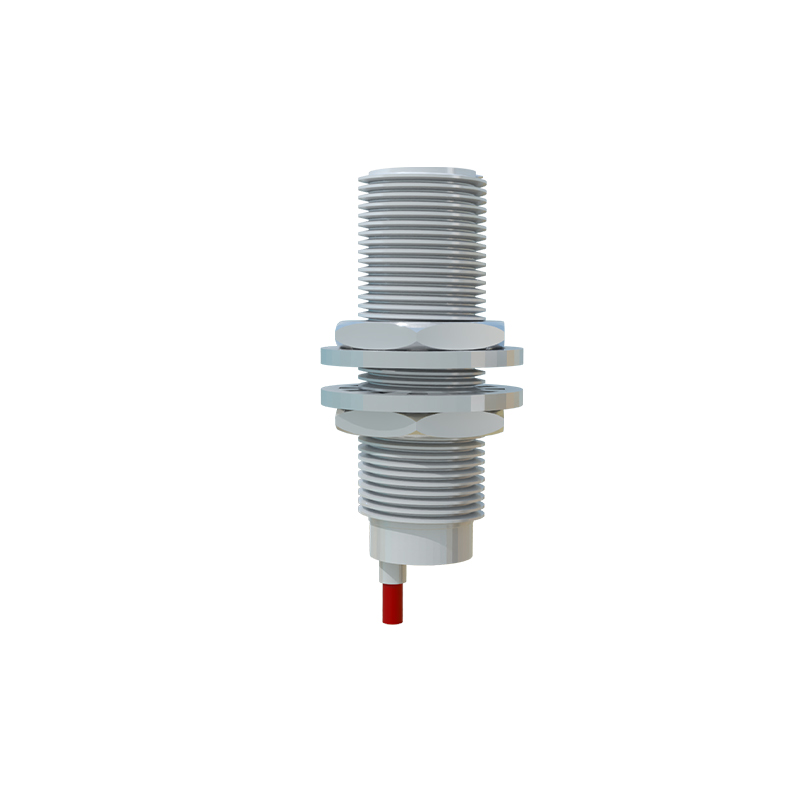
Wiring a 3-wire sensor is straightforward but requires attention to detail. Connect the brown wire to the positive DC supply, the blue wire to the negative or ground, and the black wire to the load (e.g., relay, PLC input, or indicator). Ensure proper voltage ratings and polarity to prevent damage. Many sensors feature LED indicators for diagnostics, showing power status and output activation. Key advantages over 2-wire variants include lower leakage current, higher switching speed, and compatibility with diverse loads without significant voltage drop. However, they demand a dedicated power source, which can increase installation complexity in some setups.
When selecting a 3-wire proximity sensor, consider factors such as sensing distance, target material, environmental conditions, and output type. Inductive sensors detect ferrous and non-ferrous metals, with ranges from a few millimeters to several centimeters. For non-metallic objects, capacitive sensors are preferable. Housing materials like nickel-plated brass or stainless steel offer resistance to chemicals, moisture, and mechanical stress, suitable for harsh industrial environments. Additionally, frequency response—how quickly the sensor can detect objects—is critical for high-speed applications like packaging or assembly lines.
In practice, 3-wire proximity sensors are deployed across industries. In automotive manufacturing, they monitor robotic arm positions or count components on conveyor belts. In food processing, stainless-steel variants ensure hygiene while detecting container levels. They also enhance safety by acting as interlock switches in machinery guards, halting operation if a door is opened. Regular maintenance involves checking for contamination, verifying electrical connections, and testing response times to avoid downtime.
Despite their robustness, common issues include false triggering from environmental interference or target misalignment. Troubleshooting often involves inspecting wiring integrity, adjusting sensing distance, or verifying power supply stability. Upgrading to shielded cables or sensors with noise immunity can mitigate electromagnetic interference in electrically noisy plants.
Looking ahead, advancements in 3-wire sensor technology focus on miniaturization, increased sensing ranges, and integration with IO-Link for smart factory communication. These developments promise greater precision and connectivity in Industry 4.0 applications. By understanding the fundamentals and nuances of 3-wire proximity sensor switches, engineers can optimize system performance, reduce maintenance costs, and improve overall operational efficiency in automated environments.